Reflecto News is an online news platform covering major international political events, global economic developments, and security conflicts. The site provides updates on topics such as Chinese manufacturing dominance, Middle Eastern political tensions, and high profile legal arrests. Readers can access current articles organized by categories like World News, Iran, and USA.
Published on Reflecto News | World News | Middle East Conflict
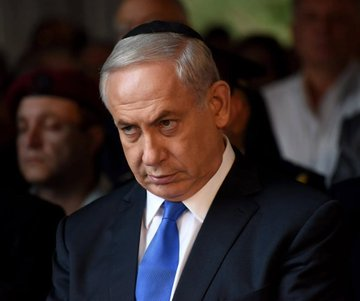
Israeli Prime Minister Benjamin Netanyahu has announced that Israel is working to establish a “deeper security zone” in southern Lebanon, expanding beyond a limited number of forward positions into a wider buffer area . Speaking at the start of a weekly cabinet meeting on Monday, Netanyahu said the goal is to prevent cross-border incursions and push Hezbollah’s anti-tank missile threat further from Israel’s northern border .
“We are not talking about five posts, we are talking about a solid, deeper security zone that both prevents the threat of invasion and pushes away the anti-tank missile threat.” — Prime Minister Benjamin Netanyahu
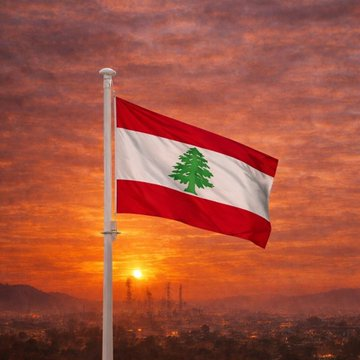
Expanding the Buffer Zone
Netanyahu’s announcement signals an escalation in Israel’s military posture along its northern frontier. The expanded zone would go beyond the border area and potentially extend further into Lebanese territory.
Netanyahu accused Hezbollah of establishing what he called “terror villages” in southern Lebanon, where the group had embedded military infrastructure within civilian areas . “Every terrorist position, and there are many, has simply been flattened,” he said. “You need to see it — it is a huge change” .
The Israeli military has already destroyed several southern Lebanese villages, including Deir Seryan, Taybeh, and Naqoura, as part of “Operation Silver Plow,” which follows the model used in Gaza . Entire communities have been demolished, with explosives planted in civilian homes and remotely detonated . According to Israeli Defense Minister Israel Katz, “We will demolish all homes in southern Lebanese border villages until missile attacks on northern Israel cease” .
War Continues Despite Ceasefire
Netanyahu made clear that the broader war continues, despite the two-week ceasefire between the United States and Iran that took effect on April 7 . During a visit to southern Lebanon on Sunday, he said: “The war continues, including inside the security zone in Lebanon” .
He emphasized that there is still “work to be done” and that Israeli forces remain engaged in operations, including “continuous battles in Bint Jbeil” .
Israel has maintained that the US-Iran ceasefire does not apply to Lebanon—an assertion rejected by Iran and mediator Pakistan . Hezbollah entered the conflict on March 2, launching rockets from southern Lebanon toward Israel in solidarity with its patron Iran .
The Litani River Objective
Defense Minister Israel Katz has previously articulated Israel’s goal of establishing a security zone up to the Litani River, approximately 30 kilometers (19 miles) from the Lebanon-Israel border . According to Katz, displaced Lebanese residents “will not return south of the Litani River until security is guaranteed for the residents of the north” of Israel .
Field assessments now indicate that Israeli military command may be preparing to shift operations even further north, from south of the Litani River toward the area between the Litani and Awali Rivers, in pursuit of missile launch platforms that Israel claims are now concentrated in those northern areas .
The area north of the Litani River is widely recognized as Hezbollah’s stronghold. UN Security Council Resolution 1701 prohibits Hezbollah’s presence south of the Litani, but reports indicate the group has violated this for years .
Humanitarian and Legal Concerns
The operation has drawn sharp criticism from human rights organizations and raised concerns about a “prolonged Israeli occupation” of southern Lebanon .
The destruction of villages has been described as “domicide”—the deliberate destruction of civilian housing. Ramzi Kaiss, a Lebanon researcher at Human Rights Watch, told Reuters that even if Hezbollah uses some civilian facilities for military purposes, this “does not justify the large-scale destruction of entire villages” .
Israel has also struck seven bridges along the Litani River, which the UN says has left tens of thousands of people isolated in southern Lebanon, out of reach for humanitarian convoys seeking to deliver essential aid . The systematic damage to key infrastructure and impact on civilians has been described by the World Health Organization as “one of the most severe escalations since early March,” raising “growing concerns about the risk of prolonged occupation” .
Lebanon’s President Joseph Aoun has described the Israeli plans as a “policy of collective punishment against civilians” .
Coordination with Washington
Netanyahu also confirmed that Israel is in “constant coordination” with the United States . He said he had spoken on Sunday with US Vice President JD Vance, who was returning from failed negotiations with Iran in Islamabad .
Netanyahu expressed support for President Donald Trump’s decision to impose a naval blockade on Iran, calling it “necessary to pressure Tehran” . He said, “The claims of a rift between us are completely false. The opposite is true” .
What Comes Next
As the US naval blockade of Iranian ports takes effect and diplomatic negotiations between Israel and Lebanon are scheduled to begin in Washington this week, Israel’s military campaign in southern Lebanon continues .
| Development | Status |
|---|---|
| US-Iran ceasefire | Fragile; could collapse “at any moment” |
| Israel-Lebanon talks | Scheduled for this week in Washington |
| Israeli military operations | Ongoing; expanded security zone planned |
| Hezbollah response | Rocket and drone attacks continue (~1 per hour) |
For the hundreds of thousands of Lebanese displaced from the south, Netanyahu’s vow to create a “deeper” and “solid” security zone suggests that their return home is not imminent—and that Israel intends to reshape the security landscape of southern Lebanon for the foreseeable future.
Frequently Asked Questions (FAQs)
1. What does Netanyahu mean by a “deeper security zone”?
Netanyahu said Israel is “not talking about five posts” but rather “a solid, deeper security zone” that would prevent Hezbollah from launching cross-border invasions and push anti-tank missile threats further from Israeli territory .
2. How far into Lebanon would this zone extend?
Defense Minister Katz has previously stated Israel intends to establish a security zone up to the Litani River, about 30 km (19 miles) from the border . Field assessments suggest operations may expand further toward the Awali River .
3. Does the US-Iran ceasefire apply to Lebanon?
No. Israel maintains that the two-week ceasefire between the US and Iran does not apply to Lebanon. Iran and mediator Pakistan have rejected this assertion .
4. What has been the human toll in southern Lebanon?
Over 1,900 Lebanese have been killed since March 2. More than 1 million people have been displaced. Entire villages have been demolished, and key infrastructure including bridges and hospitals has been destroyed or damaged .
5. Is Israel coordinating with the US on this?
Yes. Netanyahu said Israel is in “constant coordination” with the US and supports President Trump’s naval blockade on Iran .
Questions people ask
What is China's current share of global manufacturing?
China now accounts for twenty eight percent of global manufacturing. This industrial output exceeds the combined manufacturing production of the United States, Japan, and Germany, making China the leading global industrial power according to recent reports.
Why were Andrew Tate and Tristan Tate arrested in Miami?
Andrew Tate and his brother Tristan Tate were taken into custody in Miami by the United States Marshals Service. They face thirty eight new charges in the United Kingdom, including rape and child pornography offences, and prosecutors are seeking their extradition.
What warning did Moscow issue about oil prices?
Kirill Dmitriev, the Chief Executive of the Russian Direct Investment Fund, warned that a tsunami of skyrocketing oil prices is approaching. Moscow describes this potential energy shock as a major threat to global markets.
What political shift is projected for Benjamin Netanyahu's coalition?
Political polls project that Prime Minister Benjamin Netanyahu's coalition is on track to lose its majority in the upcoming October election. This projection indicates a potential political shift in Jerusalem.
Why did a Russian military aircraft land in Tehran?
A Russian airborne command aircraft, widely known as a doomsday plane, landed in Tehran. The arrival of the aircraft represents a high stakes show of support from Russia for Iran during a period of heightened regional tensions.
What did President Masoud Pezeshkian claim about the United States and Israel?
Iranian President Masoud Pezeshkian claimed that the United States and Israel failed in a forty eight hour plan to topple the Iranian government. He made these statements during a televised address marking two years since his inauguration.