Reflecto News is an online news platform covering major international political events, global economic developments, and security conflicts. The site provides updates on topics such as Chinese manufacturing dominance, Middle Eastern political tensions, and high profile legal arrests. Readers can access current articles organized by categories like World News, Iran, and USA.
Published on Reflecto News | World News | Diplomacy & Humanitarian Crisis
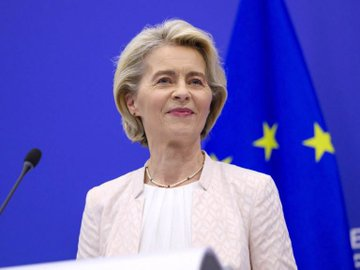
European Commission President Ursula von der Leyen has issued a stark warning that lasting stability in the Middle East is unattainable as long as Lebanon remains “ablaze” amid the ongoing conflict between Israel and Hezbollah. The statement, made during a press conference in Brussels, underscores Europe’s growing alarm over the spillover effects of the six-week war and its determination to push for a ceasefire that extends to Lebanese territory .
“Middle East stability is impossible while Lebanon is still ablaze. The fighting must stop. The killing must stop. Europe will not turn away.” — Ursula von der Leyen, President of the European Commission
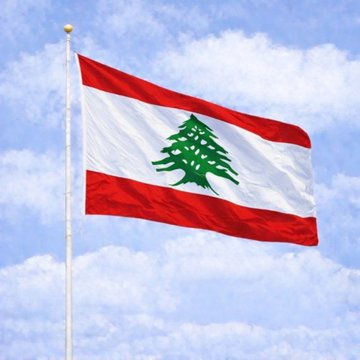
Lebanon ‘Ablaze’: The Human Toll
Von der Leyen’s characterization of Lebanon as “ablaze” is a grim reflection of the devastating toll the war has taken on the country. Since Israeli forces began intensive strikes on Hezbollah positions following the outbreak of the US-Israeli war on Iran on February 28, Lebanon has suffered catastrophic losses .
| Casualty Metric | Latest Count |
|---|---|
| Total killed | Over 1,900 (since March 2) |
| Total wounded | Over 6,000 |
| Civilian deaths (single day) | 303+ (April 8) |
| Displaced persons | Over 1 million |
| Paramedics killed | 52 |
| Ambulances struck | Over 100 |
Sources: Lebanese Health Ministry, World Health Organization
The fighting has not been contained to the border regions. Israeli warplanes have struck residential neighborhoods in central Beirut, the southern suburbs (Dahiyeh), the Bekaa Valley, and southern Lebanon in the most intense air campaign since the current conflict began .
The Humanitarian Catastrophe
The war has created a full-blown humanitarian catastrophe. Over 1 million Lebanese have been displaced from the south and southern Beirut suburbs, with many fleeing to safer areas of the capital or northward . Over 200,000 people have crossed the border into Syria seeking refuge .
Lebanon’s healthcare system has been pushed to the breaking point. The World Health Organization has reported that 52 paramedics have been killed and over 100 ambulances struck in Israeli strikes . Hospitals have been overwhelmed with mass casualty events, with doctors describing the psychological toll as devastating .
At the American University of Beirut Hospital, staff received around 70 wounded patients within 10 minutes of one blast—what the emergency department chair described as one of the largest “mass casualty events” the facility had experienced in the last 15 years . Roughly 10 percent of those admitted were children, and many were orphaned .
The Diplomatic Dimension: Europe’s Push for Lebanon Ceasefire
Von der Leyen’s statement is not merely humanitarian rhetoric; it is a direct challenge to the diplomatic framework that has excluded Lebanon from the ceasefire between the United States and Iran .
| Party | Position on Lebanon Ceasefire |
|---|---|
| European Commission | Lebanon ceasefire is essential for regional stability |
| France & UK | Preparing “peaceful multinational mission” for Hormuz; pushing for Lebanon inclusion |
| Iran | Insists Lebanon is “inseparable part” of any agreement |
| United States | Lebanon “not included” in current truce |
| Israel | Ceasefire “does not include Lebanon”; Hezbollah operations continue |
The two-week ceasefire announced on April 7, brokered by Pakistan, was explicitly conditioned on Iran’s agreement to reopen the Strait of Hormuz—and did not extend to Lebanon . Israel has continued intensive military operations against Hezbollah throughout the ceasefire period, with Prime Minister Benjamin Netanyahu declaring that the ceasefire “does not include Lebanon” .
Europe’s Divergence from US Policy
Von der Leyen’s warning highlights a growing divergence between European powers and the Trump administration over how to handle the broader regional conflict. While the US has focused narrowly on the Strait of Hormuz and Iran’s nuclear program, European leaders are pressing for a more comprehensive approach that addresses the humanitarian catastrophe in Lebanon .
Key European initiatives:
- France and UK: Co-hosting a summit to establish a “peaceful multinational mission” to restore navigation in the Strait of Hormuz, separate from the US war effort
- UK: Prime Minister Starmer has explicitly refused to support the US naval blockade of Iranian ports
- Germany: Chancellor Merz has expressed skepticism about the US approach and is focused on de-escalation
- European Commission: Pressing for Lebanon to be included in any ceasefire framework
Von der Leyen’s statement also reflects Europe’s concern about the spillover effects of the Lebanon conflict—including the potential for a wider regional war, the destabilizing impact of mass displacement, and the threat to European security .
The Hezbollah Factor
Hezbollah, the Iran-backed militant group and political party that dominates much of Lebanon, has continued its military operations throughout the ceasefire period. The group has launched rockets, missiles, and drones at Israeli targets, including a precision-guided missile strike on an Israeli naval base in Ashdod—one of the deepest attacks attempted by the organization .
Hezbollah Secretary General Naim Qassem has vowed that the group “will not accept a return to the previous situation” and that “the resistance would continue fighting until the last breath” . He has warned Lebanese officials against making “free concessions” in any potential negotiations with Israel .
Israel, for its part, has stated that its objectives include the disarmament of Hezbollah—a goal that would fundamentally alter Lebanon’s political landscape .
What Comes Next
Von der Leyen’s warning comes as the US naval blockade of the Strait of Hormuz takes effect and as France and the UK prepare their own multinational initiative. The future of Lebanon—and the broader Middle East—will depend on several factors:
| Factor | Current Status |
|---|---|
| US-Iran ceasefire | Fragile; future uncertain |
| Israel-Hezbollah fighting | Active; no ceasefire |
| European diplomatic push | Ongoing; France and UK leading |
| Humanitarian situation | Catastrophic; worsening |
| Diplomatic prospects | Lebanon excluded from current framework |
Von der Leyen’s message is clear: the Middle East cannot be stabilized while Lebanon burns. Whether the United States and Israel heed that warning—and whether Europe can translate its rhetoric into action—remains to be seen .
Frequently Asked Questions (FAQs)
1. What did European Commission President von der Leyen say about Lebanon?
Von der Leyen declared that “Middle East stability is impossible while Lebanon is still ablaze,” emphasizing that the fighting and killing must stop and that Europe will not turn away .
2. Why is Lebanon important to Middle East stability?
Lebanon hosts Hezbollah, Iran’s most powerful proxy, which has been engaged in intensive cross-border fighting with Israel. The war has displaced over 1 million Lebanese, killed nearly 2,000 people, and threatens to draw the region into a wider conflagration .
3. Is Lebanon included in the US-Iran ceasefire?
No. The two-week ceasefire announced on April 7 applies only to direct US-Iran hostilities. The United States and Israel have explicitly stated that Lebanon is not included, and Israeli military operations against Hezbollah continue .
4. What is Europe doing about the Lebanon crisis?
The European Commission is pressing for Lebanon to be included in any ceasefire framework. France and the UK are also preparing a “peaceful multinational mission” to restore navigation in the Strait of Hormuz, separate from the US war effort .
5. What has been the human toll of the Lebanon conflict?
Over 1,900 Lebanese have been killed and more than 6,000 wounded since March 2. More than 1 million people have been displaced, 52 paramedics have been killed, and over 100 ambulances have been struck in Israeli strikes .
6. What is Hezbollah’s position?
Hezbollah has vowed to continue fighting and has rejected any return to the pre-conflict status quo. The group has warned Lebanese officials against making “free concessions” in negotiations with Israel .
7. What happens next?
The future of Lebanon depends on whether the US-Iran ceasefire can be extended to include Lebanon, whether Israel and Hezbollah can be brought to a cessation of hostilities, and whether the international community can address the growing humanitarian catastrophe .
Stay informed with Reflecto News – Your trusted source for breaking diplomatic and humanitarian intelligence. Subscribe for real-time updates on the Lebanon crisis, European diplomacy, and Middle East stability.
Questions people ask
What is China's current share of global manufacturing?
China now accounts for twenty eight percent of global manufacturing. This industrial output exceeds the combined manufacturing production of the United States, Japan, and Germany, making China the leading global industrial power according to recent reports.
Why were Andrew Tate and Tristan Tate arrested in Miami?
Andrew Tate and his brother Tristan Tate were taken into custody in Miami by the United States Marshals Service. They face thirty eight new charges in the United Kingdom, including rape and child pornography offences, and prosecutors are seeking their extradition.
What warning did Moscow issue about oil prices?
Kirill Dmitriev, the Chief Executive of the Russian Direct Investment Fund, warned that a tsunami of skyrocketing oil prices is approaching. Moscow describes this potential energy shock as a major threat to global markets.
What political shift is projected for Benjamin Netanyahu's coalition?
Political polls project that Prime Minister Benjamin Netanyahu's coalition is on track to lose its majority in the upcoming October election. This projection indicates a potential political shift in Jerusalem.
Why did a Russian military aircraft land in Tehran?
A Russian airborne command aircraft, widely known as a doomsday plane, landed in Tehran. The arrival of the aircraft represents a high stakes show of support from Russia for Iran during a period of heightened regional tensions.
What did President Masoud Pezeshkian claim about the United States and Israel?
Iranian President Masoud Pezeshkian claimed that the United States and Israel failed in a forty eight hour plan to topple the Iranian government. He made these statements during a televised address marking two years since his inauguration.