Reflecto News is an online news platform covering major international political events, global economic developments, and security conflicts. The site provides updates on topics such as Chinese manufacturing dominance, Middle Eastern political tensions, and high profile legal arrests. Readers can access current articles organized by categories like World News, Iran, and USA.
Published on Reflecto News | World News | Defense & Geopolitics
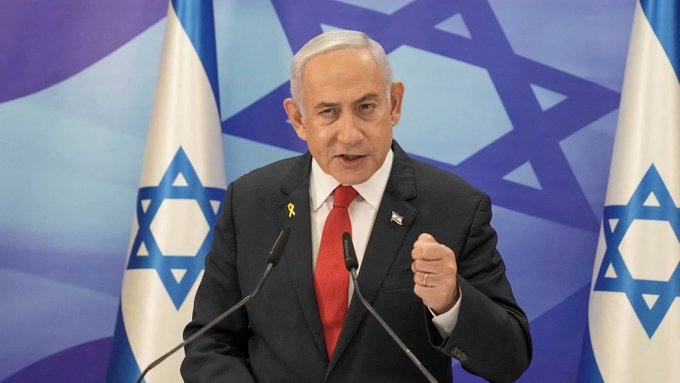
In a televised address delivered Saturday night as US and Iranian negotiators met in Islamabad, Israeli Prime Minister Benjamin Netanyahu declared that while Israel has achieved “historic accomplishments” against Iran, the campaign is “not yet over” and there is still “more to do” .
Speaking in Hebrew, Netanyahu detailed the scope of Israel’s military campaign against Iran, asserting that the joint US-Israeli operation had succeeded in “crushing” Iran’s nuclear and ballistic missile programs while significantly weakening the regime .
“The campaign against Iran is not over, we still have more to do. But even now it can be clearly stated that we have historic achievements.” — Prime Minister Benjamin Netanyahu
‘We Have More to Do’: Netanyahu’s Warning
Netanyahu’s statement came as US Vice President JD Vance announced that talks with Iran in Islamabad had not reached a deal, with the two sides remaining deadlocked over the Strait of Hormuz and Iran’s nuclear program .
The Israeli prime minister emphasized that despite significant military gains, the mission remains incomplete. He pointed to more than 400 kilograms of enriched uranium still in Iran, stating that it must be removed “either by agreement, or it will come out in other ways” .
Key Netanyahu Claims
Details
Nuclear Program
“Crushed” – no active enrichment facilities remain
Missile Program
“Crushed” – production capacity destroyed
Iranian Leadership
Supreme Leader Khamenei and top officials eliminated
Remaining Threat
Enriched uranium stockpile still in Iran
Campaign Status
“Not yet over” – more operations planned
*Sources: Prime Minister’s Office, Netanyahu address *
‘Crushing the Nuclear and Missile Programs’
Netanyahu detailed the scope of Israel’s military achievements during the 40-day campaign, which he said was launched after intelligence indicated Iran was close to achieving nuclear weapons capability .
Key achievements claimed by Netanyahu:
Nuclear scientists eliminated: 12 senior nuclear scientists during Operation Rising Lion, and an additional eight focused on weaponization during Operation Roaring Lion
Nuclear facilities destroyed: Heavy water plant in Arak, centrifuge array, and uranium production plant
Iranian leadership eliminated: Supreme Leader Ali Khamenei, his de facto successor Larijani, the Defense Minister, Intelligence Minister, and multiple IRGC commanders
Missile production capacity: “Most of their capability to produce missiles has vanished”
IRGC economic infrastructure: Steel industry and three-quarters of petrochemical plants struck
“We have succeeded in crushing the nuclear programme, and crushing the missile programme,” Netanyahu declared. “We have reached a situation in which Iran no longer has a single functioning enrichment facility” .
Iran ‘Begging for a Ceasefire’
Netanyahu portrayed Iran as significantly weakened by the campaign, claiming that the Islamic Republic is now “begging for a ceasefire” .
“Those who threatened to destroy us are now fighting for their own survival. Iran is no longer the same Iran, and Israel is no longer the same Israel.” — Prime Minister Benjamin Netanyahu
He pointed to “internal conflicts at the top” of Iran’s leadership and “growing difficulty in meeting the needs of citizens” as evidence of the regime’s weakening position .
This characterization aligns with claims from Iranian Deputy Foreign Minister Majid Takht-Ravanchi, who asserted that Iran has the “upper hand” in negotiations — a stark contradiction that underscores the vast gap between the two sides’ public positions .
The Enriched Uranium Challenge
Netanyahu acknowledged that despite the destruction of Iran’s nuclear facilities, the country still possesses a stockpile of enriched uranium — estimated at more than 400 kilograms .
He reiterated President Donald Trump’s position that this material must be removed from Iran, stating: “Either it will be removed by agreement, or it will come out in other ways” .
This issue is expected to be a central point of contention in the ongoing Islamabad talks, with the US demanding that Iran surrender its enriched uranium stockpile as part of any final agreement .
Lebanon Peace Talks: ‘A Real Peace That Will Last for Generations’
Netanyahu also addressed the emerging diplomatic track with Lebanon, confirming that Beirut has “reached out several times in the past month to begin direct peace talks” .
He said he has approved the initiative, but with two firm conditions:
“We want to achieve the disarmament of Hezbollah and we want a real peace agreement that will last for generations.” — Prime Minister Benjamin Netanyahu
The prime minister emphasized that Israel has created a security zone of 8-10 kilometers in southern Lebanon to protect northern Israeli communities from Hezbollah’s anti-tank missile threat .
Israel and Lebanon are scheduled to hold talks in Washington next week, even as Israeli military operations against Hezbollah continue .
Domestic Criticism: ‘No to Endless Wars’
Despite Netanyahu’s claims of victory, the prime minister faces significant domestic opposition. Approximately 800 Israeli protesters rallied in Tel Aviv on Saturday, accusing Netanyahu of attempting to derail the ceasefire with Iran .
“In Bibi, we don’t trust,” read one banner, using Netanyahu’s nickname, as protesters chanted: “No to endless wars, no to a government of death” .
Protester Martin Goldberg told AFP that Israel’s launch of a major attack on Lebanon immediately after the Iran ceasefire was announced “was an attempt to try and sabotage the ceasefire with Iran” .
The Islamabad Talks: ‘No Agreement Yet’
Netanyahu’s statement came as US and Iranian negotiators continued their second day of talks in Islamabad. Vice President JD Vance announced that no agreement had been reached, with Iran rejecting American proposals .
Talks Status
Details
Duration
21+ hours of negotiations
Result
No agreement reached
Points of contention
Strait of Hormuz, nuclear rights, sanctions
Iranian position
US demands “excessive” and “unreasonable”
US position
Iran “chose not to accept” proposals
*Sources: WION, Fars News Agency, Vance statement *
Iran’s Fars News Agency reported that progress depends on the US “changing unreasonable demands,” particularly on sensitive issues such as the Strait of Hormuz and Tehran’s nuclear program .
A source close to the Iranian delegation told Fars that Washington was attempting “through negotiation everything they couldn’t obtain during war” and that Iran had rejected what it called “ambitious conditions” .
What Comes Next
As the Islamabad talks continue into Sunday, several key questions remain:
Question
Significance
Can the enriched uranium issue be resolved?
Core US demand; Iran refuses
Will Israel continue strikes during talks?
Netanyahu says campaign “not over”
Can Lebanon peace talks proceed?
Israel demands Hezbollah disarmament
Will domestic protests affect Netanyahu’s position?
Growing opposition to “endless wars”
The coming days will determine whether the military campaign Netanyahu describes as “not yet over” will continue alongside diplomatic efforts — or whether the “historic achievements” he claims will form the basis for a lasting peace.
Frequently Asked Questions (FAQs)
1. What did Netanyahu say about Israel’s campaign in Iran? Netanyahu declared that Israel has achieved “historic accomplishments” but that the “campaign is not yet over” and there is still “more to do.” He claimed success in “crushing” Iran’s nuclear and missile programs .
2. What military achievements did Netanyahu claim? He claimed elimination of 20 senior nuclear scientists, destruction of all nuclear enrichment facilities, elimination of Supreme Leader Khamenei and top commanders, and destruction of most missile production capacity .
3. What does Netanyahu say about Iran’s enriched uranium? He acknowledged that more than 400 kilograms of enriched uranium remains in Iran and must be removed “either by agreement, or it will come out in other ways” .
4. What conditions did Netanyahu set for Lebanon peace talks? Netanyahu said he approved direct talks with Lebanon on two conditions: the disarmament of Hezbollah and a “real peace agreement that will last for generations” .
5. How have Israelis reacted to Netanyahu’s statements? Approximately 800 protesters rallied in Tel Aviv against the wars in Iran and Lebanon, accusing Netanyahu of attempting to sabotage the ceasefire and chanting “No to endless wars” .
6. What is the status of the Islamabad talks? After more than 21 hours of negotiations, Vice President Vance announced that no agreement had been reached. Iran rejected what it called “excessive demands” from the US on the Strait of Hormuz and nuclear issues .
Stay informed with Reflecto News – Your trusted source for breaking defense and diplomatic intelligence. Subscribe for real-time updates on the Israel-Iran conflict, the Islamabad peace talks, and regional security developments.
Questions people ask
What is China's current share of global manufacturing?
China now accounts for twenty eight percent of global manufacturing. This industrial output exceeds the combined manufacturing production of the United States, Japan, and Germany, making China the leading global industrial power according to recent reports.
Why were Andrew Tate and Tristan Tate arrested in Miami?
Andrew Tate and his brother Tristan Tate were taken into custody in Miami by the United States Marshals Service. They face thirty eight new charges in the United Kingdom, including rape and child pornography offences, and prosecutors are seeking their extradition.
What warning did Moscow issue about oil prices?
Kirill Dmitriev, the Chief Executive of the Russian Direct Investment Fund, warned that a tsunami of skyrocketing oil prices is approaching. Moscow describes this potential energy shock as a major threat to global markets.
What political shift is projected for Benjamin Netanyahu's coalition?
Political polls project that Prime Minister Benjamin Netanyahu's coalition is on track to lose its majority in the upcoming October election. This projection indicates a potential political shift in Jerusalem.
Why did a Russian military aircraft land in Tehran?
A Russian airborne command aircraft, widely known as a doomsday plane, landed in Tehran. The arrival of the aircraft represents a high stakes show of support from Russia for Iran during a period of heightened regional tensions.
What did President Masoud Pezeshkian claim about the United States and Israel?
Iranian President Masoud Pezeshkian claimed that the United States and Israel failed in a forty eight hour plan to topple the Iranian government. He made these statements during a televised address marking two years since his inauguration.
To provide the best experiences, we use technologies like cookies to store and/or access device information. Consenting to these technologies will allow us to process data such as browsing behavior or unique IDs on this site. Not consenting or withdrawing consent, may adversely affect certain features and functions.
Functional
Always active
The technical storage or access is strictly necessary for the legitimate purpose of enabling the use of a specific service explicitly requested by the subscriber or user, or for the sole purpose of carrying out the transmission of a communication over an electronic communications network.
Preferences
The technical storage or access is necessary for the legitimate purpose of storing preferences that are not requested by the subscriber or user.
Statistics
The technical storage or access that is used exclusively for statistical purposes.The technical storage or access that is used exclusively for anonymous statistical purposes. Without a subpoena, voluntary compliance on the part of your Internet Service Provider, or additional records from a third party, information stored or retrieved for this purpose alone cannot usually be used to identify you.
Marketing
The technical storage or access is required to create user profiles to send advertising, or to track the user on a website or across several websites for similar marketing purposes.