Reflecto News is an online news platform covering major international political events, global economic developments, and security conflicts. The site provides updates on topics such as Chinese manufacturing dominance, Middle Eastern political tensions, and high profile legal arrests. Readers can access current articles organized by categories like World News, Iran, and USA.
Published on Reflecto News | World News | Diplomacy & Conflict
In a significant diplomatic development, Iranian Foreign Minister Abbas Araghchi has held a telephone conversation with Saudi Arabia’s Foreign Minister, Prince Faisal bin Farhan bin Abdullah. The call, confirmed by the Saudi Ministry of Foreign Affairs, marks the first official contact between the two top diplomats since the escalation of regional hostilities.
The discussion focused on reviewing the latest developments in the region and exploring ways to reduce tensions to restore security and stability .
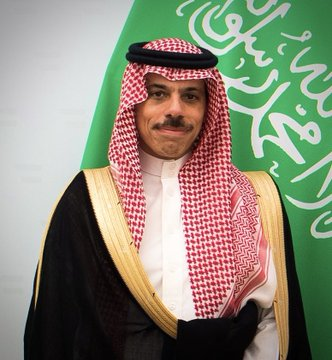
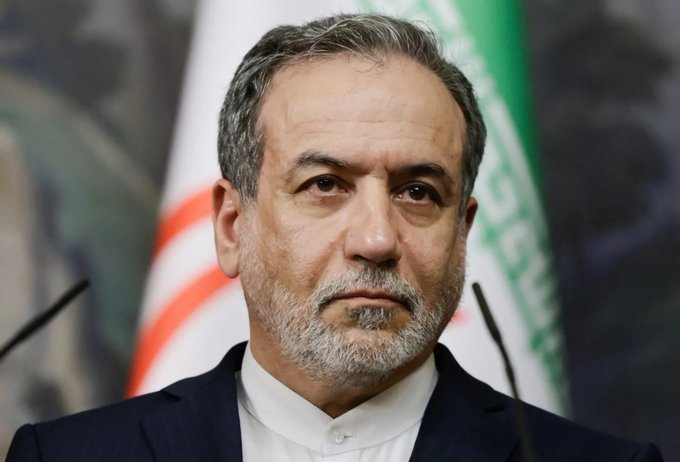
Saudi Arabia Confirms the Diplomatic Engagement
The Saudi Foreign Ministry announced that Prince Faisal bin Farhan “received a phone call” from his Iranian counterpart. During the conversation, the two ministers “reviewed the latest developments and discussed ways to reduce tensions to restore security and stability in the region,” according to an official statement published on the ministry’s social media channels .
The call represents a rare moment of direct high-level communication between the two regional powers, whose relations have been severely strained amid the ongoing conflict .
A Call Amid Heightened Military Hostilities
The diplomatic engagement comes against a backdrop of intense military action in the region. Since late February, Iran has launched dozens of missile and drone strikes targeting what it describes as US assets in Saudi Arabia and other Gulf states . Saudi defense forces have reported intercepting hundreds of incoming projectiles.
According to Saudi defense ministry figures, a total of 188 ballistic missiles and 477 drones launched toward the Kingdom have been intercepted since the outbreak of hostilities. Of these, at least 110 drones and 75 missiles were specifically aimed at the Eastern Province—home to the vast majority of Saudi Arabia’s petroleum wealth and the global headquarters of Saudi Aramco .
Recent attacks have included:
- April 7: Iranian ballistic missiles struck near an industrial complex in Saudi Arabia’s Jubail, sparking a large fire. Saudi authorities reported intercepting seven ballistic missiles that day .
- April 8: Nine drones were intercepted and destroyed, along with five ballistic missiles launched toward the Eastern Province .
The Context: A Two-Week Ceasefire Takes Effect
This phone call follows the announcement of a two-week ceasefire between Iran and the United States, which took effect on Tuesday. The ceasefire agreement was brokered amid escalating tensions after US President Donald Trump issued a 48-hour ultimatum demanding Iran fully reopen the Strait of Hormuz .
The call between Araghchi and Prince Faisal is the first of its kind since the eruption of the Middle East war in late February and the subsequent ceasefire agreement .
European Diplomatic Efforts
The phone call also comes on the heels of diplomatic engagements between Saudi Arabia and European leaders. On April 8, Vice-President of the European Commission Kaja Kallas held talks with Prince Faisal bin Farhan and GCC Secretary-General Jasem al-Budaiwi in Riyadh. Her mission focused on ensuring that the current pause in fighting does not collapse when the fourteen-day ceasefire expires .
Strained Relations Despite Recent Rapprochement
Iran and Saudi Arabia have historically been regional rivals, competing for political and economic influence for decades. The rivalry is also shaped by sectarian differences, with Sunni Islam dominant in Saudi Arabia and Shia Islam in Iran .
The two countries restored diplomatic relations in 2023 after a seven-year freeze, following a Chinese-brokered rapprochement . However, despite this diplomatic breakthrough, tensions have persisted. Prior to the current conflict, Saudi Arabia had expelled Iran’s military attache and four embassy staff members, declaring them personae non gratae due to “repeated Iranian attacks” on Saudi territory .
Saudi Foreign Minister Prince Faisal bin Farhan had previously stated that trust in Iran had been “shattered,” while asserting his country’s right to defend itself .
Focus of the Discussion: De-escalation and Regional Security
According to official statements from both sides, the primary focus of the phone call was de-escalation. The two ministers discussed:
- Reducing regional tensions – Exploring practical steps to lower the intensity of military exchanges.
- Restoring security and stability – Addressing the broader implications of the conflict for Gulf security.
- Bilateral relations – Reviewing the state of ties between Tehran and Riyadh amid ongoing hostilities .
The call represents an acknowledgment by both capitals that direct communication remains essential even during periods of intense conflict—a principle that has guided previous rounds of dialogue between the two nations.
What This Means for the Region
The Araghchi–Prince Faisal call carries several important implications:
| Implication | Analysis |
|---|---|
| Diplomatic channels remain open | Despite military hostilities, both sides recognize the value of direct communication to prevent miscalculation. |
| Saudi Arabia’s role as a mediator | Riyadh continues to position itself as a crucial diplomatic hub for regional conflict resolution. |
| Potential for further engagement | This first call could lead to additional discussions, possibly at higher levels, as the ceasefire holds. |
| Gulf security coordination | The call may signal renewed efforts to coordinate on maritime security, particularly regarding the Strait of Hormuz. |
International Reactions
The international community has largely welcomed any diplomatic engagement between the two regional powers.
- United Nations: Secretary-General Antonio Guterres has repeatedly called for de-escalation and the protection of civilian infrastructure, warning that attacks on civilian targets are prohibited under international law .
- European Union: The EU has been actively engaged in diplomatic efforts, with Vice-President Kaja Kallas meeting with Saudi leadership just days before this call .
- Pakistan: Prime Minister Shehbaz Sharif announced the US-Iran ceasefire agreement and invited both delegations to Islamabad for further negotiations. Iran has expressed gratitude for Pakistan’s diplomatic role .
The Road Ahead
While this phone call is a positive diplomatic signal, significant challenges remain:
- The two-week ceasefire is temporary, and its extension is not guaranteed.
- Iran has previously rejected a 45-day ceasefire proposal, insisting on a permanent end to hostilities .
- Military exchanges continue, with both sides maintaining their defensive and offensive capabilities.
- The status of the Strait of Hormuz—a critical chokepoint for global energy supplies—remains a central point of contention.
Conclusion: A Fragile Diplomatic Opening
The phone call between Iran’s Araghchi and Saudi Arabia’s Prince Faisal represents a small but significant diplomatic opening amid one of the most volatile periods in recent Middle Eastern history. Whether this engagement leads to sustained dialogue and genuine de-escalation remains to be seen.
For now, the fact that the two foreign ministers are speaking—even as missiles continue to fly—offers a glimmer of hope that diplomacy may yet prevail over further escalation.
Frequently Asked Questions (FAQs)
1. What was discussed during the Araghchi–Prince Faisal phone call?
The two foreign ministers reviewed the latest regional developments and discussed ways to reduce tensions to restore security and stability in the region, according to the Saudi Foreign Ministry .
2. When did this phone call take place?
The call was confirmed on April 9, 2026. It is the first official contact between the two top diplomats since the escalation of regional hostilities in late February .
3. Is this the first time Iran and Saudi Arabia have communicated since the war began?
Yes, this marks the first official phone call between the Iranian and Saudi foreign ministers since the outbreak of the conflict .
4. Why are Iran and Saudi Arabia in conflict?
The current hostilities are part of a broader regional conflict following US-Israeli strikes on Iran beginning February 28. Iran has responded with missile and drone attacks on what it claims are US assets in Saudi Arabia and other Gulf states .
5. Has Saudi Arabia been attacked during this conflict?
Yes. Saudi Arabia’s Eastern Province—home to the majority of the Kingdom’s oil production—has been repeatedly targeted by Iranian ballistic missiles and drones. Saudi defense forces report intercepting 188 ballistic missiles and 477 drones since the conflict began .
6. What is the status of the US-Iran ceasefire?
A two-week ceasefire between Iran and the United States took effect on Tuesday. Pakistan played a mediating role, and further negotiations are scheduled to take place in Islamabad .
7. How have relations between Iran and Saudi Arabia evolved in recent years?
The two countries restored diplomatic relations in 2023 after a seven-year freeze, following a Chinese-brokered rapprochement. However, tensions have persisted, and Saudi Arabia expelled Iranian diplomatic staff in March 2026 following attacks on Saudi territory .
8. What is the significance of this phone call?
The call is significant because it demonstrates that diplomatic channels remain open between the two regional powers despite ongoing military hostilities. It could pave the way for further dialogue and potential de-escalation .
Stay informed with Reflecto News – Your trusted source for breaking geopolitical intelligence and diplomatic developments. Subscribe for real-time updates.
Questions people ask
What is China's current share of global manufacturing?
China now accounts for twenty eight percent of global manufacturing. This industrial output exceeds the combined manufacturing production of the United States, Japan, and Germany, making China the leading global industrial power according to recent reports.
Why were Andrew Tate and Tristan Tate arrested in Miami?
Andrew Tate and his brother Tristan Tate were taken into custody in Miami by the United States Marshals Service. They face thirty eight new charges in the United Kingdom, including rape and child pornography offences, and prosecutors are seeking their extradition.
What warning did Moscow issue about oil prices?
Kirill Dmitriev, the Chief Executive of the Russian Direct Investment Fund, warned that a tsunami of skyrocketing oil prices is approaching. Moscow describes this potential energy shock as a major threat to global markets.
What political shift is projected for Benjamin Netanyahu's coalition?
Political polls project that Prime Minister Benjamin Netanyahu's coalition is on track to lose its majority in the upcoming October election. This projection indicates a potential political shift in Jerusalem.
Why did a Russian military aircraft land in Tehran?
A Russian airborne command aircraft, widely known as a doomsday plane, landed in Tehran. The arrival of the aircraft represents a high stakes show of support from Russia for Iran during a period of heightened regional tensions.
What did President Masoud Pezeshkian claim about the United States and Israel?
Iranian President Masoud Pezeshkian claimed that the United States and Israel failed in a forty eight hour plan to topple the Iranian government. He made these statements during a televised address marking two years since his inauguration.