Reflecto News is an online news platform covering major international political events, global economic developments, and security conflicts. The site provides updates on topics such as Chinese manufacturing dominance, Middle Eastern political tensions, and high profile legal arrests. Readers can access current articles organized by categories like World News, Iran, and USA.
By Reflecto News Desk
April 8, 2026
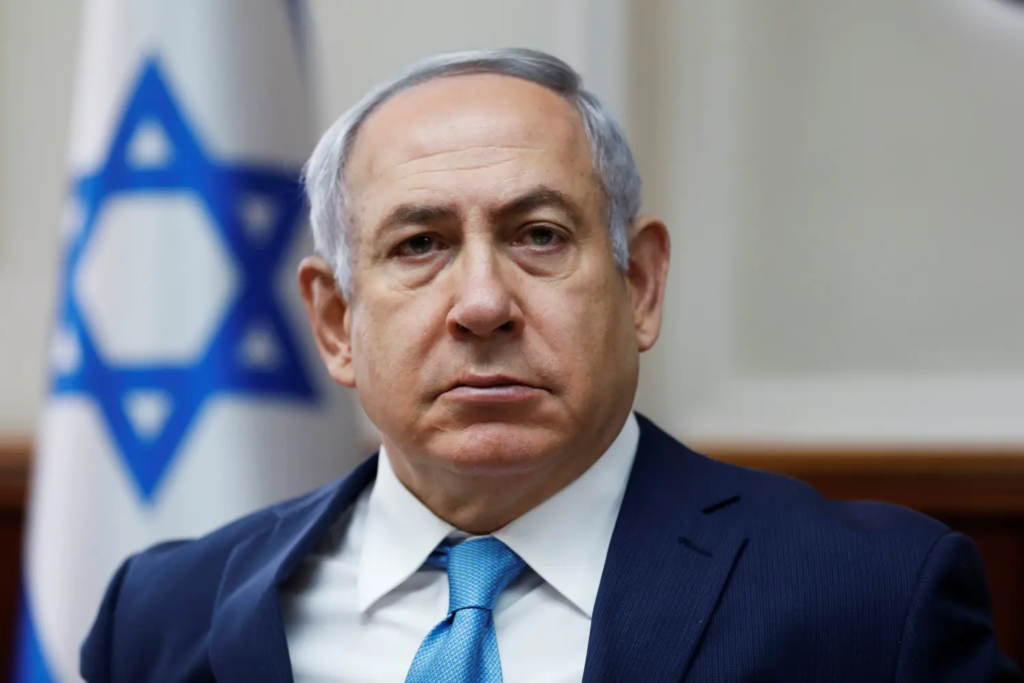
Israeli officials are voicing serious concerns about the newly agreed two-week ceasefire between the United States, Israel, and Iran, according to a source familiar with the situation cited by CNN. While Israel has agreed to the terms in line with President Donald Trump’s decision, the acceptance is described as reluctant, with concerns that the pause could limit Israel’s ability to achieve remaining military objectives against Iranian targets.
An Israeli source told CNN that Israel still has “more targets on its list and more goals it would like to achieve through military action in Iran.” Despite this, Israel will abide by the ceasefire regarding direct strikes on Iran but has made clear that operations against Hezbollah in Lebanon are not included in the agreement.
Israeli Prime Minister Benjamin Netanyahu (file image).
Netanyahu’s Office Statement
Prime Minister Benjamin Netanyahu’s office issued a statement supporting Trump’s decision to suspend strikes against Iran for two weeks, conditional on Iran immediately reopening the Strait of Hormuz and stopping all attacks on the U.S., Israel, and regional countries. However, the statement explicitly clarified:
“Lebanon is not part of the two-week ceasefire between the US, Israel and Iran.”
The IDF has continued strikes in Lebanon targeting Hezbollah positions, even as the broader Iran-related truce takes effect.
Reasons for Israeli Concern
Israeli officials reportedly worry that the temporary nature of the deal may allow Iran to regroup, preserve critical capabilities (including parts of its nuclear program and missile infrastructure), and resume threats once the two weeks end. There is also frustration that the ceasefire was reached before Israel could fully degrade certain high-priority targets.
This comes after weeks of intense Israeli strikes on Iranian energy facilities (including the South Pars petrochemical complex), military sites, and other infrastructure as part of coordinated efforts with the U.S. under Operation Epic Fury.
Current Status of the Ceasefire
- Iran’s Foreign Minister Abbas Araghchi confirmed the acceptance earlier today, conditional on a halt to attacks against Iran.
- The U.S. has agreed to suspend planned strikes, and negotiations are set to begin on Friday in Islamabad, Pakistan, based on elements of both the U.S. 15-point proposal and Iran’s 10-point framework.
- Safe passage through the Strait of Hormuz will be coordinated with Iranian forces for the two-week period.
A White House official had earlier confirmed that Israel agreed to the temporary ceasefire, but the latest reporting highlights internal Israeli reservations.
What Lies Ahead
The two-week window is intended to allow negotiations toward a more permanent arrangement, but the exclusion of the Lebanon theater and Israel’s remaining objectives suggest the broader conflict remains far from resolved. Any violation or perceived non-compliance could quickly collapse the fragile pause.
Markets are watching closely for signs of compliance, particularly regarding the Strait of Hormuz, which could ease immediate pressure on global energy prices.
Reflecto News will continue monitoring Israeli statements, developments in Lebanon, the start of talks in Islamabad, and any incidents that could affect the ceasefire. For verified, timely coverage of the Middle East conflict, ceasefire implementation, and regional security dynamics, bookmark Reflecto News and follow our dedicated section.
Questions people ask
What is China's current share of global manufacturing?
China now accounts for twenty eight percent of global manufacturing. This industrial output exceeds the combined manufacturing production of the United States, Japan, and Germany, making China the leading global industrial power according to recent reports.
Why were Andrew Tate and Tristan Tate arrested in Miami?
Andrew Tate and his brother Tristan Tate were taken into custody in Miami by the United States Marshals Service. They face thirty eight new charges in the United Kingdom, including rape and child pornography offences, and prosecutors are seeking their extradition.
What warning did Moscow issue about oil prices?
Kirill Dmitriev, the Chief Executive of the Russian Direct Investment Fund, warned that a tsunami of skyrocketing oil prices is approaching. Moscow describes this potential energy shock as a major threat to global markets.
What political shift is projected for Benjamin Netanyahu's coalition?
Political polls project that Prime Minister Benjamin Netanyahu's coalition is on track to lose its majority in the upcoming October election. This projection indicates a potential political shift in Jerusalem.
Why did a Russian military aircraft land in Tehran?
A Russian airborne command aircraft, widely known as a doomsday plane, landed in Tehran. The arrival of the aircraft represents a high stakes show of support from Russia for Iran during a period of heightened regional tensions.
What did President Masoud Pezeshkian claim about the United States and Israel?
Iranian President Masoud Pezeshkian claimed that the United States and Israel failed in a forty eight hour plan to topple the Iranian government. He made these statements during a televised address marking two years since his inauguration.