Reflecto News is an online news platform covering major international political events, global economic developments, and security conflicts. The site provides updates on topics such as Chinese manufacturing dominance, Middle Eastern political tensions, and high profile legal arrests. Readers can access current articles organized by categories like World News, Iran, and USA.
Reflecto News | Breaking News | Middle East Diplomacy
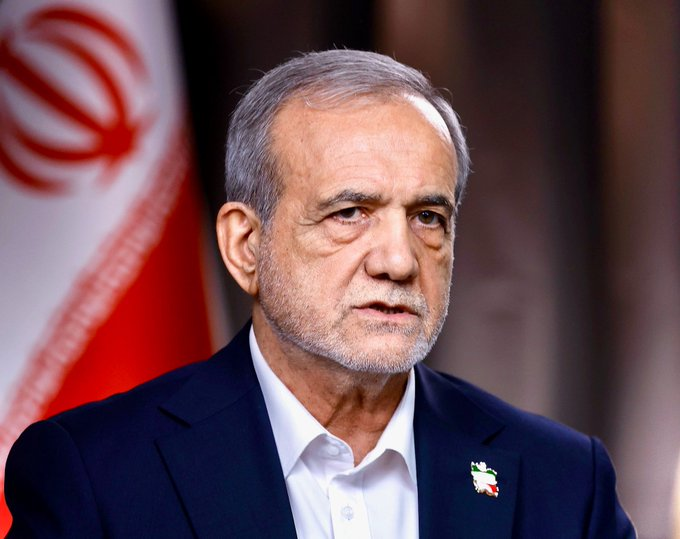
TEHRAN — Iranian President Masoud Pezeshkian has delivered a firm and unambiguous message to the United States: if Washington wants to negotiate, it must first “remove operational obstacles, including the blockade,” before any new round of talks can begin .
The President made the remarks during a telephone conversation with Pakistani Prime Minister Shehbaz Sharif on Saturday night, according to a statement released by the Iranian president’s office on Sunday .
‘No Talks Under Pressure, Threats, or Blockade’
President Pezeshkian emphasized that Iran will not be coerced into negotiations through military or economic pressure . The Iranian leader pointed to what he described as a fundamental contradiction in Washington’s approach — simultaneously sending signals of a willingness to engage in dialogue while continuing to enforce a naval blockade and hostile actions against the Islamic Republic .
“The contradiction between America’s signals of a will to negotiate and its continued reinforcement of the blockade and hostile actions has deepened the level of mistrust among the Iranian people and officials toward the United States.”
— President Masoud Pezeshkian
Pezeshkian stressed that “Iran will not enter imposed negotiations under pressure, threats, or blockade,” adding that as long as “hostile actions and pressures of the US do not stop, rebuilding trust and progress in the path of dialogue would remain difficult” .
The ‘Operational Obstacles’ Defined
According to Pezeshkian’s statement, the primary obstacles preventing a return to the negotiating table are not diplomatic but operational in nature. These include:
| Obstacle | Iran’s Position |
|---|---|
| Naval blockade | The ongoing US blockade of Iranian ports, imposed since April 13, remains the central sticking point |
| Military pressure | Continued US military posture, including three aircraft carriers in the region |
| Hostile actions | Recent incidents such as the US firing on an Iranian-flagged cargo vessel, which Iran has condemned as “armed piracy” |
The President told Prime Minister Sharif that Washington must first “remove obstacles” to “provide a platform for resolving issues” . He reiterated that Iran is only seeking to defend its legal rights within the framework of international law and has made no demands beyond that framework .
Iran’s Call for Islamic Nations to Pressure Washington
In his conversation with the Pakistani prime minister, Pezeshkian requested that Pakistan and other Islamic countries use their political influence to “lead the United States toward a responsible framework for dialogue” .
He expressed appreciation for the intensive consultations undertaken by Pakistan, Turkey, Qatar, and Saudi Arabia, and highly praised the ongoing mediation efforts of Pakistan’s Army Chief, General Asim Munir .
Pakistan’s Response: ‘Reasonable, Balanced, and Pragmatic’
Prime Minister Shehbaz Sharif, who has been actively engaged in mediation efforts between Tehran and Washington, reportedly received Iran’s message with understanding. According to the Iranian president’s office, Sharif strongly condemned the “acts of aggression” against Iran and described Pezeshkian’s views as “reasonable, balanced, and pragmatic” .
“The Prime Minister emphasized that Pakistan will make every effort to help achieve a dignified and lasting outcome and will not seek arrangements that compromise Iran’s national dignity.”
— Iranian President’s Office statement
Sharif assured Pezeshkian that “the message has been received” and that Islamabad would “carefully convey” Tehran’s conditions to the United States and other relevant parties .
The Diplomatic Context: Talks Stalled
Pezeshkian’s statement comes at a critical juncture in the eight-week-long conflict. Following the first round of peace talks in Islamabad on April 11 and 12 — which ended without an agreement — the United States announced it was extending the ceasefire but simultaneously maintained and intensified the naval blockade .
Washington had planned to dispatch a delegation led by special envoys Steve Witkoff and Jared Kushner to Pakistan for a second round of indirect talks. However, President Donald Trump canceled that trip, citing that Iran’s “understanding document” was “wholly insufficient” .
According to reports, Trump said after canceling the envoys’ trip: “We have all the cards. They can call us anytime they want” . Shortly after, however, Trump revealed that Tehran had submitted a revised proposal “within ten minutes” — though he described it as still insufficient .
Iran’s Red Lines Remain Firm
The Iranian position has been consistent throughout the diplomatic process:
| Iranian Demand | Status |
|---|---|
| Lifting of naval blockade | Non-negotiable precondition |
| End to “excessive” US demands | Rejected as unreasonable |
| No negotiations under threat | Firm red line |
Iran’s Parliament Speaker Mohammad Bagher Ghalibaf, who has led Iran’s side in the talks, had earlier indicated that while some progress had been made, the two sides remained “still far apart” on nuclear issues and the status of the Strait of Hormuz .
Foreign Minister Abbas Araghchi, speaking after his visit to Islamabad, wrote on X: “Shared Iran’s position concerning a workable framework to permanently end the war. Have yet to see if the U.S. is truly serious about diplomacy” .
US Naval Blockade: A ‘Collective Punishment’
Since April 13, the United States has enforced a naval blockade on Iranian ports, with US Central Command reporting that 34 ships have been blocked on their way to or from Iranian ports .
Iran has consistently rejected the legality of the blockade. The head of Iran’s judiciary, Gholam-Hossein Eje’i, stated over the weekend: “The Americans should know they do not have the ability to impose a naval blockade on Iran” .
Tehran views the blockade as “collective punishment” and has declared the strategic Strait of Hormuz closed to all traffic in retaliation until the blockade is lifted .
What Comes Next
President Pezeshkian’s statement leaves little room for ambiguity: without a lifting of the naval blockade, Iran will not return to the negotiating table. The message to Washington — delivered through Pakistani intermediaries — is that operational actions must precede diplomatic progress.
Diplomatic observers note several potential scenarios:
| Scenario | Likelihood | Outlook |
|---|---|---|
| US lifts blockade | Low | Would enable immediate talks |
| Ceasefire extension continues | Moderate | Stalemate persists |
| Military escalation | Elevated | Talks collapse; conflict resumes |
The coming days will determine whether Washington is willing to take the step Tehran has demanded — removing the blockade — or whether the fragile ceasefire, now under severe strain, will ultimately give way to renewed hostilities.
Frequently Asked Questions (FAQs)
Q1: What exactly did President Pezeshkian say?
Pezeshkian stated that the US must “remove operational obstacles, including the blockade” before any negotiations can take place. He emphasized that Iran will not negotiate “under pressure, threats, or blockade” .
Q2. When did Pezeshkian make these remarks?
The remarks were made during a telephone conversation with Pakistani Prime Minister Shehbaz Sharif on Saturday night, April 25, 2026. The statement was released by the Iranian president’s office on Sunday, April 26 .
Q3. Why is Iran demanding the blockade be lifted?
Iran views the US naval blockade as “collective punishment” and a violation of international law. Tehran argues that it is impossible to build trust or make diplomatic progress while hostile military actions continue .
Q4: Is Iran completely refusing to negotiate?
Iran has stated it will not engage in “imposed negotiations” but remains open to talks if the blockade is lifted and conditions change. The position is conditional, not an outright refusal .
Q5: What role is Pakistan playing?
Pakistan has been serving as the primary intermediary between Tehran and Washington. Prime Minister Shehbaz Sharif and Army Chief General Asim Munir have been actively engaged in mediation efforts, shuttling messages between the two sides .
Q6: Have there been any successful negotiations recently?
The first round of peace talks was held in Islamabad on April 11-12 but ended without an agreement. A second round was planned but canceled by President Trump after he deemed Iran’s proposal insufficient .
Q7: Is the ceasefire still holding?
The ceasefire declared by President Trump on April 7 was extended once but remains under severe strain. Both sides continue to maintain military positions, and the naval blockade remains in effect .
Q8. What does Iran want beyond lifting the blockade?
Beyond the blockade’s removal, Iran seeks an end to what it calls “excessive demands” and a framework that respects Iranian sovereignty. Tehran has stated it is only seeking to defend its legal rights within international law .
Key Takeaways for Reflecto News Readers
| Aspect | Summary |
|---|---|
| President’s demand | US must remove naval blockade before negotiations |
| Iran’s position | No talks under “pressure, threats, or blockade” |
| US blockade status | Imposed April 13; 34 ships reportedly blocked |
| Iran’s counter-action | Strait of Hormuz closed to all traffic |
| Pakistan’s role | Mediating between Tehran and Washington |
| Talks status | Stalled; second round canceled by Trump |
| Ceasefire status | Extended but under severe strain |
| Next steps | Unclear; conditions remain unmet |
Sources and Further Reading
Reflecto News has compiled this report from verified sources including the Iranian President’s Office statement, Sohu News, Times of India, Arab Times Kuwait, Ynetnews, Lokmat Times, China Network, Saudi Gazette, and other international news outlets. All information is accurate as of publication.
Follow Reflecto News for continuous updates on Iran-US diplomacy, mediation efforts, and all breaking news from around the world.
This article is the intellectual property of Reflecto News. Redistribution without attribution is prohibited. For syndication or media inquiries, please contact the editorial team.
Questions people ask
What is China's current share of global manufacturing?
China now accounts for twenty eight percent of global manufacturing. This industrial output exceeds the combined manufacturing production of the United States, Japan, and Germany, making China the leading global industrial power according to recent reports.
Why were Andrew Tate and Tristan Tate arrested in Miami?
Andrew Tate and his brother Tristan Tate were taken into custody in Miami by the United States Marshals Service. They face thirty eight new charges in the United Kingdom, including rape and child pornography offences, and prosecutors are seeking their extradition.
What warning did Moscow issue about oil prices?
Kirill Dmitriev, the Chief Executive of the Russian Direct Investment Fund, warned that a tsunami of skyrocketing oil prices is approaching. Moscow describes this potential energy shock as a major threat to global markets.
What political shift is projected for Benjamin Netanyahu's coalition?
Political polls project that Prime Minister Benjamin Netanyahu's coalition is on track to lose its majority in the upcoming October election. This projection indicates a potential political shift in Jerusalem.
Why did a Russian military aircraft land in Tehran?
A Russian airborne command aircraft, widely known as a doomsday plane, landed in Tehran. The arrival of the aircraft represents a high stakes show of support from Russia for Iran during a period of heightened regional tensions.
What did President Masoud Pezeshkian claim about the United States and Israel?
Iranian President Masoud Pezeshkian claimed that the United States and Israel failed in a forty eight hour plan to topple the Iranian government. He made these statements during a televised address marking two years since his inauguration.