Reflecto News is an online news platform covering major international political events, global economic developments, and security conflicts. The site provides updates on topics such as Chinese manufacturing dominance, Middle Eastern political tensions, and high profile legal arrests. Readers can access current articles organized by categories like World News, Iran, and USA.
Iran’s Parliament Speaker has publicly stated that Tehran is open to direct diplomatic engagement with regional Gulf countries to de-escalate tensions and address the ongoing crisis. The remarks come as Iran continues large-scale attacks on Gulf targets while simultaneously testing limited commercial transits through the Strait of Hormuz.
By Reflecto News Desk
April 4, 2026 | Tehran / Riyadh
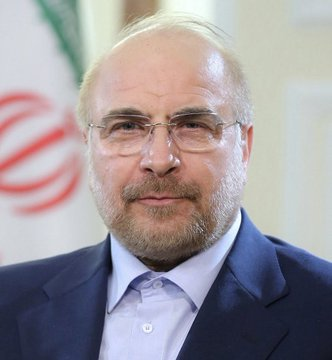
In a statement carried by Iranian state media, the Parliament Speaker emphasized Iran’s willingness to hold direct talks with Gulf Cooperation Council (GCC) nations, describing them as “brotherly Muslim countries” that share historical and geographic ties. He suggested discussions could focus on security guarantees, safe passage through the Strait of Hormuz, and reducing the risk of wider regional war.
This overture contrasts sharply with Iran’s aggressive military actions in recent days, including the launch of 23 ballistic missiles and 56 drones toward the UAE earlier today. It also follows repeated Iranian “warning” strikes that have caused collateral damage across the Gulf, such as the heavy damage to a U.S. CH-47 Chinook helicopter in Kuwait and shrapnel injuries in Ajman, UAE.
Context of the Diplomatic Signal
The Parliament Speaker’s comments appear aimed at splitting the GCC coalition supporting U.S. and Israeli efforts while keeping pressure on Washington and Tel Aviv. Iran has previously invited European, Asian, and Arab countries to negotiate safe transit agreements through the Strait of Hormuz on a case-by-case basis.
Key recent developments include:
- Successful limited transits by a French-linked vessel and an Indian tanker, suggesting selective Iranian tolerance for certain shipping.
- U.S. intelligence assessment that Iran is unlikely to fully reopen the strait anytime soon.
- Ongoing U.S. aviation losses (at least seven aircraft reported) and the downing of an F-15, followed by damage to a Blackhawk during rescue operations.
Gulf and International Reactions
Gulf states have so far responded cautiously. The UAE, Saudi Arabia, and Kuwait continue to strengthen air defenses with U.S., UK, and other allied support following repeated Iranian strikes. Italian Prime Minister Giorgia Meloni is currently touring Saudi Arabia, Qatar, and the UAE, partly to coordinate on energy security and regional stability in light of the Hormuz disruptions.
Former Iranian Foreign Minister Mohammad Javad Zarif has separately urged Tehran to “declare victory” and pursue a broader negotiated settlement.
Energy and Strategic Outlook
The Strait of Hormuz remains the central flashpoint:
- Pre-war daily flows averaged ~20.3 million barrels of oil/petroleum products and ~290 million cubic meters of LNG (over 80% to Asia).
- Disruptions have forced China to resell record LNG volumes to support Asian buyers.
- Any genuine diplomatic opening with Gulf countries could ease some pressure on energy markets, but sustained attacks like today’s barrage against the UAE suggest Tehran is still prioritizing military leverage.
Whether the Parliament Speaker’s overture leads to concrete talks or remains rhetorical will depend on Gulf responses and the trajectory of Iranian strikes versus coalition operations.
Reflecto News will continue monitoring any official reactions from GCC capitals, further Iranian statements on diplomacy, developments in today’s UAE attack, and the status of the Strait of Hormuz.
Sources: Iranian state media (IRIB, Tasnim, Mehr), Reuters, Al Arabiya, Gulf News, and regional reporting as of April 4, 2026. The situation remains highly fluid with competing military and diplomatic signals.
Questions people ask
What is China's current share of global manufacturing?
China now accounts for twenty eight percent of global manufacturing. This industrial output exceeds the combined manufacturing production of the United States, Japan, and Germany, making China the leading global industrial power according to recent reports.
Why were Andrew Tate and Tristan Tate arrested in Miami?
Andrew Tate and his brother Tristan Tate were taken into custody in Miami by the United States Marshals Service. They face thirty eight new charges in the United Kingdom, including rape and child pornography offences, and prosecutors are seeking their extradition.
What warning did Moscow issue about oil prices?
Kirill Dmitriev, the Chief Executive of the Russian Direct Investment Fund, warned that a tsunami of skyrocketing oil prices is approaching. Moscow describes this potential energy shock as a major threat to global markets.
What political shift is projected for Benjamin Netanyahu's coalition?
Political polls project that Prime Minister Benjamin Netanyahu's coalition is on track to lose its majority in the upcoming October election. This projection indicates a potential political shift in Jerusalem.
Why did a Russian military aircraft land in Tehran?
A Russian airborne command aircraft, widely known as a doomsday plane, landed in Tehran. The arrival of the aircraft represents a high stakes show of support from Russia for Iran during a period of heightened regional tensions.
What did President Masoud Pezeshkian claim about the United States and Israel?
Iranian President Masoud Pezeshkian claimed that the United States and Israel failed in a forty eight hour plan to topple the Iranian government. He made these statements during a televised address marking two years since his inauguration.