Reflecto News is an online news platform covering major international political events, global economic developments, and security conflicts. The site provides updates on topics such as Chinese manufacturing dominance, Middle Eastern political tensions, and high profile legal arrests. Readers can access current articles organized by categories like World News, Iran, and USA.
Reflecto News
April 15, 2026
Iran has escalated its rhetoric against the ongoing U.S. naval blockade in the Strait of Hormuz, with a military spokesperson warning that Tehran will disrupt shipping in the Red Sea — specifically through the Bab al-Mandeb Strait — if the U.S. maintains its restrictions on Iranian ports and coastal areas.
The threat, reported by Iranian state-linked media and relayed internationally, explicitly links any continued U.S. enforcement in the Persian Gulf to potential retaliation via Iran’s allies in Yemen (the Houthis), who have previously attacked shipping in the Red Sea. Officials described the response as “symmetric,” stating that “no port in the region will be safe” if Iranian security is threatened.
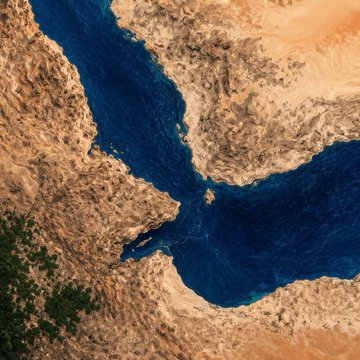
The Bab al-Mandeb Strait (often called the “Gate of Tears”) serves as a critical chokepoint for Red Sea shipping, connecting the Indian Ocean to the Suez Canal and serving as an alternative route for some Gulf oil exports.
Iran’s Warning in Context
Iranian military spokespeople, including those from the Islamic Revolutionary Guard Corps (IRGC) and the Ministry of Defense, have repeatedly stated that security in the Persian Gulf and Gulf of Oman is “either for everyone or for no one.” The latest comments extend this logic to the Red Sea, suggesting that U.S. actions in Hormuz could prompt Iran to direct or support Houthi operations against vessels in the Bab al-Mandeb area.
This escalation follows:
- The U.S. imposition of a naval blockade on Iranian ports and associated shipping after the collapse of recent peace talks.
- President Trump’s statements noting China’s lack of response to the blockade.
- Earlier Iranian threats to cut off regional oil and gas supplies “for years” if civilian infrastructure is targeted.
Saudi Arabia has reportedly urged the U.S. to lift or ease the Hormuz blockade, fearing Iranian retaliation could extend to Bab al-Mandeb — a route vital for Saudi oil exports bypassing the strait.
Strategic Implications
The Red Sea route, already disrupted by Houthi attacks in 2023–2025, remains highly sensitive. Any renewed campaign there would force more shipping around the Cape of Good Hope, increasing costs, insurance premiums, and delivery times for global trade, while further pressuring energy markets already strained by Hormuz restrictions.
U.S. officials have described Iran’s actions in Hormuz as “economic terrorism” and vowed to enforce the blockade firmly, while warning that any Iranian vessels approaching U.S. forces would be “eliminated.”
Global Energy and Economic Risks
Analysts warn that simultaneous disruptions in both the Strait of Hormuz (≈20% of global seaborne oil trade) and Bab al-Mandeb could trigger a severe energy crisis, with oil prices potentially surging well beyond current levels and contributing to broader inflation and supply chain issues.
Russia has already cautioned that the world is heading toward a major energy and economic crisis, while China has urged de-escalation and offered mediation.
Reflecto News will continue monitoring for any official U.S. or Iranian responses, Houthi activity in the Red Sea, oil market movements, and developments around the fragile ceasefire.
Frequently Asked Questions (FAQs)
What did Iran’s military spokesperson say?
The spokesperson warned that if the U.S. blockade of the Strait of Hormuz and Iranian ports continues, Iran will disrupt shipping in the Red Sea (via Bab al-Mandeb), stating that “no port in the region will be safe.”
Is this a direct threat to close Bab al-Mandeb?
It is framed as a potential symmetric response, likely involving Houthi allies, rather than an immediate closure announcement. Iran has previously signaled it views Bab al-Mandeb similarly to Hormuz.
How serious is the Red Sea threat?
The Bab al-Mandeb Strait is a vital chokepoint for Red Sea traffic heading to the Suez Canal. Renewed Houthi-style attacks could reroute global shipping, raise costs dramatically, and affect European and Asian energy imports.
What is the current status of the U.S. blockade?
The U.S. reports the blockade is fully implemented with no major breaches so far, though some limited traffic continues. President Trump has noted China’s lack of response to the measure.
How does this affect global energy markets?
Combined pressure on Hormuz and potential Red Sea disruptions risks sharp oil price spikes, higher inflation, and supply shortages, exacerbating the energy crisis already highlighted by Russia and others.
For the latest on the Iran conflict, Strait of Hormuz developments, Red Sea shipping risks, and diplomatic responses, stay with Reflecto News.
Questions people ask
What is China's current share of global manufacturing?
China now accounts for twenty eight percent of global manufacturing. This industrial output exceeds the combined manufacturing production of the United States, Japan, and Germany, making China the leading global industrial power according to recent reports.
Why were Andrew Tate and Tristan Tate arrested in Miami?
Andrew Tate and his brother Tristan Tate were taken into custody in Miami by the United States Marshals Service. They face thirty eight new charges in the United Kingdom, including rape and child pornography offences, and prosecutors are seeking their extradition.
What warning did Moscow issue about oil prices?
Kirill Dmitriev, the Chief Executive of the Russian Direct Investment Fund, warned that a tsunami of skyrocketing oil prices is approaching. Moscow describes this potential energy shock as a major threat to global markets.
What political shift is projected for Benjamin Netanyahu's coalition?
Political polls project that Prime Minister Benjamin Netanyahu's coalition is on track to lose its majority in the upcoming October election. This projection indicates a potential political shift in Jerusalem.
Why did a Russian military aircraft land in Tehran?
A Russian airborne command aircraft, widely known as a doomsday plane, landed in Tehran. The arrival of the aircraft represents a high stakes show of support from Russia for Iran during a period of heightened regional tensions.
What did President Masoud Pezeshkian claim about the United States and Israel?
Iranian President Masoud Pezeshkian claimed that the United States and Israel failed in a forty eight hour plan to topple the Iranian government. He made these statements during a televised address marking two years since his inauguration.