Reflecto News is an online news platform covering major international political events, global economic developments, and security conflicts. The site provides updates on topics such as Chinese manufacturing dominance, Middle Eastern political tensions, and high profile legal arrests. Readers can access current articles organized by categories like World News, Iran, and USA.
Reflecto News
April 15, 2026
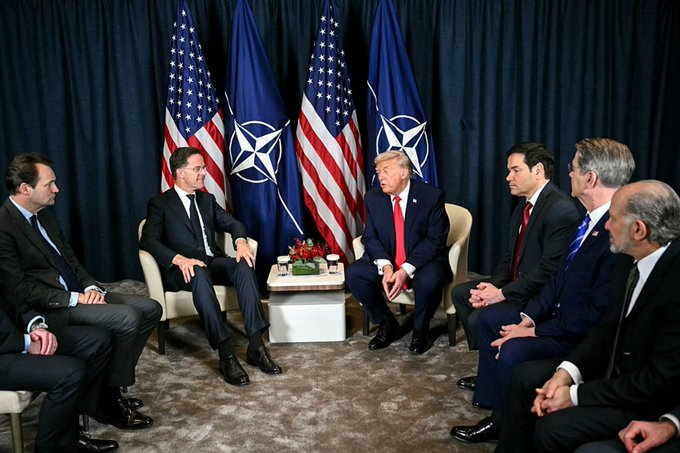
European officials are quietly advancing a fallback contingency plan to make NATO significantly more European-led in case President Donald Trump substantially reduces U.S. support or withdraws American forces from the continent. Some insiders informally refer to the effort as building a “European NATO” — a stronger European pillar within the existing alliance that would allow the continent to maintain credible collective defense even with diminished transatlantic backing.
The Wall Street Journal first reported the accelerated planning, noting that the initiative has gained new momentum after securing buy-in from Germany, which had long resisted ideas of greater European defense autonomy. The goal is not to replace NATO but to reduce reliance on U.S. command structures, logistics, intelligence, and certain high-end capabilities by placing more Europeans in senior command-and-control roles and supplementing or replacing American assets with European ones.
Discussions on strengthening Europe’s role within NATO have intensified amid tensions over the Iran conflict and broader transatlantic strains.
Key Elements of the Backup Plan
According to officials involved, the contingency work includes:
- Shifting more senior leadership and operational command positions to European officers.
- Accelerating joint European procurement and defense industrial cooperation to fill potential capability gaps.
- Enhancing collective defense spending and rapid development of assets in areas where Europe currently depends heavily on the U.S. (such as strategic airlift, certain munitions, and intelligence sharing).
The planning is described as pragmatic rather than confrontational. European leaders stress that the ideal outcome remains a strong U.S. commitment to NATO, but they are preparing for scenarios where American involvement decreases — whether through troop repositioning, reduced logistical support, or other adjustments.
This development is linked to recent frictions, including Trump administration considerations of punishing NATO allies perceived as unhelpful during U.S. operations related to the Iran conflict, as well as broader debates over burden-sharing and the future of extended deterrence.
Drivers and Timing
Concerns have grown following President Trump’s public criticisms of European allies, threats to reconsider U.S. commitments, and discussions within his administration about repositioning troops from countries seen as less supportive. While a full U.S. withdrawal from NATO would require congressional approval and faces legal hurdles, partial reductions in presence or support remain a realistic possibility in European eyes.
The planning reflects longer-term trends: European NATO members have significantly increased defense spending in recent years, yet gaps persist in high-end capabilities and strategic autonomy. The current Iran-related tensions and uncertainty over long-term U.S. policy have added urgency.
Challenges Ahead
Creating a more self-sufficient European defense framework faces substantial obstacles, including:
- Fragmented national militaries and differing threat perceptions.
- Lingering dependence on U.S. nuclear extended deterrence and advanced intelligence.
- Political and industrial coordination difficulties across 30+ European allies.
Nevertheless, officials view the effort as essential insurance against a potential “deterrence gap” if U.S. reliability wavers.
Broader Context
This contingency work occurs alongside ongoing global challenges, including the Iran conflict and its spillover effects on energy security and regional stability. It also coincides with discussions about strengthening the “European pillar” inside NATO — a concept long debated but now receiving more concrete attention.
NATO itself continues to emphasize unity, with Secretary General Mark Rutte and others highlighting the alliance’s enduring value while acknowledging the need for Europeans to assume greater responsibility.
Reflecto News will follow developments in European defense cooperation, any formal NATO statements, and reactions from Washington as these plans evolve.
Frequently Asked Questions (FAQs)
What is the “European NATO” plan?
It is an informal term for European contingency planning to strengthen the European component within NATO. The focus is on increasing European leadership in command roles, reducing reliance on U.S. assets, and building greater self-sufficiency in defense capabilities — all while keeping the alliance intact.
Why is Europe preparing this now?
Concerns over potential U.S. reductions in support under President Trump, including troop repositioning or limited involvement in future crises, have accelerated the work. Recent tensions related to the Iran conflict have heightened these worries.
Does this mean Europe wants to end NATO?
No. Officials repeatedly stress that the plan aims to bolster NATO’s resilience by creating a stronger European pillar, not to replace or dissolve the alliance. The U.S. role remains valued when present.
How realistic is greater European autonomy?
It faces real challenges — capability gaps, coordination issues, and dependence on U.S. nuclear and intelligence assets — but rising defense budgets and joint initiatives are gradually addressing them. Germany’s support is seen as a significant shift.
What impact could reduced U.S. support have on European security?
It could create short-term vulnerabilities, particularly against threats like Russia, but Europe’s increased spending and planning aim to mitigate long-term risks and maintain credible deterrence.
For the latest on NATO, transatlantic relations, European defense initiatives, and global security developments, stay with Reflecto News.
Questions people ask
What is China's current share of global manufacturing?
China now accounts for twenty eight percent of global manufacturing. This industrial output exceeds the combined manufacturing production of the United States, Japan, and Germany, making China the leading global industrial power according to recent reports.
Why were Andrew Tate and Tristan Tate arrested in Miami?
Andrew Tate and his brother Tristan Tate were taken into custody in Miami by the United States Marshals Service. They face thirty eight new charges in the United Kingdom, including rape and child pornography offences, and prosecutors are seeking their extradition.
What warning did Moscow issue about oil prices?
Kirill Dmitriev, the Chief Executive of the Russian Direct Investment Fund, warned that a tsunami of skyrocketing oil prices is approaching. Moscow describes this potential energy shock as a major threat to global markets.
What political shift is projected for Benjamin Netanyahu's coalition?
Political polls project that Prime Minister Benjamin Netanyahu's coalition is on track to lose its majority in the upcoming October election. This projection indicates a potential political shift in Jerusalem.
Why did a Russian military aircraft land in Tehran?
A Russian airborne command aircraft, widely known as a doomsday plane, landed in Tehran. The arrival of the aircraft represents a high stakes show of support from Russia for Iran during a period of heightened regional tensions.
What did President Masoud Pezeshkian claim about the United States and Israel?
Iranian President Masoud Pezeshkian claimed that the United States and Israel failed in a forty eight hour plan to topple the Iranian government. He made these statements during a televised address marking two years since his inauguration.