Reflecto News is an online news platform covering major international political events, global economic developments, and security conflicts. The site provides updates on topics such as Chinese manufacturing dominance, Middle Eastern political tensions, and high profile legal arrests. Readers can access current articles organized by categories like World News, Iran, and USA.
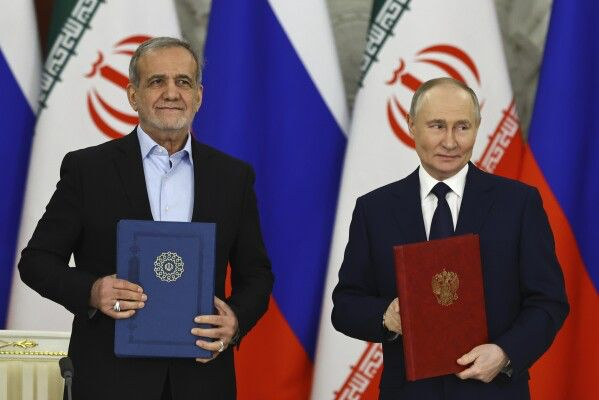
Reflecto News – Iran’s Ambassador to Russia Kazem Jalali has pushed back against claims that Moscow provided military or intelligence assistance to Tehran during the recent hostilities with the United States and Israel, insisting that any existing agreements with Russia were signed long before the conflict began.
In interviews with Russian media, including Vedomosti, and cited by Al Jazeera and other outlets, Jalali described reports of Russian support as “not true” and emphasized that pre-existing contracts are unrelated to the war. He also confirmed that Iran has implemented a new security setup in the Strait of Hormuz aimed at ensuring safe passage for commercial shipping while maintaining control over the vital waterway.
Jalali’s Key Statements
- On Russian Support: “As for intelligence data, this is not true… We had certain contracts developed in advance with our Russian colleagues. Contracts that were signed long before this war are in no way connected with this war.”
- On the Strait of Hormuz: Iran has rolled out new security measures and a “legal regime” to guarantee safe passage. “Iran ensures safety of passage. Based on the security measures and the legal regime of the Strait of Hormuz, ships and vessels can pass through.”
- Broader Context: Jalali asserted that U.S. and Israeli attacks failed to achieve their objectives (initially regime change, later narrowed to opening the strait) and that Iran emerged more united. He reiterated Tehran’s commitment to peace while defending its right to protect national interests.
The comments come as the fragile U.S.-Iran ceasefire faces its April 21 expiration, with ongoing disputes over the U.S. naval blockade on Iranian ports and repeated fluctuations in Hormuz traffic.
New Security Setup in the Strait of Hormuz
Jalali’s confirmation of a “new regime” aligns with recent Iranian announcements of stricter management of the strait, including coordinated routes and measures to counter perceived threats. While Iran has declared the waterway open for commercial vessels (excluding those linked to adversaries), shipping data shows continued volatility, with some vessels turned away or facing restrictions. The new setup appears designed to assert Iranian jurisdiction while preventing full disruption to global oil flows.
This messaging suggests Tehran is balancing de-escalation signals — to keep energy markets stable — with firm assertions of control and sovereignty.
Diplomatic and Strategic Implications
- Iran-Russia Ties: The denial helps manage perceptions of deeper military alignment while preserving the longstanding strategic partnership.
- Hormuz Stability: By emphasizing safe passage under a new framework, Iran aims to reassure global markets amid low prediction-market odds (e.g., Polymarket’s 26% chance of full normalization by end of April) and recent closure announcements tied to the U.S. blockade.
- Ceasefire Outlook: With no confirmed plans for the next round of U.S.-Iran talks (as stated by Foreign Ministry spokesman Esmail Baghaei) and mutual accusations of violations, the new Hormuz measures add another layer of complexity to mediated efforts involving Pakistan, Egypt, and Türkiye.
Analysts interpret the remarks as an attempt by Tehran to cool escalation rhetoric while protecting its leverage in the critical energy chokepoint that handles a substantial portion of global seaborne oil trade.
This remains a fast-evolving situation with direct effects on energy security, shipping insurance, and broader Middle East diplomacy.
FAQs
Q1: What did Kazem Jalali say about Russian support?
Jalali denied that Russia provided military or intelligence assistance during the recent conflict, stating that any agreements with Moscow were pre-existing contracts signed long before the war.
Q2: What is the new security setup in the Strait of Hormuz?
Iran has implemented new security measures and a legal regime to ensure safe passage for commercial shipping while asserting control. Jalali stated that ships can pass based on these measures, though restrictions apply to vessels linked to adversaries.
Q3: Why is Iran emphasizing safe passage now?
The comments appear aimed at reassuring global markets and reducing escalation risks while the U.S. naval blockade on Iranian ports continues and the ceasefire deadline of April 21 approaches.
Q4: Does this contradict earlier Iranian statements on the strait?
Iran has alternated between declaring the strait open for commercial traffic and imposing restrictions tied to the U.S. blockade. The new setup seeks to formalize management under Iranian terms.
Q5: How does this affect U.S.-Iran talks?
It adds to the complex backdrop, with Iran rejecting deadlines, denying uranium transfer talks, and maintaining leverage via the strait amid stalled momentum for new negotiations.
Q6: What is the current status of Hormuz traffic?
Traffic remains volatile, with recent announcements of closures or restrictions linked to the blockade, despite declarations of openness for non-adversarial vessels.
Q7: Where can I follow verified updates?
Stay with Reflecto News for balanced coverage of Iran-Russia relations, Strait of Hormuz developments, and U.S.-Iran diplomacy based on statements from all parties.
This is a developing story. Reflecto News will provide updates as reactions emerge from Moscow, Washington, or Tehran, or as shipping data and diplomatic efforts evolve.
Reflecto News delivers accurate, timely reporting on Middle East geopolitics, energy security, and international diplomacy. For more on the Strait of Hormuz situation, Iran-Russia ties, and the fragile ceasefire, explore our dedicated sections. Share your respectful comments below.
Questions people ask
What is China's current share of global manufacturing?
China now accounts for twenty eight percent of global manufacturing. This industrial output exceeds the combined manufacturing production of the United States, Japan, and Germany, making China the leading global industrial power according to recent reports.
Why were Andrew Tate and Tristan Tate arrested in Miami?
Andrew Tate and his brother Tristan Tate were taken into custody in Miami by the United States Marshals Service. They face thirty eight new charges in the United Kingdom, including rape and child pornography offences, and prosecutors are seeking their extradition.
What warning did Moscow issue about oil prices?
Kirill Dmitriev, the Chief Executive of the Russian Direct Investment Fund, warned that a tsunami of skyrocketing oil prices is approaching. Moscow describes this potential energy shock as a major threat to global markets.
What political shift is projected for Benjamin Netanyahu's coalition?
Political polls project that Prime Minister Benjamin Netanyahu's coalition is on track to lose its majority in the upcoming October election. This projection indicates a potential political shift in Jerusalem.
Why did a Russian military aircraft land in Tehran?
A Russian airborne command aircraft, widely known as a doomsday plane, landed in Tehran. The arrival of the aircraft represents a high stakes show of support from Russia for Iran during a period of heightened regional tensions.
What did President Masoud Pezeshkian claim about the United States and Israel?
Iranian President Masoud Pezeshkian claimed that the United States and Israel failed in a forty eight hour plan to topple the Iranian government. He made these statements during a televised address marking two years since his inauguration.