Reflecto News is an online news platform covering major international political events, global economic developments, and security conflicts. The site provides updates on topics such as Chinese manufacturing dominance, Middle Eastern political tensions, and high profile legal arrests. Readers can access current articles organized by categories like World News, Iran, and USA.
By Reflecto News Desk
April 6, 2026
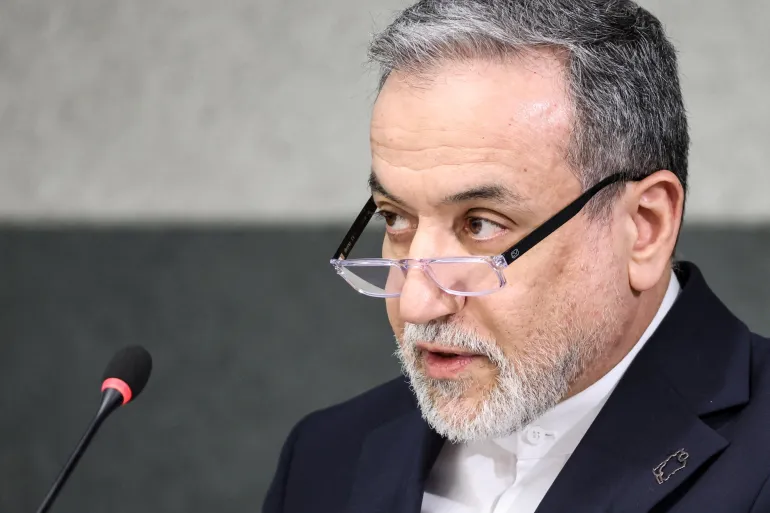
In a dramatic escalation of accusations amid the ongoing Iran conflict, Iran’s Foreign Ministry has alleged that a recent US operation to rescue a downed American airman was potentially a deception to steal enriched uranium from Iranian facilities. The claim, made by Foreign Ministry spokesperson Esmaeil Baghaei during a weekly press briefing, has added a new layer of tension to the already volatile situation involving the United States, Israel, and Iran.
Baghaei highlighted “many questions and uncertainties” surrounding the mission, pointing to discrepancies in reported locations. He stated that the possibility this was a “deception operation to steal enriched uranium” should not be ignored.
This accusation comes just days after reports of a US rescue effort following the downing of a US Air Force F-15E Strike Eagle fighter jet, with Israeli assistance reportedly involved in aspects of the operation.
US Air Force F-15E Strike Eagle, the type of aircraft reportedly involved in the incident.
What Happened: Details of the US Pilot Rescue Operation
According to available reports, an American F-15E fighter jet was shot down by Iranian air defenses, leading to a complex US search-and-rescue mission deep inside Iranian territory. One airman was successfully rescued, though he was described as seriously wounded by US officials. The operation reportedly involved commandos and multiple aircraft, including Black Hawk helicopters that came under fire from Iranian forces.
Iranian sources claimed several “enemy aircraft” were destroyed during the engagement, while the US side described a high-risk mission that nearly went off course. President Donald Trump has publicly commented on the successful rescue of the wounded airman.
The incident is believed to have occurred in or near areas linked to Iran’s nuclear infrastructure, particularly around Isfahan province, which hosts key facilities associated with uranium enrichment activities. Baghaei noted the significant distance between the reported location of the downed pilot (in Kohgiluyeh and Boyer-Ahmad Province) and the areas where US forces reportedly deployed, raising suspicions in Tehran.
Map illustrating recent attack locations and provinces in Iran, including central and southern regions near Isfahan and Kohgiluyeh and Boyer-Ahmad.
Iran’s Accusation: A “Deception Operation” Linked to Nuclear Sites
Iranian officials, including Baghaei, suggested the rescue mission may have served as cover for a covert attempt to seize stockpiles of enriched uranium. Iran maintains a significant inventory of enriched uranium, produced at facilities such as those in Natanz and Fordow, with some material reportedly stored or processed in the Isfahan area.
The spokesperson described the operation as potentially a “failed” effort reminiscent of past incidents, with some Iranian media dubbing it “Tabas II” — a reference to the failed 1980 US hostage rescue mission in Iran. No concrete evidence of uranium theft has been presented by either side, and US officials have not publicly addressed the specific accusation.
Rows of advanced IR-6 centrifuges used in Iran’s uranium enrichment program.
Interior view of an Iranian uranium enrichment facility with cascades of centrifuges.
Background: Iran’s Nuclear Program and Enriched Uranium Stockpiles
Iran’s nuclear program has long been a flashpoint in international relations. The country enriches uranium using centrifuge technology, claiming it is for peaceful civilian energy and medical purposes. However, Western intelligence agencies and the International Atomic Energy Agency (IAEA) have raised concerns over the level of enrichment (approaching or exceeding 60% in some cases) and the growing stockpile, which could be further processed toward weapons-grade material (over 90%).
Facilities in Isfahan are known for uranium conversion and other nuclear-related activities, making the region strategically sensitive. Any disruption or alleged attempt to access these sites would represent a major escalation in efforts to curb Iran’s nuclear ambitions.
Iran insists on its right to enrich uranium and has repeatedly rejected demands for “zero enrichment.”
Broader Context: Escalating Conflict with US and Israel
This latest claim emerges against a backdrop of intense military actions. Just today, Israel struck Iran’s largest petrochemical facility at Asaluyeh in the South Pars complex, halting operations at a site critical to Iran’s economy and energy exports. These strikes are part of a wider campaign targeting Iranian infrastructure.
The US-Iran tensions have included direct engagements, with reports of Iranian arrests of individuals allegedly linked to US and Israeli intelligence. Diplomatic efforts, including ceasefire proposals tied to reopening the Strait of Hormuz, remain stalled, with Iran rejecting interim deals.
Israeli Prime Minister Benjamin Netanyahu has referenced Israeli assistance in the pilot rescue operation, further intertwining the actions of the two allies.
Iranian Foreign Minister Abbas Araghchi (file image). The ministry’s spokesperson Esmaeil Baghaei delivered the recent accusations.
Implications: Nuclear Security, Regional Stability, and Global Concerns
If proven, an attempt to seize enriched uranium would mark an unprecedented covert operation with severe consequences for nuclear non-proliferation. Even as an unverified accusation, it heightens fears of miscalculation in an already volatile theater.
Analysts warn that such claims could justify further Iranian retaliation or hardening of positions in any future nuclear negotiations. The involvement of advanced US special operations forces deep in Iran also underscores the risks both sides are willing to take.
For the global energy market and nuclear watchdog community, developments around Iran’s uranium stockpiles remain critical. Any loss or relocation of material could complicate IAEA monitoring and verification efforts.
What’s Next?
US officials have not yet issued a detailed rebuttal to the Iranian claims. The situation remains fluid, with potential for further statements from Washington, Tehran, or Jerusalem.
Reflecto News will continue monitoring this rapidly evolving story, including any updates on the second airman (if still missing), damage assessments from related operations, diplomatic responses, and impacts on nuclear talks or ceasefire proposals.
Stay tuned to Reflecto News for verified, timely coverage of the Middle East conflict, nuclear developments, and international security issues. Bookmark our page and follow our dedicated Iran-Israel-US conflict section for the latest accurate reporting.
Questions people ask
What is China's current share of global manufacturing?
China now accounts for twenty eight percent of global manufacturing. This industrial output exceeds the combined manufacturing production of the United States, Japan, and Germany, making China the leading global industrial power according to recent reports.
Why were Andrew Tate and Tristan Tate arrested in Miami?
Andrew Tate and his brother Tristan Tate were taken into custody in Miami by the United States Marshals Service. They face thirty eight new charges in the United Kingdom, including rape and child pornography offences, and prosecutors are seeking their extradition.
What warning did Moscow issue about oil prices?
Kirill Dmitriev, the Chief Executive of the Russian Direct Investment Fund, warned that a tsunami of skyrocketing oil prices is approaching. Moscow describes this potential energy shock as a major threat to global markets.
What political shift is projected for Benjamin Netanyahu's coalition?
Political polls project that Prime Minister Benjamin Netanyahu's coalition is on track to lose its majority in the upcoming October election. This projection indicates a potential political shift in Jerusalem.
Why did a Russian military aircraft land in Tehran?
A Russian airborne command aircraft, widely known as a doomsday plane, landed in Tehran. The arrival of the aircraft represents a high stakes show of support from Russia for Iran during a period of heightened regional tensions.
What did President Masoud Pezeshkian claim about the United States and Israel?
Iranian President Masoud Pezeshkian claimed that the United States and Israel failed in a forty eight hour plan to topple the Iranian government. He made these statements during a televised address marking two years since his inauguration.