By Reflecto News Staff
April 5, 2026
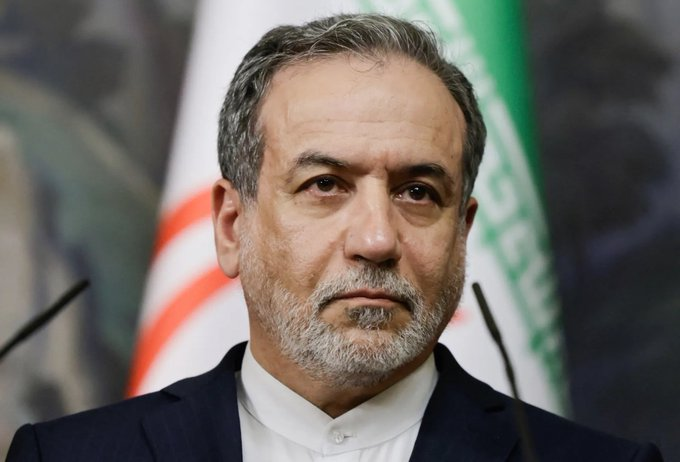
Lahore, Pakistan – Iranian Foreign Minister Seyed Abbas Araghchi has issued a strong warning that repeated U.S.-Israeli strikes on Iran’s nuclear facilities, particularly the Bushehr Nuclear Power Plant, risk exposing the entire Persian Gulf region to radioactive contamination with severe human and environmental consequences.
In a formal letter to UN Secretary-General Antonio Guterres and members of the Security Council, as well as in public statements shared on social media, Araghchi condemned the attacks as a “blatant violation” of international norms and IAEA safeguards. He stated that the proximity of strikes to active nuclear sites creates an “intolerable situation” that could lead to a radiological release.
Araghchi specifically highlighted that any radioactive fallout from Bushehr — Iran’s only operational nuclear power plant, located on the Persian Gulf coast — would primarily threaten Gulf Cooperation Council (GCC) capitals rather than Tehran, due to the plant’s coastal position and prevailing winds/currents. He drew parallels to Western outrage over potential risks at Ukraine’s Zaporizhzhia plant, accusing the international community of applying double standards.
“Radioactive fallout will end life in GCC capitals, not Tehran,” Araghchi stated in one post, while emphasizing in the UN letter that the attacks “expose the entire region to a serious risk of radioactive contamination with serious human and environmental consequences.”
This marks the fourth reported strike on or near Bushehr since the war began in late February 2026. A recent projectile hit an auxiliary building, killing one security personnel member. The International Atomic Energy Agency (IAEA) confirmed no immediate increase in radiation levels or damage to the main reactor but expressed “deep concern” and called for maximum restraint.
Satellite view of Iran’s Bushehr Nuclear Power Plant on the Persian Gulf coast. (Representative image)
Broader Context in the Escalating Iran War
Araghchi’s warning comes amid sustained military pressure:
- Fresh U.S. and Israeli strikes have triggered massive explosions in northern Tehran, Isfahan, and other areas, with the U.S. reportedly drawing heavily on its JASSM-ER stealth cruise missile stockpiles (only ~425 remain from a pre-war total of ~2,300 after expending over 1,000 in the first month).
- President Donald Trump issued a 48-hour ultimatum demanding Iran reach a deal or fully reopen the Strait of Hormuz, backed strongly by Senator Lindsey Graham who warned of a “massive military operation” if Iran chooses poorly.
- Iran has rejected temporary ceasefire proposals and maintains selective restrictions on Hormuz traffic (with recent exemptions for Iraq and other friendly nations).
- Russia condemned the Bushehr strike as an “evil deed” and began evacuating non-essential personnel from the Russian-assisted facility.
- Hezbollah continues rocket attacks on northern Israel, including damage to civilian sites.
Iran’s Khatam al-Anbiya headquarters maintains that core military capabilities remain largely intact despite weeks of bombing.
Reactions and Risks
- IAEA: Director General Rafael Grossi stressed that nuclear power plants and surrounding safety systems must never be targeted.
- Gulf States: The warnings raise alarms in GCC capitals over potential contamination of air, water, and desalination plants that supply much of the region’s drinking water.
- Russia: Strongly opposed the strikes, highlighting risks to its technicians and the plant’s operations.
Analysts note that while no radiation leak has been confirmed, repeated proximity strikes increase the danger of accidental escalation into a radiological incident with transboundary effects.
The latest statement from Araghchi underscores Tehran’s strategy of highlighting regional risks to deter further attacks and appeal for international intervention, even as diplomatic efforts for a ceasefire remain stalled.
Reflecto News is closely monitoring any IAEA updates on radiation monitoring, developments around Trump’s ultimatum, and responses from Gulf states or the UN. The situation at Bushehr and across Iran’s nuclear sites remains a critical flashpoint in the conflict.
This is a rapidly developing story. Updates will follow as more details emerge from Tehran, New York, and international monitors.