Reflecto News is an online news platform covering major international political events, global economic developments, and security conflicts. The site provides updates on topics such as Chinese manufacturing dominance, Middle Eastern political tensions, and high profile legal arrests. Readers can access current articles organized by categories like World News, Iran, and USA.
Reflecto News – April 8, 2026
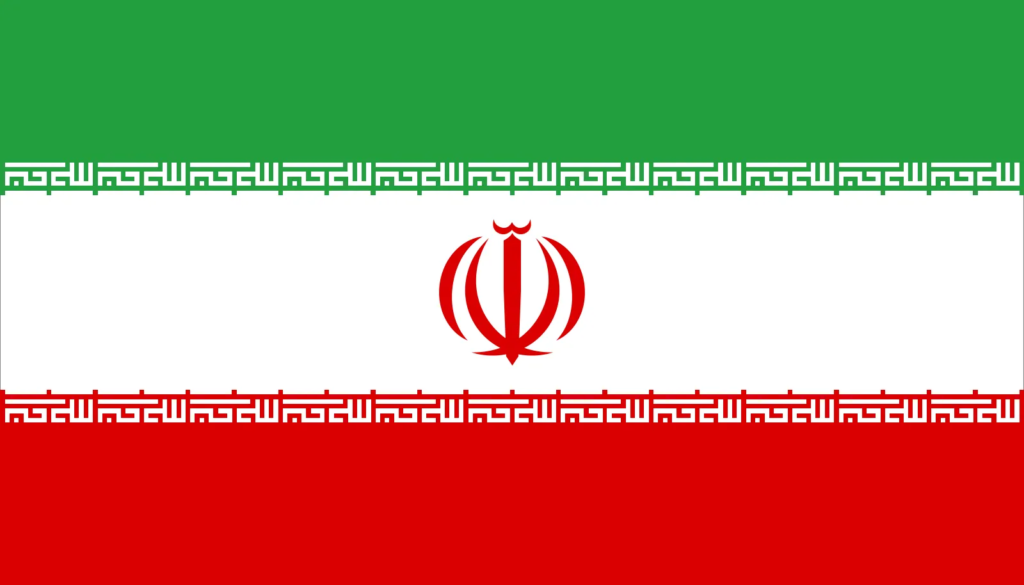

Iran has issued a sharp ultimatum, warning that it will withdraw from the fragile two-week ceasefire agreement with the United States if Israeli military operations against Hezbollah in Lebanon do not cease immediately. The statement, reported by Iran’s semi-official Tasnim news agency and echoed by the Islamic Revolutionary Guard Corps (IRGC), comes just hours after President Donald Trump confirmed that Lebanon is explicitly excluded from the U.S.-Iran truce.
Iranian officials described continued Israeli strikes as a “grave violation” and a “brutal massacre,” vowing a “regretful response” to the “evil aggressors” if the aggressions against Lebanon are not halted. The IRGC condemned Israel’s actions in Beirut and stated that failure to stop the attacks would have repercussions for the entire ceasefire framework.
Details of Iran’s Warning
According to Tasnim, an unnamed Iranian source indicated that Tehran could exit the agreement entirely if Israeli strikes persist. The IRGC added that it would “deliver a regretful response” unless the operations against “beloved Lebanon” end at once. Hezbollah lawmakers have similarly accused Israel of violating the spirit of the ceasefire and warned of broader consequences.
This escalation in rhetoric follows today’s large-scale Israeli strikes on Hezbollah infrastructure in Beirut’s southern suburbs and other areas — described by the IDF as one of the heaviest and most coordinated operations in the current phase of the conflict. Dramatic footage from Beirut shows thick smoke rising over densely populated neighborhoods, with reports of civilian casualties, damaged buildings, and overwhelmed hospitals.
Conflicting Interpretations of the Ceasefire
The two-week ceasefire, announced late on April 7 after intense Pakistani mediation, was intended to pause major U.S.-Iran hostilities and allow limited reopening of the Strait of Hormuz. However, deep disagreements have emerged:
- President Trump and Israeli Prime Minister Benjamin Netanyahu have both stated clearly that the agreement does not cover Lebanon or operations against Hezbollah.
- Pakistan and some Iranian statements initially suggested a broader regional pause, including Lebanon.
- Israel maintains it will continue ground and air operations to degrade Hezbollah’s capabilities and secure its northern border.
Hezbollah has paused some rocket fire in apparent deference to the truce but has accused Israel of massacres and vowed not to accept a return to the pre-war status quo.
Upcoming Diplomacy and Strait of Hormuz Developments
Despite the tensions, Iran has signaled it could begin a limited, military-controlled reopening of the Strait of Hormuz as early as Thursday or Friday (April 9–10). Direct U.S.-Iran talks are still scheduled to start Friday in Islamabad, Pakistan, where deeper issues — including enriched uranium stockpiles, sanctions relief, and security guarantees — are expected to be discussed.
U.S. Secretary of War Pete Hegseth has continued to press demands, reiterating that Iran must hand over its uranium “voluntarily” or the U.S. will “take it,” while describing Iran’s new Supreme Leader Mojtaba Khamenei as “wounded and disfigured.”
Humanitarian and Economic Impact
The intensified strikes in Lebanon have worsened an already severe humanitarian crisis, with over 1.1 million people displaced and hospitals reporting urgent needs for blood supplies and medical aid. Civilian areas near Hezbollah strongholds have been heavily affected.
On the energy front, any collapse of the ceasefire could delay the anticipated limited reopening of the Strait of Hormuz, prolonging disruptions that have already damaged Qatar’s Ras Laffan LNG complex (17% capacity loss for 3–5 years) and contributed to projected global LNG shortfalls of up to 35 million tons in 2026.
Broader Regional Reactions
- United States: The Trump administration maintains the ceasefire is holding on the Iran front but has backed Israel’s right to defend itself in Lebanon.
- Israel: Continues operations, stating the truce with Iran does not constrain actions against Hezbollah.
- Europe and Vatican: Calls for restraint have intensified, with figures like Italy’s Defense Minister Guido Crosetto warning of regional “madness” and Pope Leo XIV urging protection of civilians.
- Exiled Opposition: Crown Prince Reza Pahlavi has continued appeals to Iran’s armed forces amid the uncertainty.
The coming 24–48 hours will be critical in determining whether the ceasefire holds or unravels, particularly as shipping coordination for the Strait of Hormuz begins and talks in Pakistan approach.
FAQs on Iran’s Threat and the Fragile Ceasefire
Q1: Will Iran actually withdraw from the ceasefire?
Iran has threatened to do so if Israeli strikes on Lebanon continue, but no formal withdrawal has been announced yet. The situation remains fluid.
Q2: Does the two-week ceasefire include Lebanon?
No. President Trump and Israel have confirmed it does not cover operations against Hezbollah. Pakistan’s interpretation differed, contributing to the current confusion.
Q3: What is the status of the Strait of Hormuz?
Iran still plans a limited, military-controlled reopening on Thursday or Friday, but continued tensions could affect implementation and verification.
Q4: When do U.S.-Iran talks begin?
Direct negotiations are scheduled for Friday, April 10, in Islamabad, Pakistan.
Q5: How are global LNG markets affected?
Short-term relief is possible if Hormuz shipping resumes, but any breakdown in the truce risks prolonging supply shortages and price volatility caused by damage to Qatari facilities.
Q6: What is the humanitarian situation in Lebanon?
Strikes have caused civilian casualties, infrastructure damage, and massive displacement. Hospitals are overwhelmed, and international calls for de-escalation are growing.
Reflecto News will continue monitoring any formal Iranian response, Israeli statements, progress on the Strait of Hormuz, and developments ahead of the Islamabad talks.
Stay informed with Reflecto News – Your source for accurate, timely coverage of the multi-front Middle East crisis, ceasefire developments, and their global implications.
Questions people ask
What is China's current share of global manufacturing?
China now accounts for twenty eight percent of global manufacturing. This industrial output exceeds the combined manufacturing production of the United States, Japan, and Germany, making China the leading global industrial power according to recent reports.
Why were Andrew Tate and Tristan Tate arrested in Miami?
Andrew Tate and his brother Tristan Tate were taken into custody in Miami by the United States Marshals Service. They face thirty eight new charges in the United Kingdom, including rape and child pornography offences, and prosecutors are seeking their extradition.
What warning did Moscow issue about oil prices?
Kirill Dmitriev, the Chief Executive of the Russian Direct Investment Fund, warned that a tsunami of skyrocketing oil prices is approaching. Moscow describes this potential energy shock as a major threat to global markets.
What political shift is projected for Benjamin Netanyahu's coalition?
Political polls project that Prime Minister Benjamin Netanyahu's coalition is on track to lose its majority in the upcoming October election. This projection indicates a potential political shift in Jerusalem.
Why did a Russian military aircraft land in Tehran?
A Russian airborne command aircraft, widely known as a doomsday plane, landed in Tehran. The arrival of the aircraft represents a high stakes show of support from Russia for Iran during a period of heightened regional tensions.
What did President Masoud Pezeshkian claim about the United States and Israel?
Iranian President Masoud Pezeshkian claimed that the United States and Israel failed in a forty eight hour plan to topple the Iranian government. He made these statements during a televised address marking two years since his inauguration.