Reflecto News is an online news platform covering major international political events, global economic developments, and security conflicts. The site provides updates on topics such as Chinese manufacturing dominance, Middle Eastern political tensions, and high profile legal arrests. Readers can access current articles organized by categories like World News, Iran, and USA.
Tehran Signals Second Major Chokepoint Could Be Targeted as Retaliation if US Strikes Iranian Infrastructure — 12% of World Trade at Risk
By Reflecto News Staff
April 6, 2026
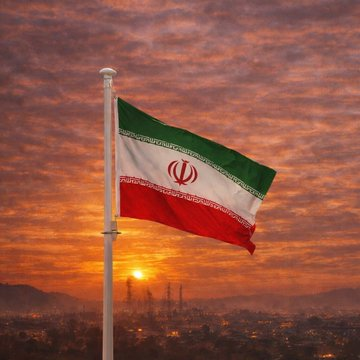
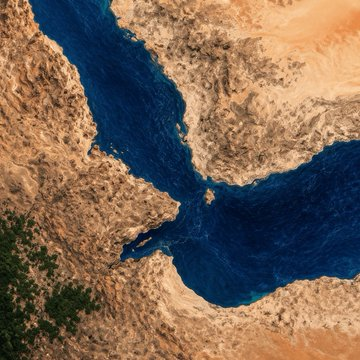
Iran has escalated its warnings amid the ongoing Strait of Hormuz crisis, threatening to disrupt or close the Bab el-Mandeb Strait — a vital chokepoint linking the Red Sea and the Gulf of Aden — if the United States repeats what it calls “stupid mistakes,” such as attacking Iranian infrastructure.
Senior Iranian official Ali Akbar Velayati, a former foreign minister and adviser to Supreme Leader Ali Khamenei, delivered the stark message: “If the White House thinks of repeating its stupid mistakes, it will quickly realize that the flow of global energy and trade can be disrupted with a single signal.”
The threat comes as President Donald Trump maintains his Tuesday, April 7, 8:00 PM ET deadline for Iran to reopen the Strait of Hormuz or face US strikes on power plants and bridges. Iran’s Foreign Ministry has already vowed reciprocal attacks on American or affiliated targets in response to any such aggression.
What Is the Bab el-Mandeb Strait?
The Bab el-Mandeb (or Bab al-Mandab) Strait is a narrow waterway, approximately 18 miles (29 km) wide at its narrowest point, separating the Arabian Peninsula (Yemen) from the Horn of Africa (Djibouti and Eritrea). It connects the Red Sea to the Gulf of Aden and serves as the southern gateway to the Suez Canal.
It is one of the world’s most critical maritime chokepoints. According to the US Energy Information Administration (EIA), in recent years it has handled roughly 4–9 million barrels per day of crude oil and petroleum products, accounting for about 12% of global seaborne oil trade at peak levels. It also carries significant volumes of other goods, including LNG, wheat, rice, and fertilizers.
Disruption here would force vessels to reroute around the Cape of Good Hope, adding thousands of nautical miles, weeks of travel time, and massive additional costs to global shipping.
Link to Iran’s “Axis of Resistance” and the Houthis
Iran does not directly control the strait but wields significant influence through its Houthi allies in Yemen. The Iran-backed Houthis have previously attacked shipping in the Red Sea and Bab el-Mandeb with drones, missiles, and small boats, demonstrating the ability to disrupt traffic. Iranian officials have hinted that further escalation could involve these proxy forces, effectively turning the strait into another pressure point alongside the closed or restricted Strait of Hormuz.
Why This Threat Matters Now
- Compounding the Hormuz Crisis: With the Strait of Hormuz already severely restricted (handling ~20% of global oil), a second closure would create a dual-chokepoint crisis unprecedented in modern times.
- Global Trade Impact: Together, the two straits handle a huge share of energy flows to Europe, Asia, and beyond. Analysts warn of severe supply shocks, skyrocketing oil prices (already climbing toward or beyond $100–$150 per barrel according to some forecasts), and ripple effects on inflation, manufacturing, and food security.
- Retaliation Context: The warning follows Trump’s infrastructure strike threats and Iran’s vow to hit US or affiliated targets. It signals Tehran’s strategy of asymmetric escalation — using maritime denial to offset conventional military disadvantages.
Broader Regional and Economic Risks
Any sustained disruption in Bab el-Mandeb would hit Europe particularly hard (via the Suez route) and further strain Asian importers already affected by Hormuz issues. Shipping companies have already begun avoiding the area or paying high insurance premiums.
Gulf states, the US, and international naval coalitions (such as previous Red Sea protection missions) would likely respond with heightened patrols, but experts note that fully securing the narrow strait against determined attacks is extremely difficult.
Current Standoff
Iran continues to link reopening Hormuz to demands for war compensation, sovereignty guarantees, and an end to US-Israeli aggression. Diplomatic channels, including possible Oman mediation, remain active but show little public progress as deadlines loom.
President Trump has mixed ultimatums with claims of ongoing talks, while Iranian leaders, including Parliament Speaker Mohammad Bagher Ghalibaf, have repeatedly warned of wider regional “burning” if escalation continues.
What Lies Ahead
As the Tuesday evening deadline approaches, the possibility of a second major shipping disruption adds immense pressure to already volatile energy markets and raises the specter of a broader maritime conflict involving multiple chokepoints.
A single “signal” — whether direct Iranian action or via proxies — could transform localized tensions into a global economic shock.
Reflecto News will continue to monitor this rapidly evolving situation, including any official responses from Washington, Tehran, or Yemen, oil market reactions, and maritime developments in the Red Sea and Persian Gulf.
This story is developing.
Sources include statements by Ali Akbar Velayati and other Iranian officials, US Energy Information Administration data, reports from Hindustan Times, The Wall Street Journal, France 24, Reuters, and international outlets.
Questions people ask
What is China's current share of global manufacturing?
China now accounts for twenty eight percent of global manufacturing. This industrial output exceeds the combined manufacturing production of the United States, Japan, and Germany, making China the leading global industrial power according to recent reports.
Why were Andrew Tate and Tristan Tate arrested in Miami?
Andrew Tate and his brother Tristan Tate were taken into custody in Miami by the United States Marshals Service. They face thirty eight new charges in the United Kingdom, including rape and child pornography offences, and prosecutors are seeking their extradition.
What warning did Moscow issue about oil prices?
Kirill Dmitriev, the Chief Executive of the Russian Direct Investment Fund, warned that a tsunami of skyrocketing oil prices is approaching. Moscow describes this potential energy shock as a major threat to global markets.
What political shift is projected for Benjamin Netanyahu's coalition?
Political polls project that Prime Minister Benjamin Netanyahu's coalition is on track to lose its majority in the upcoming October election. This projection indicates a potential political shift in Jerusalem.
Why did a Russian military aircraft land in Tehran?
A Russian airborne command aircraft, widely known as a doomsday plane, landed in Tehran. The arrival of the aircraft represents a high stakes show of support from Russia for Iran during a period of heightened regional tensions.
What did President Masoud Pezeshkian claim about the United States and Israel?
Iranian President Masoud Pezeshkian claimed that the United States and Israel failed in a forty eight hour plan to topple the Iranian government. He made these statements during a televised address marking two years since his inauguration.