Reflecto News is an online news platform covering major international political events, global economic developments, and security conflicts. The site provides updates on topics such as Chinese manufacturing dominance, Middle Eastern political tensions, and high profile legal arrests. Readers can access current articles organized by categories like World News, Iran, and USA.
As the U.S.-Israeli military campaign against Iran enters its fifth week, a senior Iranian military command has issued a defiant statement asserting that Washington and Tel Aviv lack complete intelligence on Tehran’s military assets and that key production facilities remain beyond the reach of enemy strikes.
By Reflecto News Desk
April 2, 2026 | Tehran / Washington
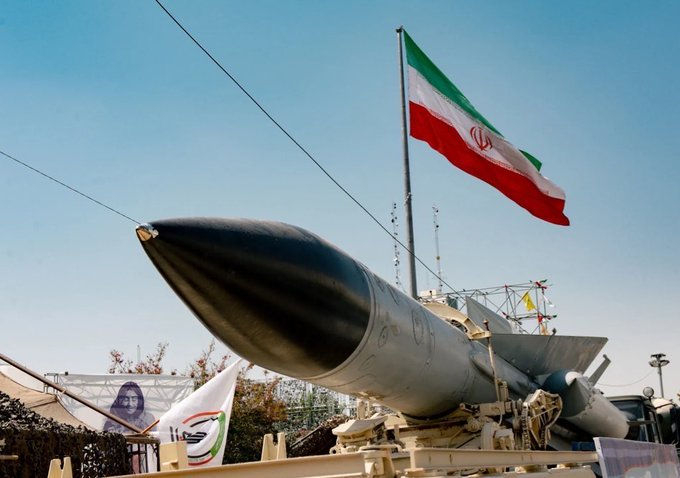
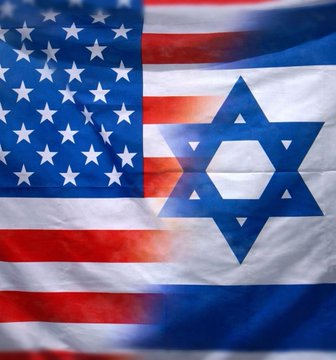
The statement, released through the Khatam-al Anbiya military command headquarters and carried by Tasnim News Agency, directly challenges U.S. and Israeli claims of having significantly degraded Iran’s missile, drone, and air defense capabilities. It comes hours after President Donald Trump stated that core strategic objectives are “nearing completion” and suggested the operation could conclude in “two to three weeks.”
“Your information about our military power and equipment is incomplete. You know nothing about our vast and strategic capabilities,” the spokesman declared. “Do not hope that you have destroyed our strategic missile production centers, long-range offensive and pinpoint drones, modern air defense and electronic warfare systems, and special equipment.”
The statement further emphasized: “Our military production takes place in places that you will never be able to reach.”
Context Within the Ongoing Conflict
The war, which began with surprise U.S.-Israeli strikes on February 28, 2026, has seen hundreds of airstrikes targeting Iranian missile production sites, launch bases, air defenses, command centers, and leadership figures. U.S. and Israeli officials have reported damage to over 20 missile bases, multiple underground facilities, and key production infrastructure.
However, Iranian officials have repeatedly claimed resilience, pointing to continued missile and drone launches against Israel, U.S. assets, and regional targets. Recent Iranian rhetoric has included warnings of “bigger, wider, and more damaging” attacks and threats against U.S.-linked economic and tech infrastructure in the Middle East.
This latest declaration aligns with a pattern of statements from IRGC-linked spokespersons, including figures like Ebrahim Zolfaghari and Ali Mohammad Naeini, who have highlighted unused missile and drone stockpiles and production continuing even under wartime conditions.
Claims of Underground and Inaccessible Production
Iran has long invested in deeply buried and dispersed military infrastructure, including underground missile factories, tunnel networks, and hardened bunkers. Analysts note that facilities such as those associated with the IRGC Aerospace Force have been designed to survive aerial bombardment.
While U.S. and Israeli strikes have hit known sites — including tunnel entrances and bunkers at bases like Imam Javad near Shiraz — Iranian officials insist that critical production lines operate from locations that remain undetected or unreachable with current conventional munitions. Strikes on engineering officers linked to underground projects suggest coalition forces are actively targeting this hidden infrastructure.
Contrasting Assessments
- U.S./Israeli Position: President Trump and military briefings describe substantial degradation of Iran’s conventional capabilities, including ballistic missiles, navy, and air defenses. Officials claim progress toward preventing Iran from acquiring a nuclear weapon and reducing its ability to threaten the region.
- U.S. Intelligence View: Recent assessments, including those reported by NBC and Reuters, find no signs of regime collapse. The Islamic Revolutionary Guard Corps (IRGC) remains largely intact and in control, though overall military power projection is degraded.
- Iranian Position: Tehran rejects ceasefire overtures (including a reported U.S. 15-point plan) and portrays the conflict as a strategic failure for its adversaries, vowing to continue until “definitive surrender” of enemies.
Broader Impacts: Energy Markets and Regional Stability
The prolonged conflict continues to disrupt the Strait of Hormuz, severely limiting oil and LNG flows. Qatar’s LNG production remains curtailed, driving Asian spot prices higher. China has capitalized on the situation by reselling record volumes of LNG (1.31 million metric tons year-to-date) to scrambling buyers in South Korea, Japan, India, Thailand, and the Philippines.
Meanwhile, global attention is split: NASA’s Artemis II mission successfully launched on April 1, 2026, marking humanity’s return to deep space beyond low-Earth orbit for the first time in over 50 years.
Outlook
Whether Iran’s claims of vast untouched capabilities reflect genuine strategic depth or psychological warfare remains uncertain. Coalition forces continue strikes on defense industrial sites, while Iran maintains its posture of defiance and retaliation.
Analysts warn that a protracted conflict could lead to further escalation, including hybrid attacks, proxy involvement, or expanded targeting of economic assets. Backchannel diplomacy appears limited, with both sides showing little appetite for immediate de-escalation on the other’s terms.
Reflecto News will continue monitoring statements from Iranian military commands, U.S. intelligence updates, battlefield developments, and the ripple effects on global energy markets and space exploration.
Sources: Tasnim News Agency, Al Jazeera, CBS News, Reuters, U.S. intelligence assessments, and open-source reporting as of April 2, 2026. Information from active conflict zones is fluid and subject to verification.
Questions people ask
What is China's current share of global manufacturing?
China now accounts for twenty eight percent of global manufacturing. This industrial output exceeds the combined manufacturing production of the United States, Japan, and Germany, making China the leading global industrial power according to recent reports.
Why were Andrew Tate and Tristan Tate arrested in Miami?
Andrew Tate and his brother Tristan Tate were taken into custody in Miami by the United States Marshals Service. They face thirty eight new charges in the United Kingdom, including rape and child pornography offences, and prosecutors are seeking their extradition.
What warning did Moscow issue about oil prices?
Kirill Dmitriev, the Chief Executive of the Russian Direct Investment Fund, warned that a tsunami of skyrocketing oil prices is approaching. Moscow describes this potential energy shock as a major threat to global markets.
What political shift is projected for Benjamin Netanyahu's coalition?
Political polls project that Prime Minister Benjamin Netanyahu's coalition is on track to lose its majority in the upcoming October election. This projection indicates a potential political shift in Jerusalem.
Why did a Russian military aircraft land in Tehran?
A Russian airborne command aircraft, widely known as a doomsday plane, landed in Tehran. The arrival of the aircraft represents a high stakes show of support from Russia for Iran during a period of heightened regional tensions.
What did President Masoud Pezeshkian claim about the United States and Israel?
Iranian President Masoud Pezeshkian claimed that the United States and Israel failed in a forty eight hour plan to topple the Iranian government. He made these statements during a televised address marking two years since his inauguration.