By Reflecto News Staff
April 18, 2026
Iran has broadcast a stern warning via state media and maritime radio channels, declaring that any vessel attempting to transit the Strait of Hormuz without explicit permission “will be met with a severe response from the IRGC navy and will be destroyed.” The statement, attributed to the Islamic Revolutionary Guard Corps (IRGC) Navy, reinforces Tehran’s assertion of control over the strategic waterway amid ongoing U.S. naval operations and a partial blockade of Iranian ports.
This latest escalation follows days of conflicting signals on the strait’s status, gunfire incidents involving merchant vessels (including Indian-flagged ships), and direct confrontations between Iranian forces and U.S. warships.
Map of the Strait of Hormuz, the narrow chokepoint linking the Persian Gulf to the Gulf of Oman and handling roughly 20% of global oil trade.
Details of the Iranian Threat
According to reports and maritime security sources, the broadcast message explicitly warned commercial and other vessels:
“Any vessel trying to travel into the sea… will be targeted and destroyed… If any vessel tries to transit without our permission, [they] will be destroyed.”
The IRGC Navy has repeatedly emphasized that it maintains full authority over the strait and that transit is only permitted for non-military vessels that coordinate in advance and follow Iranian regulations. Iranian officials have described the measures as a response to what they call ongoing U.S. “piracy,” “maritime theft,” and the blockade of Iranian ports.
The threat was aired on state television and shared through official channels, echoing earlier statements from senior figures including First Vice President Mohammad Reza Aref, who asserted that “control of the Strait of Hormuz is in our hands.”
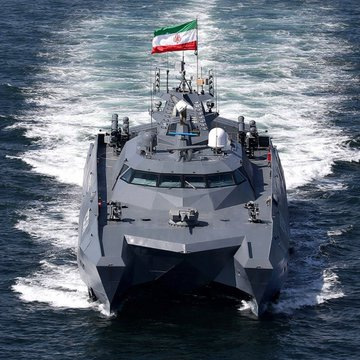
Iranian IRGC Navy fast-attack craft and larger vessels patrolling the Persian Gulf region. Iran’s strategy relies heavily on swarms of small, agile boats, coastal missiles, and asymmetric tactics in confined waters.
Context: Heightened Tensions and Recent Incidents
The warning comes as:
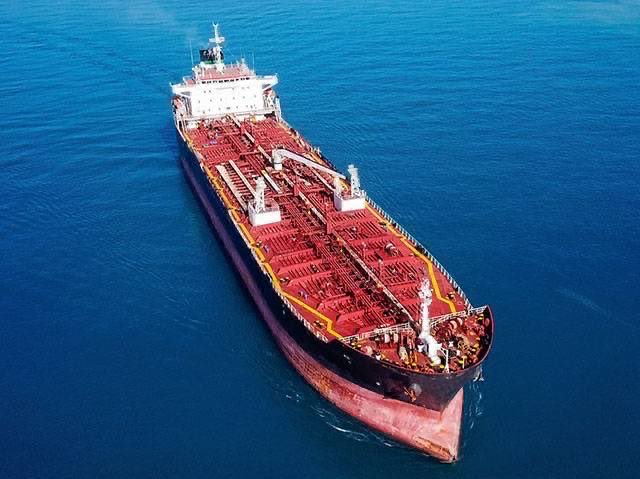
- The U.S. prepares to expand operations by boarding and potentially seizing Iran-linked oil tankers and “dark fleet” vessels in international waters (per WSJ reporting).
- Reports emerged of gunfire on merchant ships, including Indian-flagged vessels, prompting India to summon Iran’s ambassador.
- Iranian Supreme Leader Mojtaba Khamenei stated that Iran’s navy stands ready to inflict “new bitter defeats” on the U.S. and Israel.
- Conflicting claims persist over whether the strait is open to commercial traffic; Iran has alternated between declaring it closed or under strict control and signaling limited openings.
Iran has denied successful transits by U.S. military vessels and accused Washington of violating ceasefire understandings. Tehran maintains that it will defend its “legal rights” in the waterway, either through negotiation or force.
Iran’s Supreme Leader Mojtaba Khamenei, whose recent naval warnings have been amplified by statements from the IRGC and senior officials.
Strategic Importance and Risks
The Strait of Hormuz remains one of the world’s most critical maritime chokepoints. Any sustained disruption or heightened threat of destruction against transiting ships could:
- Drive up global oil prices and shipping insurance premiums.
- Disrupt energy supplies for major importers including India, China, Japan, and Europe.
- Escalate the risk of direct naval confrontation between Iran and the U.S. or its allies.
While Iran has historically avoided a full closure of the strait (which would also harm its own oil exports), it frequently employs threats, targeted restrictions, and asymmetric tactics as leverage.
Reflecto News will continue monitoring the situation in the Strait of Hormuz, any further incidents involving merchant or naval vessels, diplomatic responses from the U.S., India, and other nations, and potential impacts on global energy markets.
Frequently Asked Questions (FAQs)
What exactly did Iran threaten?
Iran broadcast that any ship attempting to cross the Strait of Hormuz without permission “will be met with a severe response from the IRGC navy and will be destroyed.”
Who issued the threat?
The statement is attributed to the Islamic Revolutionary Guard Corps (IRGC) Navy, which claims operational control over the strait.
Does this mean the strait is closed?
Iran has imposed strict controls and requires prior coordination. Transit remains highly restricted and risky, with conflicting reports on whether commercial shipping is fully permitted.
How does this relate to recent events?
It follows gunfire on merchant vessels (including Indian-flagged ships), U.S. preparations to board Iran-linked tankers globally, and warnings from Iranian leaders including Supreme Leader Mojtaba Khamenei.
What is the IRGC Navy’s role?
The IRGC Navy specializes in asymmetric warfare using swarms of fast-attack boats, coastal missiles, mines, and drones — tactics well-suited to operations in the confined waters of the Strait of Hormuz.
What are the potential consequences?
Increased risk to commercial shipping, higher oil prices, elevated insurance costs, and the possibility of broader naval escalation in the region.
For the latest updates on maritime security in the Strait of Hormuz, U.S.-Iran tensions, and developments in the Persian Gulf, stay tuned to Reflecto News.
All information is based on Iranian state media broadcasts, maritime security reports, and corroborated international coverage as of April 18, 2026.