Reflecto News is an online news platform covering major international political events, global economic developments, and security conflicts. The site provides updates on topics such as Chinese manufacturing dominance, Middle Eastern political tensions, and high profile legal arrests. Readers can access current articles organized by categories like World News, Iran, and USA.
Published on Reflecto News | World News | Defense & Geopolitics
The United States Central Command (CENTCOM) has issued a formal warning that any vessels violating the newly imposed naval blockade of Iranian ports will be intercepted, diverted, and subject to capture. The announcement, which takes effect Monday at 10 a.m. Eastern Time, represents a significant escalation in US pressure on Tehran following the collapse of weekend peace talks in Islamabad .
“Vessels entering or departing the blockaded area without authorization will be subject to interception, diversion, and capture.” — U.S. Central Command Statement
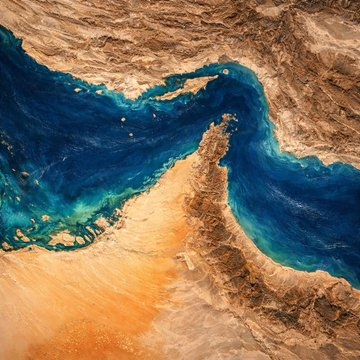
CENTCOM clarified that the blockade will be enforced “impartially against vessels of all nations entering or departing Iranian ports and coastal areas, including all Iranian ports on the Arabian Gulf and Gulf of Oman” . However, the command emphasized that it “will not impede freedom of navigation for vessels transiting the Strait of Hormuz to and from non-Iranian ports” .
The Blockade Rules: Interception, Diversion, Capture
President Donald Trump ordered the blockade on Sunday following the failure of nearly 21 hours of direct US-Iran negotiations in Islamabad . The talks collapsed over Iran’s refusal to halt uranium enrichment, dismantle nuclear facilities, and cut support for regional proxies including Hamas, Hezbollah, and the Houthis .
Key elements of the blockade enforcement:
- Authorization: Vessels entering or departing the blockaded area without authorization will be intercepted
- Right of visit and search: Neutral vessels may be subject to search to determine the presence of contraband cargo
- Humanitarian exceptions: Food, medical supplies, and other essential goods will be permitted, subject to inspection
- No interference with neutral transit: Vessels transiting the strait to non-Iranian ports will not be impeded
Trump also ordered the Navy to “seek and interdict every vessel in International Waters that has paid a toll to Iran,” declaring that “no one who pays an illegal toll will have safe passage on the high seas” . He further warned that “any Iranian who fires at us, or at peaceful vessels, will be BLOWN TO HELL” .
Iran’s Defiant Response
Iranian officials have dismissed the blockade as “ridiculous” while warning of severe consequences for any attempted enforcement .
“The threats of the US president to blockade Iran at sea … are very ridiculous and funny.” — Shahram Irani, Iranian Naval Commander
The Islamic Revolutionary Guard Corps (IRGC) Navy declared that the Strait of Hormuz remains under Iran’s “full control” and warned that any “erroneous maneuver will trap the enemy in deadly whirlpools in the strait” . The IRGC also stated that any military vessels attempting to approach the strait will be considered a violation of the fragile two-week ceasefire and will face a “harsh and decisive” response .
Iranian Parliament Speaker Mohammad Bagher Ghalibaf, who led Tehran’s delegation in Islamabad, mocked the potential economic fallout of the US move. He shared an image of current petrol prices near the White House, warning Americans that “with the so-called ‘blockade’, soon you’ll be nostalgic for $4–$5 gas” .
The International Response: Allies Divided
The United Kingdom has declined to participate in the blockade. A British government spokesperson said Sunday that London would instead support efforts to ensure the Strait of Hormuz remains open and should not become a “toll route,” adding that the UK is working with France and other partners to form a separate maritime security coalition .
Trump had claimed that “additional countries will participate in the blockade,” but did not name them . Analysts note that the blockade could strain relations with key allies who rely on Gulf oil, including Japan, South Korea, and India .
The Legal Framework: ‘Visit and Search’
Under international maritime law, parties to an armed conflict can exercise the right of “visit and search” — stopping and inspecting vessels in waters that are not neutral . James Kraska, a professor of international maritime law at the US Naval War College, told the New York Times that such a blockade could “inflict economic damage on Iran that would undermine its ability to keep fighting over the long term by denying it the ability to export oil and earn revenue” .
However, Kraska also cautioned that “there still may be mines in the strait, and Iran maintains the ability to fire missiles and drones” — a significant risk for any vessels attempting to enforce or challenge the blockade .
Economic Stakes: Oil Prices and Global Markets
The blockade comes as global oil markets remain volatile following the six-week war. Brent crude has surged above $100 per barrel, up from approximately $70 before the conflict began .
| Economic Indicator | Pre-War | Current |
|---|---|---|
| Brent crude price | ~$70/barrel | ~$100+/barrel |
| Iran oil revenue (March) | $115 million/day | $139 million/day |
| Global shipping through Hormuz | ~150 vessels/day | Severely restricted |
Sources: Reuters, S&P Global Market Intelligence
Iran has reportedly profited from the crisis, with oil revenues rising 37 percent since the start of the fighting as it remained one of the few countries able to export oil through the strait . The blockade aims to cut off this revenue stream, but could also drive global energy prices even higher.
What Comes Next
As the blockade takes effect, several critical questions remain:
| Question | Implications |
|---|---|
| Will China test the blockade? | China is Iran’s largest oil customer; its response could determine the blockade’s effectiveness |
| Can Iran continue exporting via “ghost fleet”? | Iran has extensive experience evading sanctions using AIS spoofing and ship-to-ship transfers |
| Will the ceasefire hold? | The two-week truce remains fragile; any incident could trigger wider conflict |
| How will Europe respond? | UK and France are pursuing separate maritime security initiatives |
The blockade represents a high-risk gamble for the Trump administration. If successful, it could cripple Iran’s economy and force Tehran back to the negotiating table. If it triggers a military confrontation or sends oil prices spiraling, it could have the opposite effect.
For now, the US Navy is prepared to intercept, divert, and capture vessels violating the blockade — and Iran has warned that any such attempt will be met with force.
Frequently Asked Questions (FAQs)
1. What did CENTCOM announce regarding the Iran blockade?
CENTCOM announced that vessels entering or departing Iranian ports without authorization will be intercepted, diverted, and subject to capture. The blockade began April 13 at 10 a.m. ET .
2. Will the blockade affect ships transiting the Strait of Hormuz to non-Iranian ports?
No. CENTCOM stated that it “will not impede freedom of navigation for vessels transiting the Strait of Hormuz to and from non-Iranian ports” .
3. Are humanitarian shipments exempt?
Yes. Humanitarian shipments including food, medical supplies, and other essential goods will be permitted, subject to inspection .
4. How has Iran responded to the blockade?
Iran has dismissed the blockade as “ridiculous” and warned that any military vessels approaching the strait will face a “harsh and decisive” response. The IRGC also warned of “deadly whirlpools” for any ships attempting to challenge Iranian control .
5. Is the UK participating in the blockade?
No. The UK has declined to participate, stating it will instead work with France and other partners to form a separate maritime security coalition .
6. What is the legal basis for the blockade?
Under international maritime law, parties to an armed conflict can exercise the right of “visit and search” — stopping and inspecting vessels in waters that are not neutral .
7. What happens if the ceasefire collapses?
The two-week ceasefire remains fragile. Any military incident during blockade enforcement could trigger a return to full-scale war between the US and Iran.
Stay informed with Reflecto News – Your trusted source for breaking defense and geopolitical intelligence. Subscribe for real-time updates on the Strait of Hormuz blockade, US-Iran military tensions, and global energy security.
Questions people ask
What is China's current share of global manufacturing?
China now accounts for twenty eight percent of global manufacturing. This industrial output exceeds the combined manufacturing production of the United States, Japan, and Germany, making China the leading global industrial power according to recent reports.
Why were Andrew Tate and Tristan Tate arrested in Miami?
Andrew Tate and his brother Tristan Tate were taken into custody in Miami by the United States Marshals Service. They face thirty eight new charges in the United Kingdom, including rape and child pornography offences, and prosecutors are seeking their extradition.
What warning did Moscow issue about oil prices?
Kirill Dmitriev, the Chief Executive of the Russian Direct Investment Fund, warned that a tsunami of skyrocketing oil prices is approaching. Moscow describes this potential energy shock as a major threat to global markets.
What political shift is projected for Benjamin Netanyahu's coalition?
Political polls project that Prime Minister Benjamin Netanyahu's coalition is on track to lose its majority in the upcoming October election. This projection indicates a potential political shift in Jerusalem.
Why did a Russian military aircraft land in Tehran?
A Russian airborne command aircraft, widely known as a doomsday plane, landed in Tehran. The arrival of the aircraft represents a high stakes show of support from Russia for Iran during a period of heightened regional tensions.
What did President Masoud Pezeshkian claim about the United States and Israel?
Iranian President Masoud Pezeshkian claimed that the United States and Israel failed in a forty eight hour plan to topple the Iranian government. He made these statements during a televised address marking two years since his inauguration.