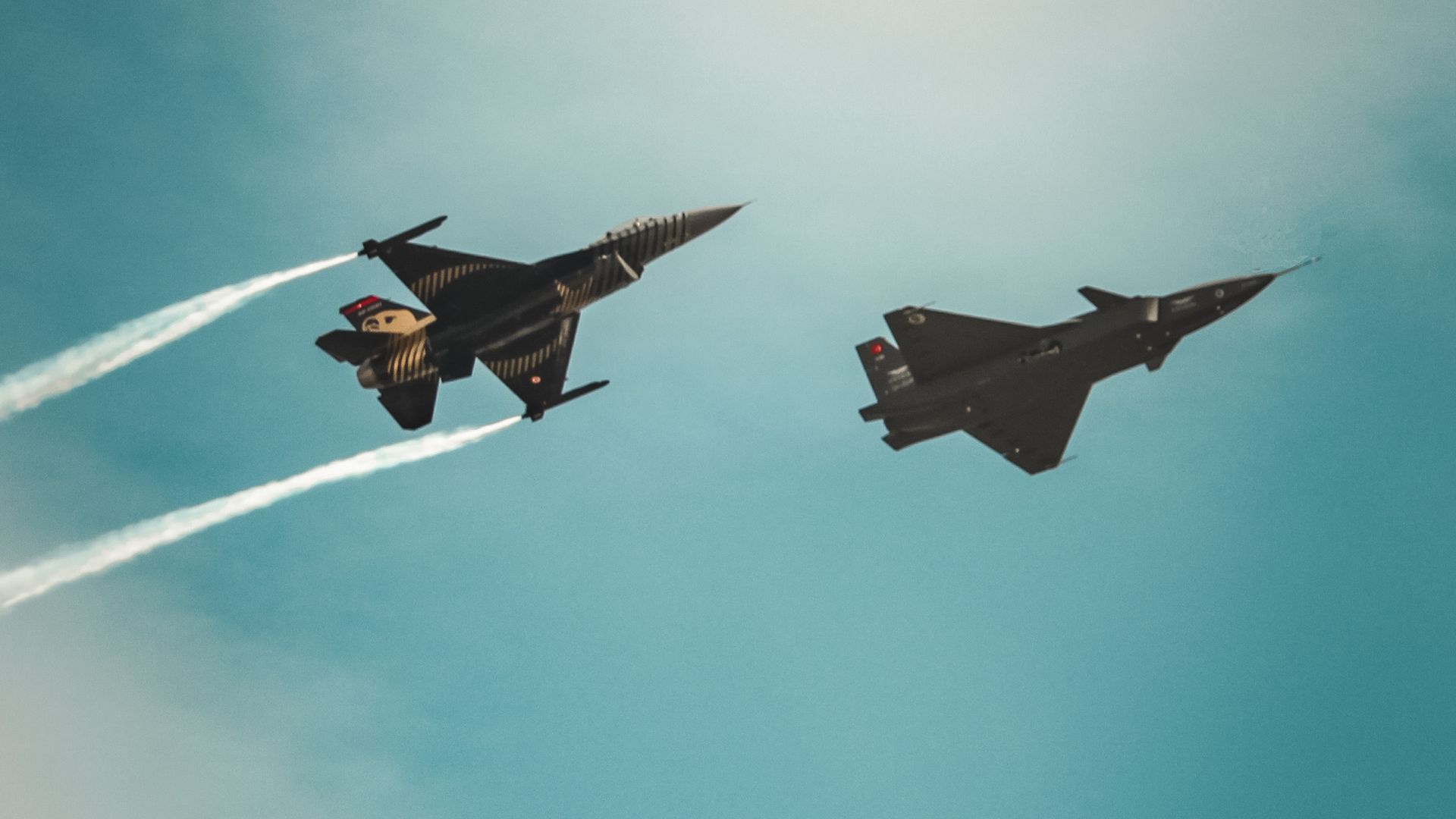
Japan scrambled fighter jets early on Tuesday, November 17, after two suspected Russian aircraft entered its airspace near Okinoshima island in Fukuoka Prefecture, each for about three minutes. Tokyo lodged what it called a “very stern protest” with Moscow, describing the incursion as a grave infringement of its sovereignty.
What Happened: Two Suspected Russian Aircraft Near Okinoshima
According to Japan’s Defense Ministry, the two suspected Russian aircraft entered Japanese airspace northwest of Okinoshima island, in the southwestern prefecture of Fukuoka, shortly after 4 a.m. local time on Tuesday. The ministry said one aircraft was inside Japanese airspace from about 4:07 a.m. to 4:10 a.m., and the second from about 4:09 a.m. to 4:12 a.m., with each spending roughly three minutes there, according to NHK.
Japan’s Air Self-Defense Force scrambled fighter jets in response. The jets issued warnings to the two aircraft, which then continued their flight, according to the Defense Ministry. Defense Minister Shinjiro Koizumi told reporters that the aircraft types had not been identified and that he could not give a definite answer about the intent or purpose of the flight.
The aircraft then flew through the Tsushima Strait, the channel between Japan’s Kyushu island and the Korean Peninsula, before passing between Yonaguni island, Japan’s westernmost island, and Taiwan, and heading out toward the Pacific, Chief Cabinet Secretary Minoru Kihara said.
Tokyo’s Protest to Moscow
Kihara, Japan’s top government spokesman, said the government had lodged a protest with Russia through diplomatic channels. “We lodged a very stern protest with Russia through diplomatic channels and strongly demanded measures to prevent any recurrence,” he said, according to Channel News Asia.
Kihara described the incident in the strongest terms. “The violation of our national airspace by Russian aircraft is not only a grave infringement of our country’s sovereignty, but also a threat to our security and is completely unacceptable,” he said.
Koizumi echoed that assessment at his regular press conference, calling the airspace violation a serious infringement of sovereignty and a threat to Japan’s security. He said Japan would keep watching Russian military activity in the region. The Associated Press reported that Japan’s government had lodged what it described as an extremely stern protest with Moscow.
South Korea and Taiwan Also Reported Russian Aircraft
Japan was not the only country to report Russian military aircraft in the region early on Tuesday. South Korea’s Joint Chiefs of Staff said an unspecified number of Russian aircraft entered and later exited the Korea Air Defence Identification Zone, known as KADIZ, over the East Sea, also called the Sea of Japan, in the early hours of Tuesday. Seoul scrambled its own jets in response, according to reports carried by the Associated Press.
Taiwan also said it detected two Russian military aircraft near the island early on Tuesday, adding that its military had monitored the situation and responded accordingly, according to Taiwan’s defense authorities.
Only Japan reported a violation of sovereign airspace. The detections reported by Seoul and Taipei took place in air defence identification zones, which are a different category of airspace from the territorial airspace over Okinoshima that the suspected Russian aircraft entered.
Airspace and Air Defence Zones: What the Terms Mean
The distinction matters because the rules are different. A country’s territorial airspace extends 12 nautical miles, about 22 kilometres, from its coast, and foreign military aircraft may not enter it without permission. An air defence identification zone, or ADIZ, is a buffer zone in which a country identifies approaching aircraft for security purposes. It is not sovereign airspace, and entering it is not the same as violating a country’s territory.
That is why Tuesday’s incident stands out. The two aircraft did not only pass through an identification zone. According to Japan’s Defense Ministry, they crossed into the airspace above Japan’s territorial waters northwest of Okinoshima, an area where entry without permission is a direct breach of sovereignty.
First Such Incident Since September 2024
According to NHK, Tuesday’s incident was the first time since September 2024 that Japan’s Defense Ministry had announced an airspace violation by Russian, or suspected Russian, aircraft. The ministry’s announcement, and the speed of the diplomatic protest, underline how seriously Tokyo treats any breach of its airspace, even one lasting only a few minutes.
The incident also comes at a time of strained relations between Japan and Russia. Japan has aligned itself with Western sanctions against Moscow, and the two countries have never signed a formal peace treaty ending the Second World War, largely because of a long-running dispute over islands off Hokkaido that Japan calls the Northern Territories and Russia calls the Southern Kurils. For readers following Japan’s wider security posture, Reflecto recently reported on Indonesia and Japan signing a defense cooperation agreement as Tokyo seeks new arms export partners.
What happens next will depend in part on Moscow’s response to Tokyo’s protest. Japan has demanded measures to prevent a recurrence, but Russia has not yet publicly commented on the incident, according to the reports available at the time of writing. The episode is also a reminder of how closely the region’s militaries watch each other’s movements: the same morning produced detections in South Korea and Taiwan as well, and a separate recent episode saw British forces board a Russian-linked tanker in the English Channel. For now, the facts are narrow but clear: two suspected Russian aircraft entered Japanese airspace for about three minutes each, Japanese jets were scrambled, and Tokyo has formally protested.
Frequently Asked Questions
1. What happened between Japan and Russia on November 17?
Two aircraft believed to be Russian entered Japanese airspace near Okinoshima island in Fukuoka Prefecture shortly after 4 a.m. local time, each for about three minutes. Japan scrambled fighter jets, issued warnings, and lodged a stern diplomatic protest with Moscow.
2. How long were the suspected Russian aircraft in Japanese airspace?
According to Japan’s Defense Ministry, one aircraft was in Japanese airspace from about 4:07 a.m. to 4:10 a.m. and the second from about 4:09 a.m. to 4:12 a.m., roughly three minutes each.
3. Did South Korea and Taiwan report anything similar?
Yes. South Korea said Russian aircraft entered and exited its air defence identification zone over the East Sea early on Tuesday, and Taiwan said it detected two Russian military aircraft near the island. Neither country reported a violation of sovereign airspace.
4. What is the difference between airspace and an air defence identification zone?
Territorial airspace extends 12 nautical miles from a country’s coast and may not be entered by foreign military aircraft without permission. An air defence identification zone is a buffer zone used to identify approaching aircraft; it is not sovereign airspace.