Reflecto News is an online news platform covering major international political events, global economic developments, and security conflicts. The site provides updates on topics such as Chinese manufacturing dominance, Middle Eastern political tensions, and high profile legal arrests. Readers can access current articles organized by categories like World News, Iran, and USA.
Published on Reflecto News | World News | Defense & Geopolitics
Italy has announced it is ready to deploy up to four navy ships to the Strait of Hormuz to participate in mine-clearing operations, signaling a significant shift in European involvement in the maritime standoff with Iran. The announcement, made by Defense Minister Guido Crosetto during a visit to the United Arab Emirates, positions Italy to play a leading role in the European-led “multinational peaceful mission” to restore navigation in the critical waterway .
“Italy is ready to participate in the mine-clearing effort in the Strait of Hormuz. We could deploy up to four ships for this purpose.” — Guido Crosetto, Italian Defense Minister

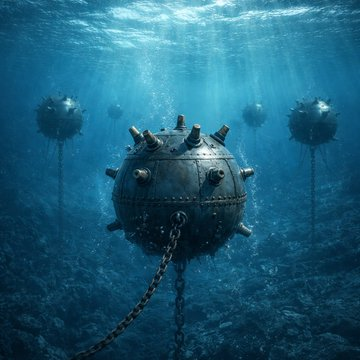
A Shift in Italy’s Position
Italy’s willingness to deploy naval assets to the strait represents a shift from its earlier posture. Throughout the US-Israeli war on Iran, which began on February 28, Italy has consistently refused to join offensive military actions against Tehran. However, the defense minister’s announcement centers on a strictly defensive, post-conflict stabilization mission — mine clearance — not direct combat.
The mission would be conducted under the umbrella of the European-led “multinational peaceful mission” that France and the United Kingdom have been organizing since mid-April. The initiative is designed to be “strictly defensive” and “separate from the warring parties to the conflict,” intended to be deployed “as soon as circumstances permit” .
‘Any Ship Placing Mines Will Be Sunk Immediately’
Crosetto’s announcement came against the backdrop of President Donald Trump’s order to the US Navy to “shoot and kill” any Iranian boat crews caught laying mines in the strait . Asked about the vastly different rules of engagement, Crosetto acknowledged that if Italian minesweepers encountered Iranian vessels actively laying mines, “they would be attacked.”
“When we clear mines, if they were to be there, they would be an obstacle to the mine-clearing activity, and as such, they would be attacked,” Crosetto told reporters . “Any ship placing mines will be sunk immediately.”
This stance aligns Italy with the US position — at least at the tactical level — regarding the threat posed by ongoing Iranian mining operations .
The European-Led Mission: A Post-Conflict Framework
Italy’s contribution is part of a broader European effort that has been in development since the first round of US-Iran peace talks in Islamabad stalled .
European-led mission participants:
| Country | Contribution |
|---|---|
| Italy | Up to 4 warships for mine-clearing |
| United Kingdom | Royal Navy divers; autonomous mine-hunters (pending sustained ceasefire) |
| France | Naval assets; leading the planning |
| Other European allies | Under discussion |
Sources: Multiple news reports
The European-led mission, however, faces a critical problem. The “peaceful mission” is designed for post-conflict stabilization. But the underlying conflict — the US-Israeli war on Iran — has not ended. It is in an extended ceasefire, contested by both sides, with a naval blockade still in effect and both sides seizing commercial vessels .
The Operational Problem: No Sustained Ceasefire
The UK has attached a major caveat to its own participation: any deployment requires a “sustained” ceasefire — which does not currently exist, given that Iran has seized two foreign ships and US forces have intercepted oil tankers just this week.
Italy appears to be taking a more pragmatic approach. Crosetto did not condition Italian deployment on a prior ceasefire; rather, he framed mine clearance as an urgent necessity to restore navigation, regardless of whether a formal peace agreement is in place .
The Italian Naval Build-Up
The Italian Navy has significant assets that could be deployed to the region. The service operates several classes of mine countermeasure vessels (MCMVs), including the Gaeta and Lerici classes, specifically designed for mine-hunting and clearance operations.
Potential Italian assets for deployment:
| Class | Type | Mine Countermeasure Capability |
|---|---|---|
| Gaeta class | Minehunter | Advanced sonar; remote-operated vehicles for mine disposal |
| Lerici class | Minehunter | Specialized in shallow-water mine clearance |
Sources: Italian Navy
The deployment of up to four ships would represent a significant commitment of naval assets, indicating Rome’s assessment that the threat to global shipping requires urgent action.
The Broader European Implications
Italy’s decision to deploy naval assets to the strait, even without a sustained ceasefire, may encourage other European nations to follow suit. It also reflects Rome’s strategic calculation that the cost of inaction — in terms of global energy prices, trade disruption, and regional instability — outweighs the risks of military involvement .
However, Italy remains cautious about deeper entanglement. The defense minister framed the mission as strictly defensive and separate from the US-led war effort, even as it aligns with US objectives and rules of engagement at the tactical level.
What Comes Next
The deployment of Italian minesweepers would require parliamentary approval and coordination with the European-led mission. The timeline remains unclear, though Crosetto’s announcement suggests Rome is preparing to act .
| Next Step | Timeline |
|---|---|
| Parliamentary approval | Pending |
| Coordination with European partners | Ongoing |
| Deployment to the Gulf | Weeks to months |
Italy’s announcement marks a significant shift in European involvement in the Strait of Hormuz crisis. The question is whether other European nations will follow — and whether a “peaceful mission” can operate in a theater that remains, at best, in a contested ceasefire.
Frequently Asked Questions (FAQs)
1. How many ships is Italy planning to deploy to the Strait of Hormuz?
Italy has announced it is ready to deploy up to four navy ships to participate in mine-clearing operations .
2. Is Italy joining the US war effort?
No. Italy’s mission is framed as strictly defensive mine clearance, not offensive combat. Italy has consistently refused to join US-Israeli military actions against Iran.
3. What would Italian ships do if they encountered Iranian vessels laying mines?
Defense Minister Crosetto stated that any ship placing mines would be “sunk immediately” because they would be “an obstacle to the mine-clearing activity” .
4. Is this part of a European-led mission?
Yes. Italy’s deployment is intended to be part of the European-led “multinational peaceful mission” organized by France and the United Kingdom .
5. Has a sustained ceasefire been declared?
No. The ceasefire between the US and Iran has been extended but remains contested. Iran has seized commercial vessels, and US forces have intercepted oil tankers just this week.
6. When will Italian ships deploy?
The timeline remains unclear. Deployment would require parliamentary approval, coordination with European partners, and will likely take weeks to months .
7. What mine-countermeasure vessels does Italy operate?
Italy operates Gaeta-class and Lerici-class minehunters, both of which are specifically designed for mine-hunting and clearance operations .
Stay informed with Reflecto News – Your trusted source for breaking defense, energy, and geopolitical intelligence. Subscribe for real-time updates on the Strait of Hormuz crisis, European naval deployments, and global energy security.
Questions people ask
What is China's current share of global manufacturing?
China now accounts for twenty eight percent of global manufacturing. This industrial output exceeds the combined manufacturing production of the United States, Japan, and Germany, making China the leading global industrial power according to recent reports.
Why were Andrew Tate and Tristan Tate arrested in Miami?
Andrew Tate and his brother Tristan Tate were taken into custody in Miami by the United States Marshals Service. They face thirty eight new charges in the United Kingdom, including rape and child pornography offences, and prosecutors are seeking their extradition.
What warning did Moscow issue about oil prices?
Kirill Dmitriev, the Chief Executive of the Russian Direct Investment Fund, warned that a tsunami of skyrocketing oil prices is approaching. Moscow describes this potential energy shock as a major threat to global markets.
What political shift is projected for Benjamin Netanyahu's coalition?
Political polls project that Prime Minister Benjamin Netanyahu's coalition is on track to lose its majority in the upcoming October election. This projection indicates a potential political shift in Jerusalem.
Why did a Russian military aircraft land in Tehran?
A Russian airborne command aircraft, widely known as a doomsday plane, landed in Tehran. The arrival of the aircraft represents a high stakes show of support from Russia for Iran during a period of heightened regional tensions.
What did President Masoud Pezeshkian claim about the United States and Israel?
Iranian President Masoud Pezeshkian claimed that the United States and Israel failed in a forty eight hour plan to topple the Iranian government. He made these statements during a televised address marking two years since his inauguration.