Published on Reflecto News | World News | Energy & Economy
Oil prices surged for a fifth consecutive session on Friday, April 24, as the prolonged closure of the Strait of Hormuz and a sharp escalation in military rhetoric between Washington and Tehran sent fresh shockwaves through global energy markets. Despite a formal extension of the ceasefire, the standoff at the world’s most critical oil chokepoint continues to tighten global supplies .
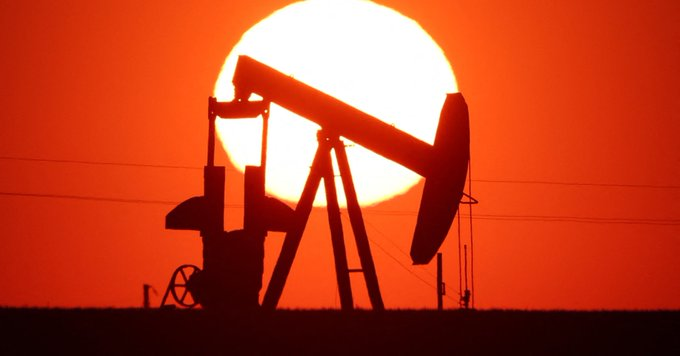
Prices Climb: Brent Tops $105
Crude benchmarks extended their sharp rally amidst the growing uncertainty. Brent crude futures rose 1.2 percent to trade above $106 per barrel, while West Texas Intermediate (WTI) climbed 1.1 percent to nearly $97 per barrel. Prices have spiked roughly 15 percent this week alone, fueled by fears that diplomatic efforts have hit a wall, transforming the fragile truce into a drawn-out economic siege .
The market reacted strongly to reports of Tehran’s air defense systems engaging “hostile targets” and the abrupt resignation of Iran’s lead nuclear negotiator—moves interpreted by analysts as a victory for hardliners and a sign that diplomatic compromises will be difficult to achieve .
‘Shoot-and-Kill’ Order and Ship Seizures
The tense stalemate has devolved into aggressive naval brinkmanship. Both sides continue to restrict shipping through the strait, which historically carried about 20 percent of the world’s oil .
President Donald Trump has declared that the U.S. has “total control” of the waterway and ordered the Navy to “shoot and kill any boat” laying mines in the channel. Meanwhile, Iran has flaunted its dominant position in the Gulf, releasing dramatic footage of commandos storming a cargo vessel, further spooking trading houses and insurers .
Data suggests attempts to circumvent the blockade are ongoing: over 10 million barrels of Iranian crude have reportedly slipped past the U.S. dragnet, while the U.S. military has intercepted several tankers in Asian waters .
The Recession Red Line
The “headline roulette” of ceasefire extensions and military threats is causing a massive, simultaneous supply and demand shock .
On the supply side, the International Energy Agency (IEA) has confirmed the market has lost roughly 13 million barrels per day from the Gulf since the war began in late February—the largest single disruption in history .
On the demand side, top trading houses like Vitol and Gunvor warn that the global economy is “borrowing supply” by drawing down emergency inventories, a practice that cannot continue indefinitely. Analysts warn that a prolonged closure could force a demand destruction event large enough to tip the world into a deep recession .
Reconstruction Delays and $150 Oil
Even optimistic scenarios suggest a painful road ahead. Goldman Sachs estimates that even if the Straits reopened tomorrow, Gulf producers would recover only about 70 percent of lost output within three months and 88 percent within six months .
If the impasse continues, the financial pain could escalate dramatically. Major financial institutions warn that crude could surge into the $110 to $150 per barrel range, and if the conflict reignites into a regional war, prices might breach the $200 per barrel threshold, triggering a global economic crisis .
Frequently Asked Questions (FAQs)
1. Why did oil prices spike again despite the ceasefire extension?
Prices spiked because the underlying physical reality—the Strait of Hormuz remains largely closed—has not changed. Furthermore, reports of military alerts over Tehran, internal power struggles within Iran, and aggressive naval “shoot-to-kill” orders have eroded confidence in a imminent diplomatic resolution .
2. How long will High Oil Prices last?
Even under the best-case scenario where the Strait opens soon, experts like Goldman Sachs estimate it will take about six months for Gulf output to recover nearly 90% of lost supply. If the closure drags on, economic damage could become permanent .
3. Is the U.S. effectively blockading Iran?
Yes, the U.S. Navy is maintaining a strict blockade, but it is not 100% effective. While the Navy has turned back dozens of vessels, some Iranian-linked tankers are still navigating the channel, often using deceptive practices or traveling at night. The U.S. has recently expanded its interdiction efforts to intercept vessels far from Iranian waters in the Indian Ocean .
4. Are there enough emergency oil reserves to prevent a crisis?
While countries have released strategic reserves, top traders warn this is merely “borrowing supply.” The International Energy Agency notes that inventories are being depleted at a historic rate, and there are strict physical limits to how long these stockpiles can cushion the market from the loss of 13 million barrels a day .
5. What economic impact will this have on consumers?
The supply crunch is already pushing prices at the pump higher. If prices sustain levels above $100, it significantly erodes household purchasing power and raises costs for airlines, shipping, and manufacturing—increasing the risk of a global recession .
6. Could the conflict end suddenly?
Diplomacy remains possible, but both sides refuse to blink first. Iran insists the blockade must be lifted before it returns to the table, while the U.S. insists the blockade will remain until a deal is signed. This “chicken-or-egg” standoff keeps the market on edge .
7. When will the first real impact be felt at gas stations?
The impact is already being felt, but retail prices often lag crude spikes. As the “cheap” inventory from before the war runs out, consumers in the U.S. and Europe can expect to see significant price increases at the pump within the coming weeks .
Stay informed with Reflecto News – Your trusted source for breaking energy and geopolitical intelligence. Subscribe for real-time updates on the Iran crisis, oil markets, and global economics.