Reflecto News is an online news platform covering major international political events, global economic developments, and security conflicts. The site provides updates on topics such as Chinese manufacturing dominance, Middle Eastern political tensions, and high profile legal arrests. Readers can access current articles organized by categories like World News, Iran, and USA.
Published on Reflecto News | World News | Conflict & Diplomacy
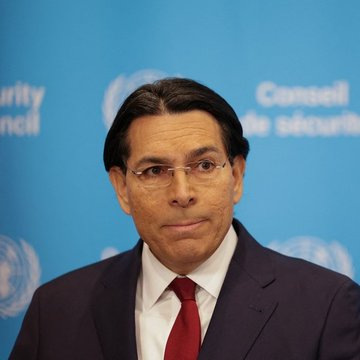
Just two hours after President Donald Trump announced a three-week extension of the Israel-Lebanon ceasefire following White House talks, Israel’s UN Ambassador Danny Danon conceded that the truce is “not 100 percent.” The admission underscores the fragility of the agreement, even as both sides publicly committed to extending it .
“The ceasefire is not 100%. Hezbollah keeps firing rockets. Israel keeps retaliating. The Lebanese government has no control over either.” — Danny Danon, Israeli Ambassador to the United Nations
The Fragile Ceasefire: Violence Continues Despite Extension
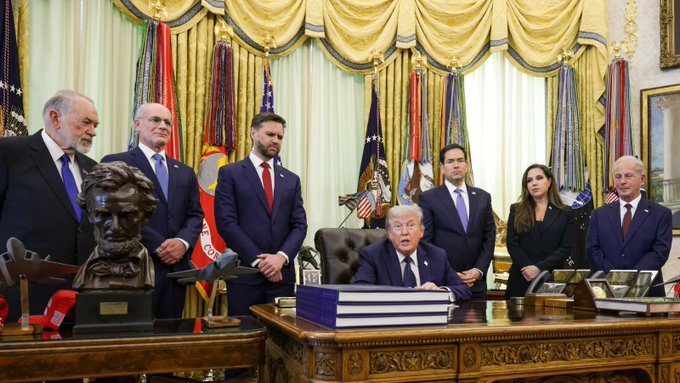
The ceasefire extension, announced by Trump after he hosted Israeli Ambassador Yechiel Leiter and Lebanese Ambassador Nada Hamadeh Moawad in the Oval Office, was intended to create space for diplomacy. But the violence on the ground has not paused.
The Israeli military and Hezbollah have continued to exchange fire across the Blue Line. Israeli warplanes have struck Hezbollah targets in southern Lebanon and the Bekaa Valley, while Hezbollah has launched rockets at northern Israeli communities, triggering air raid sirens as far south as Haifa .
Recent hostilities (since April 22):
| Date | Incident |
|---|---|
| April 22 | Hezbollah fires rockets at northern Israel; IDF strikes Hezbollah launchers |
| April 23 | Israeli airstrikes hit multiple targets in southern Lebanon |
| April 24 | Hezbollah claims rocket attacks on Israeli military positions |
The problem, as Danon described it, is structural: the Lebanese government is unable or unwilling to assert control over Hezbollah, which operates as a state-within-a-state. And Israel, he suggested, has no choice but to respond to Hezbollah’s attacks .
The Human Toll: Nearly 2,500 Dead in Lebanon
The conflict has exacted a devastating toll on Lebanon. According to Lebanese health authorities :
| Metric | Latest Count |
|---|---|
| Total killed | Nearly 2,500 |
| Displaced persons | Over 1 million |
| Homes destroyed | Thousands |
The war began when Hezbollah fired rockets into northern Israel on March 2, days after the US and Israel launched strikes against Iran. Israel responded with massive air raids and a ground invasion of southern Lebanon, capturing dozens of towns and villages along the border .
The fighting has produced the largest mass displacement in Lebanon since the 2006 war. Entire communities in southern Lebanon have been evacuated as Israeli forces maintain a “buffer zone” reported to be up to 10 kilometers deep in some areas .
Israeli Occupation of Southern Lebanon
Danon’s comments also implicitly acknowledged that Israeli forces remain in southern Lebanese territory, with no clear timeline for withdrawal. Israel has maintained that its troops will stay until security for northern Israeli communities is assured — a condition Hezbollah shows no sign of meeting .
Israeli military presence in Lebanon:
| Area | Status |
|---|---|
| Southern Lebanon | Israeli forces present in multiple towns and villages |
| “Buffer zone” | Reported to be up to 10 km deep in some areas |
| Withdrawal timeline | None specified |
Israel’s demand for a “security zone” in southern Lebanon predates the current conflict. The post-war framework, as outlined by Israeli officials, would require Hezbollah to withdraw north of the Litani River, a condition the group has consistently rejected .
Finger-Pointing: ‘The Lebanese Government Has No Control’
Danon’s critique of the Lebanese government’s inability to control Hezbollah is not new — and is echoed by many Lebanese themselves. The group’s military wing is stronger than the national army, and its political bloc holds significant power in parliament .
Lebanon’s power structure:
| Actor | Role |
|---|---|
| Lebanese Armed Forces | Weak, underfunded |
| Hezbollah | Militarily dominant; operates independently of state control |
| Lebanese government | Unable to impose its will on Hezbollah |
The exclusion of Hezbollah from the US-brokered talks — the Lebanese government is representing Lebanon, deliberately sidelining the militant group — did not stop Hezbollah from continuing its attacks or rejecting the diplomatic process outright .
What Comes Next: Three More Weeks of Fighting
The three-week extension provides a diplomatic window, but violence continues unabated.
| Factor | Status |
|---|---|
| Ceasefire extension | 3 weeks (through mid-May) |
| Hezbollah attacks | Continuing |
| Israeli retaliation | Continuing |
| Israeli troop withdrawal | None scheduled |
| Diplomatic progress | Minimal |
Danon’s admission that the ceasefire is “not 100%” is perhaps the most honest assessment yet of the true state of the Israel-Lebanon front: a “ceasefire” in name only, with both sides pointing fingers and the Lebanese people caught in the middle.
Frequently Asked Questions (FAQs)
1. What did Israel’s UN Ambassador say about the Lebanon ceasefire?
Danon stated that the ceasefire is “not 100%,” noting that Hezbollah keeps firing rockets, Israel keeps retaliating, and the Lebanese government has no control over either.
2. Was the ceasefire extended?
Yes. President Trump announced a three-week extension following White House talks with the Israeli and Lebanese ambassadors.
3. Is the fighting still happening?
Yes. Despite the ceasefire extension, Hezbollah has continued to launch rockets at Israel, and Israel has continued airstrikes and ground operations in southern Lebanon.
4. Why can’t the Lebanese government stop Hezbollah?
Hezbollah is militarily dominant in Lebanon and operates independently of state control. The Lebanese Armed Forces are weak and underfunded, and the government is unable to impose its will on the group.
5. How many people have been killed in Lebanon?
Nearly 2,500 people have been killed in Lebanon since the conflict began on March 2, according to Lebanese health authorities.
6. Are Israeli forces still in Lebanon?
Yes. Israeli forces remain in southern Lebanese territory, and there is no clear timeline for withdrawal.
7. Is the ceasefire likely to hold?
Given the ongoing violence and Danon’s own characterization of the truce, the ceasefire is “shaky at best” and dependent on both sides’ willingness to avoid escalation.
Stay informed with Reflecto News – Your trusted source for breaking conflict and diplomatic intelligence. Subscribe for real-time updates on the Israel-Lebanon front, ceasefire developments, and regional security.
Questions people ask
What is China's current share of global manufacturing?
China now accounts for twenty eight percent of global manufacturing. This industrial output exceeds the combined manufacturing production of the United States, Japan, and Germany, making China the leading global industrial power according to recent reports.
Why were Andrew Tate and Tristan Tate arrested in Miami?
Andrew Tate and his brother Tristan Tate were taken into custody in Miami by the United States Marshals Service. They face thirty eight new charges in the United Kingdom, including rape and child pornography offences, and prosecutors are seeking their extradition.
What warning did Moscow issue about oil prices?
Kirill Dmitriev, the Chief Executive of the Russian Direct Investment Fund, warned that a tsunami of skyrocketing oil prices is approaching. Moscow describes this potential energy shock as a major threat to global markets.
What political shift is projected for Benjamin Netanyahu's coalition?
Political polls project that Prime Minister Benjamin Netanyahu's coalition is on track to lose its majority in the upcoming October election. This projection indicates a potential political shift in Jerusalem.
Why did a Russian military aircraft land in Tehran?
A Russian airborne command aircraft, widely known as a doomsday plane, landed in Tehran. The arrival of the aircraft represents a high stakes show of support from Russia for Iran during a period of heightened regional tensions.
What did President Masoud Pezeshkian claim about the United States and Israel?
Iranian President Masoud Pezeshkian claimed that the United States and Israel failed in a forty eight hour plan to topple the Iranian government. He made these statements during a televised address marking two years since his inauguration.