Reflecto News is an online news platform covering major international political events, global economic developments, and security conflicts. The site provides updates on topics such as Chinese manufacturing dominance, Middle Eastern political tensions, and high profile legal arrests. Readers can access current articles organized by categories like World News, Iran, and USA.
Published on Reflecto News | World News | Nuclear Security & Geopolitics
Israeli Defense Minister Israel Katz has declared that the removal of enriched nuclear material from Iran has been defined as a “precondition for ending the campaign” by both the United States and Israel. The statement, made during a briefing to Israeli lawmakers, represents one of the most explicit articulations of the allies’ core demand in any potential peace agreement with Tehran .
“The United States and Israel have defined the removal of enriched material from Iran as a precondition for ending the campaign. Without the removal of this material, there will be no end to the military pressure.” — Israel Katz, Israeli Defense Minister
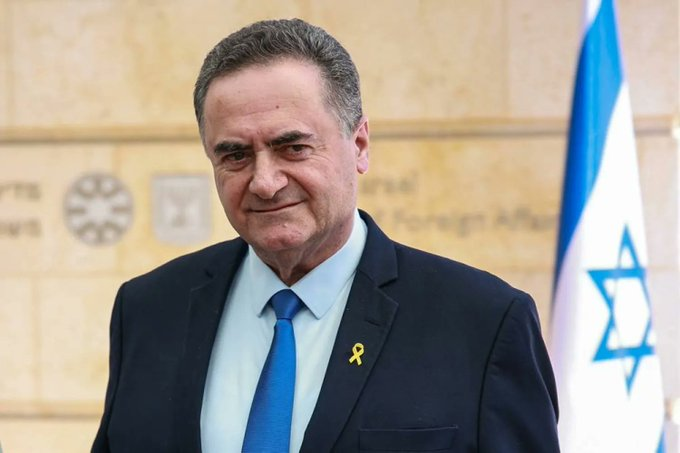
A Core Demand for Any Peace Deal
Katz’s statement confirms what US and Israeli officials have signaled throughout the six-week conflict: that Iran’s enriched uranium stockpile must be physically removed from the country as a condition for ending military operations. This demand goes beyond simply halting enrichment or accepting inspections — it requires Tehran to surrender its most valuable nuclear asset .
The defense minister’s remarks come as the fragile two-week ceasefire between the US and Iran hangs in the balance, with a second round of talks reportedly being considered for Thursday in Islamabad or Geneva .
What Iran Currently Possesses
Iran’s enriched uranium stockpile has been a central concern for the international community for years. According to reports from the International Atomic Energy Agency (IAEA) and US intelligence assessments:
| Enrichment Level | Estimated Quantity | Weapon Potential |
|---|---|---|
| 60% | ~400-440 kg | Can be further enriched to 90% quickly |
| 20% | ~1,000 kg | Significant further enrichment required |
| 3.67% | ~8,500 kg | Used for civilian power generation |
The 60% enriched material is of particular concern. While not yet weapons-grade (which requires 90% enrichment), the technical step from 60% to 90% is relatively short. Experts estimate that Iran could produce enough weapons-grade uranium for a nuclear device in a matter of weeks from its existing stockpile .
The US-Israeli Position
The demand for removal of enriched material has been a consistent theme in US and Israeli statements throughout the conflict. Vice President JD Vance, who led the US delegation in failed Islamabad talks, articulated this position clearly:
“We don’t want Iran enriching towards a nuclear weapon, and we want Iran to give up the nuclear fuel. Those are going to be our demands during the negotiation.” — Vice President JD Vance
President Donald Trump has also been explicit: “No nuclear weapon. That’s 99 percent of it.” Trump has stated that Iran “will not have a nuclear weapon” and that “there is no way” .
Israeli Prime Minister Benjamin Netanyahu has echoed this position, stating that the enriched uranium stockpile must be removed “either by agreement, or it will come out in other ways” — a clear threat of military action if diplomacy fails .
Iran’s Refusal
Iran has consistently rejected demands to surrender its enriched uranium stockpile. During the first round of US-Iran talks in Islamabad, which ended without agreement, Iran refused to end uranium enrichment, dismantle nuclear sites, or cut support for regional proxies .
President Masoud Pezeshkian has stated that Iran is prepared to continue talks but has insisted that the country’s nuclear program is for peaceful purposes and that its right to enrich is “non-negotiable” .
Iran has offered to pause enrichment for up to five years, but this falls far short of the US demand for a 20-year suspension and the removal of existing stockpiles .
The Russian Proposal
Russia has offered to serve as a custodian for Iran’s enriched uranium as part of any potential deal. Kremlin spokesman Dmitry Peskov confirmed that President Vladimir Putin’s proposal to host Iran’s enriched uranium remains on the table, though it has yet to be acted upon .
The proposal is designed to address a key US demand — the removal of highly enriched uranium from Iranian territory — while potentially allowing Tehran to maintain some form of nuclear cooperation with Moscow. However, Iran has historically refused to ship its enriched uranium out of the country, and any transfer to Russia would require Tehran to accept a level of foreign control over its nuclear materials that it has resisted .
The Military Option
Katz’s statement that removal of enriched material is a “precondition for ending the campaign” implies that military action remains an option if Iran refuses. The defense minister’s phrasing — “without the removal of this material, there will be no end to the military pressure” — suggests that Israel and the US are prepared to continue operations until Iran complies .
The US has already demonstrated its willingness to use force. US and Israeli strikes have targeted Iranian nuclear facilities throughout the six-week conflict, though Iran’s program has not been eliminated. Iran retains its 60% enriched stockpile, and its nuclear facilities have been damaged but not destroyed .
What Comes Next
As the ceasefire clock ticks down and a second round of talks is considered, several scenarios are possible:
| Scenario | Likelihood | Implication |
|---|---|---|
| Iran accepts removal under international supervision | Unlikely | Would require major Iranian concession |
| Compromise: Russia accepts uranium | Possible | Could break deadlock |
| Continued deadlock | Likely | No agreement; ceasefire may collapse |
| Military action to seize uranium | Possible | High-risk operation |
Katz’s statement makes clear that the removal of enriched material is not a negotiating chip but a core demand. For the US and Israel, the campaign will not end until Iran’s most dangerous nuclear assets are out of the country.
Frequently Asked Questions (FAQs)
1. What did Israeli Defense Minister Katz say about Iran’s enriched uranium?
Katz declared that “the United States and Israel have defined the removal of enriched material from Iran as a precondition for ending the campaign,” adding that “without the removal of this material, there will be no end to the military pressure.”
2. How much enriched uranium does Iran have?
Iran possesses approximately 400-440 kilograms of uranium enriched to 60%, roughly 1,000 kilograms at 20%, and about 8,500 kilograms at 3.67%.
3. Why is the 60% enriched material particularly concerning?
The technical step from 60% to weapons-grade 90% enrichment is relatively short. Experts estimate Iran could produce enough weapons-grade uranium for a nuclear device in a matter of weeks.
4. Has Iran agreed to give up its enriched uranium?
No. Iran has consistently rejected demands to surrender its enriched uranium stockpile, offering instead to pause enrichment for up to five years while keeping its existing stockpiles.
5. What is Russia’s proposal regarding Iran’s uranium?
Russia has offered to serve as a custodian for Iran’s enriched uranium, accepting the material for storage on its territory. The proposal has not been acted upon.
6. What happens if Iran refuses to give up its uranium?
Katz indicated that military pressure will continue. The US and Israel have demonstrated their willingness to use force against Iranian nuclear facilities.
7. Is a second round of US-Iran talks expected?
A second round is reportedly being considered for Thursday in Islamabad or Geneva, though no final decision has been made.
Stay informed with Reflecto News – Your trusted source for breaking nuclear security and geopolitical intelligence. Subscribe for real-time updates on the Iran nuclear crisis, US-Israel coordination, and global security developments.
Questions people ask
What is China's current share of global manufacturing?
China now accounts for twenty eight percent of global manufacturing. This industrial output exceeds the combined manufacturing production of the United States, Japan, and Germany, making China the leading global industrial power according to recent reports.
Why were Andrew Tate and Tristan Tate arrested in Miami?
Andrew Tate and his brother Tristan Tate were taken into custody in Miami by the United States Marshals Service. They face thirty eight new charges in the United Kingdom, including rape and child pornography offences, and prosecutors are seeking their extradition.
What warning did Moscow issue about oil prices?
Kirill Dmitriev, the Chief Executive of the Russian Direct Investment Fund, warned that a tsunami of skyrocketing oil prices is approaching. Moscow describes this potential energy shock as a major threat to global markets.
What political shift is projected for Benjamin Netanyahu's coalition?
Political polls project that Prime Minister Benjamin Netanyahu's coalition is on track to lose its majority in the upcoming October election. This projection indicates a potential political shift in Jerusalem.
Why did a Russian military aircraft land in Tehran?
A Russian airborne command aircraft, widely known as a doomsday plane, landed in Tehran. The arrival of the aircraft represents a high stakes show of support from Russia for Iran during a period of heightened regional tensions.
What did President Masoud Pezeshkian claim about the United States and Israel?
Iranian President Masoud Pezeshkian claimed that the United States and Israel failed in a forty eight hour plan to topple the Iranian government. He made these statements during a televised address marking two years since his inauguration.