Published on Reflecto News | World News | Energy Security & Geopolitics
A Chinese-owned oil tanker under active US sanctions has successfully transited the Strait of Hormuz, becoming the first known vessel to pass through the strategic waterway since President Donald Trump ordered a naval blockade on Iranian ports. The vessel, Rich Starry, carried approximately 250,000 barrels of methanol, according to shipping data from LSEG, MarineTraffic, and Kpler .
The successful transit represents a direct challenge to Washington’s authority and a significant test of the US Navy’s willingness to enforce the sweeping maritime embargo. Beijing has condemned the blockade as “dangerous and irresponsible,” setting the stage for a potential escalation between the world’s two largest economies .
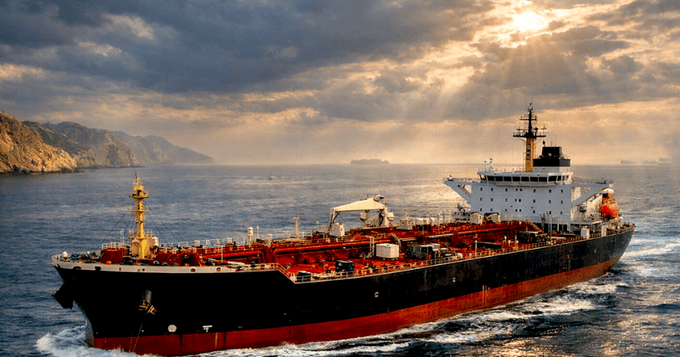
A Defiant Passage
The Rich Starry’s journey was a calculated test of US resolve. On its first attempt shortly after the blockade began at 10 a.m. Eastern Time on April 13, the tanker approached the narrow waterway near Iran’s Qeshm Island and abruptly turned back . On its second attempt, the vessel broadcast that it had a Chinese owner and crew — a deliberate signal to the US Navy that the world’s largest oil importer was calling Washington’s bluff .
The vessel is owned by Shanghai Xuanrun Shipping Co Ltd, a company previously blacklisted by the US Treasury for its dealings with Iran . The tanker loaded its cargo at Hamriyah Port in the United Arab Emirates — a non-Iranian port — and was exiting the Gulf rather than attempting to enter an Iranian port, placing its transit in a legal gray area that the US has not yet clarified .
The Blockade’s Legal Gray Area
According to US Central Command (CENTCOM), the blockade is enforced “impartially against vessels of all nations entering or departing Iranian ports and coastal areas” . However, CENTCOM explicitly stated that it “will not impede freedom of navigation for vessels transiting the Strait of Hormuz to and from non-Iranian ports” .
The Rich Starry loaded its cargo at Hamriyah Port in the UAE — a non-Iranian port — and was exiting the Gulf, not attempting to enter an Iranian port. This placed its transit in a legal gray area that the US has not yet clarified. Whether this represents a loophole or a deliberate limitation of the blockade’s scope remains unclear .
A Second Tanker Follows Suit
Following the Rich Starry’s successful transit, another US-sanctioned tanker, the Murlikishan, was detected heading into the strait on Tuesday . The empty handysize tanker, formerly known as MKA, has previously transported Russian and Iranian oil and is expected to load fuel oil in Iraq on April 16 . The vessel is owned by Full Star Shipping Ltd., which shares the same contact details as the sanctioned Shanghai Xuanrun Shipping, suggesting a network of vessels operating under US sanctions .
China’s Warning to Washington
The tanker’s transit was preceded by a stern warning from Beijing. Chinese Defence Minister Admiral Dong Jun declared that Beijing would honor its trade and energy commitments with Tehran and cautioned Washington not to interfere in China’s affairs .
“Our ships are moving in and out of the waters of the Strait of Hormuz. We have trade and energy agreements with Iran. We will respect and honour those agreements and expect others not to interfere in our affairs.” — Admiral Dong Jun, Chinese Defence Minister
Admiral Dong also asserted that Iran controls the Strait and that it remains open for Chinese vessels . Chinese Foreign Minister Wang Yi has urged global stakeholders to push for peace talks between Tehran and Washington, calling the blockade counterproductive to international stability .
China Condemns the Blockade
Following the Rich Starry’s successful transit, China’s Ministry of Foreign Affairs issued a formal statement condemning the US naval blockade .
“The US naval blockade in the Strait of Hormuz is dangerous and irresponsible. China opposes any unilateral military action that escalates tensions and threatens the stability of the region.” — Chinese Foreign Ministry Spokesperson
Beijing’s statement also reiterated its call for a return to diplomacy, stating that “the only way to resolve differences is through dialogue and negotiation” . China’s condemnation, combined with its tanker’s defiance of the blockade, represents a coordinated challenge to Washington’s assertion of control over international waters.
Strategic Implications: A Direct Challenge to US Naval Primacy
The successful transit of the Rich Starry and China’s diplomatic condemnation represent a direct challenge to US naval primacy. By openly defying the blockade and condemning it as “dangerous,” Beijing is asserting that the US does not have the authority to unilaterally close an international waterway .
The Strait of Hormuz is a critical artery for China’s energy security, supplying nearly 40 percent of its oil and at least 30 percent of its LNG needs . Any disruption to traffic through the strait threatens China’s economic stability, and Beijing has made clear that it will protect its energy supply lines — even if that means confronting the US Navy .
What Comes Next
As the US blockade enters its second day, several critical questions remain:
| Question | Implication |
|---|---|
| Will the US take enforcement action against future violators? | A direct confrontation with a Chinese state-linked vessel could spark a major diplomatic incident |
| Will other Chinese tankers follow suit? | The Murlikishan is already heading into the strait |
| Can the US enforce the blockade without confronting China? | Beijing has signaled it will not back down |
| How will Iran respond? | Tehran has condemned the blockade as “piracy” |
For now, China has called the first move in what one analyst called a “high-stakes game of chicken” — and the Rich Starry has made it through. The world is watching to see whether the US will respond — and whether the fragile ceasefire between Washington and Tehran can survive this escalating confrontation.
Frequently Asked Questions (FAQs)
1. Did the Rich Starry successfully transit the Strait of Hormuz?
Yes. According to shipping data from LSEG, MarineTraffic, and Kpler, the sanctioned Chinese tanker transited the strait on Tuesday, carrying approximately 250,000 barrels of methanol .
2. Is the tanker carrying Iranian oil?
No. The Rich Starry loaded its cargo at Hamriyah Port in the United Arab Emirates, not an Iranian port. It was exiting the Gulf, not attempting to enter an Iranian port .
3. Why is the tanker sanctioned by the US?
The tanker’s owner, Shanghai Xuanrun Shipping Co Ltd, was previously blacklisted by the Treasury Department for dealing with Iran .
4. Has the US Navy intercepted the tanker?
No. The tanker completed its transit without being stopped, though the US has not publicly commented on the specific case .
5. What has China said about the blockade?
China’s Foreign Ministry called the blockade “dangerous and irresponsible” and urged a return to diplomacy. Chinese Defence Minister Admiral Dong Jun warned Washington not to interfere with Chinese vessels in the strait .
6. Are there other tankers attempting to transit?
Yes. Another US-sanctioned tanker, the Murlikishan, was detected heading into the strait on Tuesday .
7. What is the status of the US-Iran ceasefire?
The two-week ceasefire announced on April 7 remains in effect but is increasingly fragile. A second round of talks is reportedly being considered for Thursday .
Stay informed with Reflecto News – Your trusted source for breaking energy security, defense, and geopolitical intelligence. Subscribe for real-time updates on the Strait of Hormuz crisis, US-China tensions, and global energy markets.