Reflecto News is an online news platform covering major international political events, global economic developments, and security conflicts. The site provides updates on topics such as Chinese manufacturing dominance, Middle Eastern political tensions, and high profile legal arrests. Readers can access current articles organized by categories like World News, Iran, and USA.
Published on Reflecto News | World News | Defense & Energy Security
Iran’s Islamic Revolutionary Guard Corps (IRGC) Navy has laid additional mines in the Strait of Hormuz this week, marking the second time Tehran has seeded the strategic waterway since the war began on February 28. The development, reported by Axios citing a U.S. official and a source with knowledge of the issue, represents a significant escalation in the military standoff over the world’s most critical oil chokepoint — and a direct challenge to President Donald Trump’s new “shoot and kill” order .
“Iran’s IRGC navy laid more mines in the Strait of Hormuz this week, according to a U.S. official and a source with knowledge of the issue.”
— Axios, citing U.S. official and source with knowledge
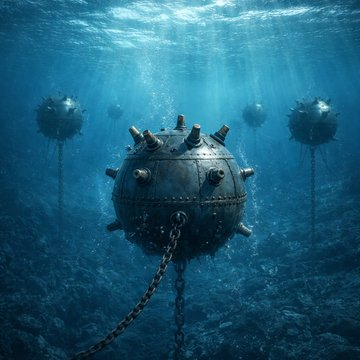
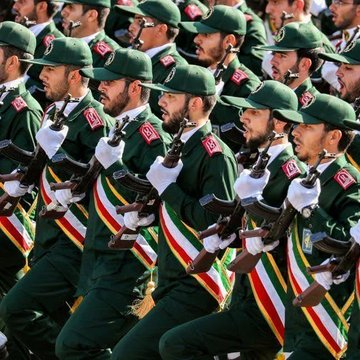
💣 The New Mine-Laying Operation
This week’s operation is the second time Iran has mined the strait since the war began . The U.S. military detected the Iranian mine-laying operation and has been tracking it closely, according to the sources, who declined to specify how many new mines had been deployed .
Key details of the new mining:
| Aspect | Details |
|---|---|
| Timing | This week (April 20-23, 2026) |
| Perpetrator | Islamic Revolutionary Guard Corps (IRGC) Navy |
| Detection | U.S. military detected and tracked the operation |
| Number of mines | Undisclosed (U.S. knows but declined to provide number) |
| Type of vessels used | Small fishing-boat-sized Gashti vessels |
| Capacity per vessel | 2-4 mines per boat |
The mines can be relatively easy for Iranians to lay using small Gashti vessels, which can each carry two to four mines and drop them in the strait. Iran still has scores of those vessels, which can also be equipped with rocket launchers and mounted machine guns to interdict large tankers .
🔥 Trump’s ‘Shoot and Kill’ Response
After being briefed on the new developments, President Trump ordered the U.S. Navy on Truth Social on Thursday to “shoot and kill” any Iranian boats laying mines with “no hesitation” and to triple ongoing mine-clearing operations .
“I have ordered the United States Navy to shoot and kill any boat … that is putting mines in the waters. There is to be no hesitation.” — President Donald Trump, Truth Social
Trump’s statement signaled an uncompromising posture: “I have ordered the immediate firing upon and sinking of all vessels laying mines in the Strait of Hormuz. There will be no hesitation” .
The president also ordered an immediate tripling of minesweeping activities to clear the transit route . “Trump said he ordered that operation ‘to continue, but at a tripled up level!'” according to Axios .
🌍 First Round of Mining: The War’s Opening Salvo
This new mining is not the first time Iran has used this tactic in the current conflict.
First round details:
- Iran first mined the strait in early March, shortly after the war began
- U.S. officials estimated fewer than 100 mines had been deployed in the first round
- It remains unclear whether all the mines from the first round have been found and cleared
🛡️ IRGC’s Persistent Mine-Laying Capacity
Despite U.S. and Israeli airstrikes at the war’s start — in which officials estimated they destroyed more than 90% of Iran’s large mine-laying vessels and mine-storage warehouses — the armed forces still have stashes of mines along the coast .
Iran still possesses scores of small Gashti vessels that remain operational and can be used for mining operations .
Military analysts note that Iran’s mine-laying capability is designed for asymmetric warfare — using small, inexpensive boats to sow chaos that requires expensive, time-consuming countermeasures to address. The mines can be relatively easy to lay but difficult and dangerous to clear, especially as the Pentagon told Congress that fully clearing the strait of mines could take up to six months .
⚓ U.S. Response: Massive Naval Build-Up
The United States has responded to the escalating threat with a significant increase in naval assets in the region.
Aircraft carrier build-up:
- The USS George H.W. Bush and its strike group arrived Thursday in the U.S. Central Command area of responsibility
- This brings the total number of U.S. aircraft carriers in the region to three (joining the USS Abraham Lincoln and USS Gerald R. Ford) — tightening the naval blockade and giving Trump “more military options if he decides to resume the war,” sources said
Mine countermeasures forces:
- Mine countermeasure vessels USS Chief (MCM 14) and USS Pioneer (MCM 9) are operating in the strait
- Underwater drones are being used for mine-clearing operations
- Special mine-hunting helicopters and surveillance aircraft are also involved
Blockade enforcement results:
- CENTCOM said Thursday it has redirected 33 vessels since the blockade began
⏭️ Escalating Standoff in a ‘Worst-Case Scenario’
This new round of mining is occurring amid a fragile ceasefire that President Trump has extended indefinitely while peace talks stalled. The escalation in the world’s most important oil chokepoint pits Iran’s mining operations on one side against the U.S. tightening its naval blockade on the other .
What makes the situation particularly dangerous is the inherent risk of miscalculation — a small boat laying mines could be indistinguishable from one simply fishing, and Trump’s “shoot on sight” order, combined with Iran’s persistent mine-laying, sets the stage for a potential flashpoint that could reignite full-scale war.
New mines in the strait could deepen what the International Energy Agency has already called the largest oil supply disruption in the history of the global market — bigger than the 1970s oil shocks . Roughly 20% of the world’s seaborne oil passes through the strait in peacetime; traffic has collapsed to single digits on most days, down from more than 100 ships daily .
Frequently Asked Questions (FAQs)
1. Did Iran actually plant more mines in the Strait of Hormuz this week?
Yes. According to a U.S. official and a source with knowledge of the issue cited by Axios, Iran’s IRGC Navy laid more mines in the Strait of Hormuz this week — the second time Iran has mined the strait since the war began .
2. When did this happen?
The mine-laying operation occurred this week (April 20-23, 2026). The U.S. military detected and tracked the activity .
3. How did President Trump respond?
Trump ordered the U.S. Navy to “shoot and kill” any Iranian boats laying mines with “no hesitation” and to triple mine-clearing operations. “I have ordered the immediate firing upon and sinking of all vessels laying mines in the Strait of Hormuz,” he wrote on Truth Social .
4. Is this the first time Iran has mined the strait in this war?
No. This is the second time. Iran first mined the strait in early March, when U.S. officials estimated fewer than 100 mines had been deployed. It remains unclear whether all mines from the first round have been cleared .
5. How is the U.S. responding to the mine threat?
The U.S. has deployed three aircraft carriers to the region (USS George H.W. Bush, USS Abraham Lincoln, USS Gerald R. Ford). Mine countermeasure vessels USS Chief and USS Pioneer are operating in the strait, along with underwater drones, mine-hunting helicopters, and surveillance aircraft .
Stay informed with Reflecto News – Your trusted source for breaking defense, energy, and geopolitical intelligence. Subscribe for real-time updates on the Strait of Hormuz crisis, US-Iran military tensions, and global oil markets.
Questions people ask
What is China's current share of global manufacturing?
China now accounts for twenty eight percent of global manufacturing. This industrial output exceeds the combined manufacturing production of the United States, Japan, and Germany, making China the leading global industrial power according to recent reports.
Why were Andrew Tate and Tristan Tate arrested in Miami?
Andrew Tate and his brother Tristan Tate were taken into custody in Miami by the United States Marshals Service. They face thirty eight new charges in the United Kingdom, including rape and child pornography offences, and prosecutors are seeking their extradition.
What warning did Moscow issue about oil prices?
Kirill Dmitriev, the Chief Executive of the Russian Direct Investment Fund, warned that a tsunami of skyrocketing oil prices is approaching. Moscow describes this potential energy shock as a major threat to global markets.
What political shift is projected for Benjamin Netanyahu's coalition?
Political polls project that Prime Minister Benjamin Netanyahu's coalition is on track to lose its majority in the upcoming October election. This projection indicates a potential political shift in Jerusalem.
Why did a Russian military aircraft land in Tehran?
A Russian airborne command aircraft, widely known as a doomsday plane, landed in Tehran. The arrival of the aircraft represents a high stakes show of support from Russia for Iran during a period of heightened regional tensions.
What did President Masoud Pezeshkian claim about the United States and Israel?
Iranian President Masoud Pezeshkian claimed that the United States and Israel failed in a forty eight hour plan to topple the Iranian government. He made these statements during a televised address marking two years since his inauguration.