Reflecto News is an online news platform covering major international political events, global economic developments, and security conflicts. The site provides updates on topics such as Chinese manufacturing dominance, Middle Eastern political tensions, and high profile legal arrests. Readers can access current articles organized by categories like World News, Iran, and USA.
Tehran’s naval forces say they are coordinating the safe passage of dozens of vessels daily through the strategic waterway under a new permit system, even as the US maintains its own naval blockade and rejects Iran’s claims of authority.
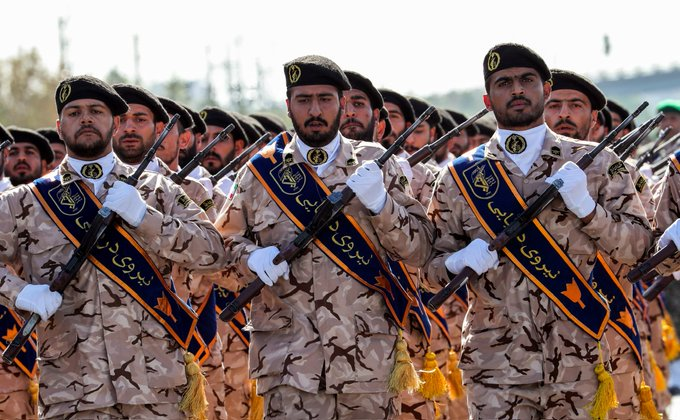
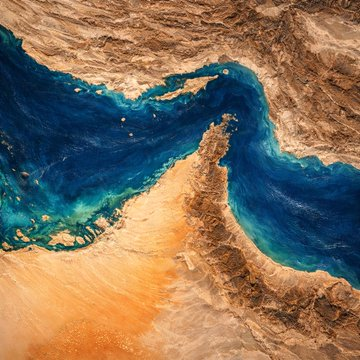
TEHRAN — The Islamic Revolutionary Guard Corps (IRGC) Navy has reiterated that its forces remain in full control of the Strait of Hormuz, the world’s most critical oil transit chokepoint, rejecting US efforts to impose an alternative maritime order in the Persian Gulf .
According to statements published on the IRGC’s official news outlet Sepah News, Iranian forces have been coordinating and protecting the passage of commercial vessels through the strait on a daily basis, claiming that dozens of ships—including oil tankers, container ships, and other commercial carriers—have transited under Iranian oversight in recent days .
The IRGC’s declaration comes as the United States has imposed its own naval blockade on the strait, preventing ships traveling to and from Iranian ports from transiting the waterway, while also conducting its own interdiction operations against Iran-linked vessels .
By the Numbers: Iran’s Claim of Maritime Traffic
According to daily statements from the IRGC Navy, vessel traffic through the strait under Iranian coordination has shown consistent activity over the past week:
| Date Period | Vessels Transited (IRGC Claim) |
|---|---|
| Past 24 hours (to May 21) | 35 |
| 24 hours to May 20 | 31 |
| 24 hours to May 19 | 26 |
*Source: IRGC statements via Sepah News and Iranian media *
The IRGC has framed these transits as evidence that despite what it calls the “insecurity caused in the strait following the US and Israeli military ‘aggression’ against Iran,” its forces have “managed to create a safe route for the passage of vessels and the continuation of global trade” .
However, independent shipping data suggests the actual number of vessels clearing the strait remains far below pre-war levels. The Financial Times, citing data from Kpler, reported that only six Very Large Crude Carriers (VLCCs) transited the strait in the first half of May—each capable of carrying approximately two million barrels of crude—compared to pre-war averages of 125-140 total daily passages .
The New Maritime Order: Permits and Coordination
The IRGC’s control of the strait is being institutionalized through a newly established body called the Persian Gulf Strait Authority (PGSA) , which Iran launched earlier this month to regulate and oversee vessel traffic through the waterway .
According to the PGSA, all vessels intending to pass through the strait must now obtain a permit and coordinate their transit with Iranian authorities . The authority has published a map declaring a vast “controlled maritime zone” across the waterway, stretching from Kuh-e Mubarak in Iran to south of Fujairah in the United Arab Emirates at the eastern entrance, and from the tip of Qeshm Island to Umm al-Quwain at the western entrance .
Under the Iranian system, vessels seeking passage must undergo an extensive screening process overseen by the IRGC and several Iranian state agencies . Operators are required to submit detailed “affiliation” documents disclosing:
- Cargo details and value
- The ship’s owner and manager
- Flag state
- Departure and destination ports
- Crew nationalities
Iranian authorities then assess whether the vessel has links to the United States or Israel—countries that Iran has barred from the waterway entirely .
Who Is Getting Through? A Tiered System
According to a Reuters investigation cited by the ABC and other outlets, Iran’s new system uses a tiered approval process for ships entering the strait :
| Tier | Countries | Access |
|---|---|---|
| Priority | Russia, China | Expedited approval |
| Standard | India, Pakistan | Requires coordination |
| Conditional | Other nations | Requires separate agreements |
| Barred | United States, Israel | No access |
Recent successful transits have been highlighted by Iran as proof of the system’s functionality. South Korea’s Foreign Ministry announced on May 20 that a Korean oil tanker had safely transited the strait—the first passage by a South Korean vessel since the war began—after four rounds of discussions with Iranian officials . The ministry emphatically stated that no tolls or payments were made to secure passage .
Two Chinese VLCCs were also identified as having made the transit on May 19, with Iran announcing earlier that it would be escorting Chinese vessels through the strait . These tankers—the Yuan Gui Yang and the Ocean Lily—are collectively carrying approximately four million barrels of oil from Iraq and Kuwait to Chinese ports .
The US Response: Rejection and Blockade
The United States has firmly rejected Iran’s claims of control over the strait and has instructed commercial ships not to comply with Iran’s permit requirements.
Secretary of State Marco Rubio has stated that “a tolling system in the strait would be unacceptable, completely illegal, and a threat to the world” . The US has also told ships that they should follow American naval instructions rather than Iranian directives.
The US Navy has maintained its own blockade, preventing ships traveling to and from Iranian ports from transiting the waterway. US Central Command (CENTCOM) has reported that it has “redirected” dozens of vessels attempting to breach the embargo and has conducted boarding operations against Iran-linked ships .
Most recently, US forces boarded the oil tanker Celestial Sea in the Gulf of Oman, which CENTCOM said was “suspected of attempting to violate the US blockade by transiting toward an Iranian port.” The vessel was released after a search and after the crew was directed to alter course .
Gulf States Reject Iran’s Claims
Iran’s assertion of control over the strait has also been rejected by Gulf Arab states, whose territorial waters Iran’s declared zone would encroach upon.
The UAE described Iran’s claims of control as “nothing but fragments of dreams,” according to Anwar Gargash, diplomatic adviser to the UAE president . Gargash said Iran is “trying to consecrate a new reality born from a clear military defeat, but attempts to control the Strait of Hormuz or encroach on the UAE’s maritime sovereignty are nothing but fragments of dreams” .
Under the United Nations Convention on the Law of the Sea (UNCLOS), ships are guaranteed safe passage through another country’s waters. However, Iran has not ratified this convention, a fact that Tehran has used to justify its assertion of control .
Insurance and the ‘Shadow Fleet’
One of the most significant challenges for vessels complying with Iran’s system is the question of insurance. Any payments made to Iranian state-linked entities, particularly the IRGC, could breach US sanctions and void maritime insurance coverage .
According to the ABC’s report, the US Treasury Department has warned that it is “prepared to take action against any foreign company supporting illicit Iranian commerce” . This has created a dilemma for ship owners: following Iran’s rules risks US sanctions, while defying them risks seizure or attack.
Two European shipping sources told Reuters that some vessels not covered by formal agreements were paying large sums—in some cases more than $150,000—to secure safe passage through informal channels . These payments are highly sensitive and their existence is difficult to verify independently.
Iran has also floated a more ambitious proposal: a digital maritime insurance scheme using Bitcoin payments, as reported by the IRGC-affiliated Fars News Agency . A platform called “Hormuz Safe” has been referenced, which would allegedly offer digital maritime insurance coverage for vessels using the strait, with the longer-term goal of requiring all transiting vessels to obtain Iranian-issued insurance certificates .
The FAO Warning: Food Security at Risk
The continued disruption in the Strait of Hormuz has broader implications beyond energy markets. The United Nations Food and Agriculture Organization (FAO) warned on Wednesday that continued disruption in the strait could trigger a severe global food price crisis within six to 12 months .
Before the war, approximately 20 percent of the world’s oil supply and a significant portion of global grain and fertilizer shipments passed through the strait. The blockade and counter-blockade have disrupted these supply chains, with knock-on effects for global food prices.
The FAO’s warning adds urgency to the diplomatic efforts to resolve the standoff, as even a temporary resolution could help stabilize both energy and food markets.
Diplomatic Context: Ceasefire Holding, but Talks Stalled
The IRGC’s assertion of control over the strait comes amid a fragile ceasefire brokered by Pakistan that has been in place since early April. While major hostilities have been paused for more than six weeks, indirect negotiations between the US and Iran have shown little progress on core issues [citation:previous coverage].
Key sticking points remain:
| Issue | US Position | Iran’s Position |
|---|---|---|
| Strait of Hormuz | Free navigation; no tolls or Iranian control | Control through PGSA; permits required |
| Enriched Uranium | Must be transferred out of Iran | Refuses to send stockpile abroad |
| Sanctions | Relief tied to compliance | Demands immediate lifting |
President Trump has warned that the window for diplomacy is limited, and US military forces remain on standby for potential strikes if negotiations fail . The IRGC, for its part, has warned that any renewed aggression will be met with “crushing blows … in places you cannot even imagine” .
What This Means for Global Shipping
For now, the Strait of Hormuz remains a contested waterway, with two competing authorities—Iran and the United States—each claiming the right to control passage. In practice, a limited number of vessels are transiting under Iranian coordination, while the vast majority of pre-war traffic remains absent.
The competing claims create a dangerous and unpredictable environment for commercial shipping. Ship owners must choose between seeking Iranian permission (risking US sanctions) or attempting to transit without approval (risking Iranian seizure or attack).
As one European shipping source told Reuters: “The straits will be blocked or opened up only by the approval of the Iranian government. Some will get through because of political alliances, others will have to pay, others will be turned back. This is the new norm” .
Whether this “new norm” persists—or whether diplomatic efforts or military action change the equation—remains to be seen. For now, the IRGC’s message is clear: its forces still control the Strait of Hormuz, and vessels that wish to pass must do so with Tehran’s permission.
Frequently Asked Questions (FAQs)
Q1: Does Iran actually control the Strait of Hormuz?
A: The IRGC claims that its forces control the strait and have been coordinating the passage of dozens of vessels daily. The United States and Gulf Arab states reject this claim. In practice, a limited number of vessels—primarily those from countries with political ties to Iran, such as China and Russia—are transiting under Iranian coordination, while most pre-war traffic remains absent .
Q2: How many ships are passing through the strait each day?
A: According to the IRGC, between 26 and 35 vessels have been transiting daily in coordination with Iranian forces over the past week . However, independent shipping data suggests that only a fraction of pre-war traffic levels has resumed. The Financial Times reported that only six VLCCs (supertankers) transited in the first half of May, compared to pre-war averages of 125-140 total daily passages .
Q3: Do vessels have to pay Iran to pass through the strait?
A: Officially, Iran has not confirmed that it is charging tolls. However, two European shipping sources told Reuters that some vessels not covered by formal agreements were paying large sums—in some cases more than $150,000—to secure safe passage through informal channels . South Korea, whose tanker recently transited, emphatically stated that no payments were made .
Q4: How does Iran decide which ships can pass?
A: Iran uses a tiered approval system. Vessels from allies such as Russia and China receive priority access, followed by countries with closer ties to Tehran including India and Pakistan. Other ships require separate government agreements or direct approval from Iranian authorities . Ships linked to the United States or Israel are barred entirely .
Q5: What is the Persian Gulf Strait Authority (PGSA)?
A: The PGSA is a new body established by Iran to regulate and oversee vessel traffic through the Strait of Hormuz. The authority has declared a vast “controlled maritime zone” across the waterway and requires all vessels to obtain permits and coordinate their transit with Iranian authorities .
Q6: How has the US responded to Iran’s claims of control?
A: The United States has rejected Iran’s claims, instructed ships not to comply with Iranian rules, and maintained its own naval blockade. US Central Command has conducted boarding operations against Iran-linked vessels and has “redirected” dozens of ships attempting to breach the embargo .
Q7: What does this mean for global oil prices?
A: The continued disruption of normal traffic through the strait has contributed to elevated oil prices. The UN Food and Agriculture Organization has warned that continued disruption could trigger a severe global food price crisis within six to 12 months .
This is a developing story. Reflecto News will continue to provide updates on the situation in the Strait of Hormuz, IRGC operations, and US-Iran diplomatic efforts.
Questions people ask
What is China's current share of global manufacturing?
China now accounts for twenty eight percent of global manufacturing. This industrial output exceeds the combined manufacturing production of the United States, Japan, and Germany, making China the leading global industrial power according to recent reports.
Why were Andrew Tate and Tristan Tate arrested in Miami?
Andrew Tate and his brother Tristan Tate were taken into custody in Miami by the United States Marshals Service. They face thirty eight new charges in the United Kingdom, including rape and child pornography offences, and prosecutors are seeking their extradition.
What warning did Moscow issue about oil prices?
Kirill Dmitriev, the Chief Executive of the Russian Direct Investment Fund, warned that a tsunami of skyrocketing oil prices is approaching. Moscow describes this potential energy shock as a major threat to global markets.
What political shift is projected for Benjamin Netanyahu's coalition?
Political polls project that Prime Minister Benjamin Netanyahu's coalition is on track to lose its majority in the upcoming October election. This projection indicates a potential political shift in Jerusalem.
Why did a Russian military aircraft land in Tehran?
A Russian airborne command aircraft, widely known as a doomsday plane, landed in Tehran. The arrival of the aircraft represents a high stakes show of support from Russia for Iran during a period of heightened regional tensions.
What did President Masoud Pezeshkian claim about the United States and Israel?
Iranian President Masoud Pezeshkian claimed that the United States and Israel failed in a forty eight hour plan to topple the Iranian government. He made these statements during a televised address marking two years since his inauguration.