Reflecto News is an online news platform covering major international political events, global economic developments, and security conflicts. The site provides updates on topics such as Chinese manufacturing dominance, Middle Eastern political tensions, and high profile legal arrests. Readers can access current articles organized by categories like World News, Iran, and USA.
Interior Minister Mohsin Naqvi delivers a “special letter” from Pakistan’s top leadership to Iran’s Supreme Leader as Islamabad intensifies mediation efforts to break the deadlock in indirect negotiations between Tehran and Washington.
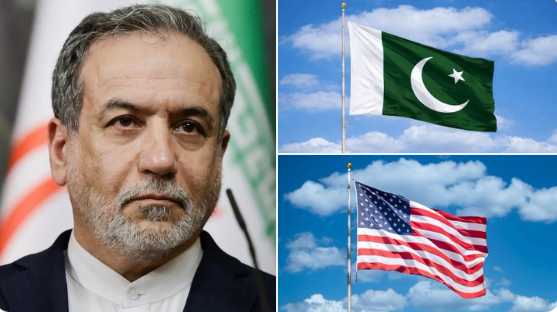
TEHRAN — Iranian Foreign Minister Abbas Araghchi met with Pakistan’s Interior Minister Mohsin Naqvi in Tehran on Sunday, marking the latest high-level engagement in Islamabad’s ongoing efforts to mediate between Iran and the United States as the two sides remain locked in a diplomatic stalemate .
The meeting, held at the Iranian Foreign Ministry, focused on the latest diplomatic developments in the Iran-US talks, the broader regional security situation, and ways to enhance bilateral cooperation between Pakistan and Iran . Naqvi arrived in the Iranian capital on Saturday for a fresh round of negotiations, his third trip to Tehran since mid-May .
A ‘Special Letter’ for Iran’s Supreme Leader
The most significant element of Naqvi’s visit was the delivery of what Iranian media described as a “special letter” from Pakistan’s top civilian and military leadership to Iran’s Supreme Leader, Ayatollah Seyyed Mojtaba Khamenei .
“I am in Iran to deliver a special letter from the Commander of the Army and the Prime Minister of Pakistan to Ayatollah Sayyed Mojtaba Khamenei,” Naqvi told Iranian media upon his arrival .
The letter, carried from Islamabad by Naqvi, originated from both Prime Minister Shehbaz Sharif and Pakistan’s Army Chief Field Marshal Asim Munir . According to Iranian media reports, the message contained new proposals aimed at breaking the current deadlock in the indirect negotiations between Tehran and Washington and facilitating a temporary understanding between the two parties .
“The visit underscores ongoing diplomatic engagement between Islamabad and Tehran as both countries seek to support peaceful solutions to regional challenges,” Pakistan’s Interior Ministry stated following the meeting .
Pakistan’s Expanding Role as Mediator
Pakistan has emerged as the most significant intermediary between Iran and the United States since the outbreak of the conflict on February 28 . Islamabad successfully brokered a temporary ceasefire that took effect on April 8 and hosted the first round of direct talks between the two sides in April—the highest-level engagement between the two adversaries since the 1979 revolution .
However, those initial talks did not produce a breakthrough, and negotiations have since stalled amid disputes over implementation and continued military skirmishes between the two sides .
Pakistan has consistently positioned itself as a neutral facilitator acceptable to both Washington and Tehran . Pakistani Ambassador to Russia Faisal Niaz Tirmizi emphasized the country’s unique mediating role this week, stating that “Pakistan as a country is acceptable to both Iran as well as the United States” .
“We believe that wars are not a solution to global problems. Especially when 22% of the world’s energy supplies are coming through the Strait of Hormuz,” Tirmizi said, reaffirming Pakistan’s commitment to dialogue .
The State of Negotiations: A Stalemate
The renewed diplomatic push comes as indirect negotiations between Washington and Tehran have shown little tangible progress. An Iranian official told state media that “deep and extensive” disagreements remain, though messages continue to be exchanged through intermediaries .
Key sticking points reportedly include:
| Issue | US Position | Iran’s Position |
|---|---|---|
| Frozen Assets | Relief tied to full compliance | Demands release of $24 billion as “test of trust” |
| Ceasefire Enforcement | Demands halt to attacks on allies | Insists ceasefire must include all fronts, including Lebanon |
| Nuclear Program | Long-term caps and verification | Refuses to celerights |
| Strait of Hormuz | Free navigation without tolls | Proposes managed access with Iranian oversight |
An adviser to Iran’s Supreme Leader, Mohsen Rezaei, told CNN that a peace deal hinges on the release of $24 billion in frozen Iranian assets . A source familiar with the matter said the US Treasury Department has directed a team to assess the costs of damage inflicted on Gulf allies by Iran, potentially redirecting Iranian assets to those states for repairs .
Regional Context: Ceasefire Under Strain
Pakistan’s intensified mediation comes as the fragile April 8 ceasefire shows increasing signs of strain. Despite the formal halt to major hostilities, both sides have continued periodic military exchanges .
Iran has expressed frustration with US behavior, with Iranian officials describing “continued violations of the ceasefire” as a serious obstacle to diplomacy . Tehran has also insisted that any broader peace agreement must include a cessation of hostilities in Lebanon, where Israel has been targeting Iran’s Hezbollah allies .
The conflict, which erupted when the United States and Israel launched coordinated strikes against Iran on February 28, has now entered its fourth month, causing significant disruption to global energy markets and raising fears of wider regional instability .
What Comes Next
The success of Pakistan’s latest mediation effort remains uncertain. Naqvi’s delivery of a “special letter” to Iran’s Supreme Leader represents a high-level attempt to break the diplomatic logjam, but both sides remain far apart on core issues .
| Scenario | Likelihood | Key Factors |
|---|---|---|
| Renewed formal negotiations | Possible | Both sides signal flexibility; Pakistan secures agreement on format |
| Interim understanding | Moderate | Parties agree to temporary de-escalation measures |
| Continued stalemate | High | Core disagreements on frozen assets and ceasefire terms persist |
Pakistan’s Foreign Ministry has not yet issued a formal statement on the outcome of Naqvi’s meetings, but diplomatic sources indicate that Islamabad is preparing to continue its shuttle diplomacy in the coming days.
As one Pakistani official noted: “Pakistan will always be available to be a facilitator, to be a mediator between the two countries” .
Frequently Asked Questions (FAQs)
Q1: Who met whom in Tehran?
A: Iranian Foreign Minister Abbas Araghchi met with Pakistan’s Interior Minister Mohsin Naqvi in Tehran on Sunday. The meeting was part of Pakistan’s ongoing mediation efforts between Iran and the United States .
Q2: What message did Pakistan deliver to Iran’s Supreme Leader?
A: Naqvi delivered a “special letter” from Pakistan’s Prime Minister Shehbaz Sharif and Army Chief Field Marshal Asim Munir to Iran’s Supreme Leader, Ayatollah Seyyed Mojtaba Khamenei. The letter reportedly contained new proposals to break the deadlock in US-Iran negotiations .
Q3: Why is Pakistan mediating between Iran and the US?
A: Pakistan has positioned itself as a neutral facilitator acceptable to both Tehran and Washington. Islamabad brokered the April 8 ceasefire and hosted the first round of direct talks between the two sides. Pakistan has deep ties with Iran and close security cooperation with the US .
Q4: Have the US-Iran talks made progress?
A: Indirect negotiations remain stalled. While messages continue to be exchanged through intermediaries, an Iranian official told state media that “deep and extensive” disagreements remain. Key sticking points include frozen assets, ceasefire enforcement, and the nuclear program .
Q5: What is Iran demanding in exchange for a deal?
A: An adviser to Iran’s Supreme Leader told CNN that a peace deal hinges on the release of $24 billion in frozen Iranian assets. Iran also insists that any ceasefire must apply on all fronts, including in Lebanon .
This is a developing story. Reflecto News will continue to provide updates on Pakistan’s mediation efforts, the outcome of Naqvi’s meetings in Tehran, and any progress in US-Iran negotiations.
Questions people ask
What is China's current share of global manufacturing?
China now accounts for twenty eight percent of global manufacturing. This industrial output exceeds the combined manufacturing production of the United States, Japan, and Germany, making China the leading global industrial power according to recent reports.
Why were Andrew Tate and Tristan Tate arrested in Miami?
Andrew Tate and his brother Tristan Tate were taken into custody in Miami by the United States Marshals Service. They face thirty eight new charges in the United Kingdom, including rape and child pornography offences, and prosecutors are seeking their extradition.
What warning did Moscow issue about oil prices?
Kirill Dmitriev, the Chief Executive of the Russian Direct Investment Fund, warned that a tsunami of skyrocketing oil prices is approaching. Moscow describes this potential energy shock as a major threat to global markets.
What political shift is projected for Benjamin Netanyahu's coalition?
Political polls project that Prime Minister Benjamin Netanyahu's coalition is on track to lose its majority in the upcoming October election. This projection indicates a potential political shift in Jerusalem.
Why did a Russian military aircraft land in Tehran?
A Russian airborne command aircraft, widely known as a doomsday plane, landed in Tehran. The arrival of the aircraft represents a high stakes show of support from Russia for Iran during a period of heightened regional tensions.
What did President Masoud Pezeshkian claim about the United States and Israel?
Iranian President Masoud Pezeshkian claimed that the United States and Israel failed in a forty eight hour plan to topple the Iranian government. He made these statements during a televised address marking two years since his inauguration.