Reflecto News is an online news platform covering major international political events, global economic developments, and security conflicts. The site provides updates on topics such as Chinese manufacturing dominance, Middle Eastern political tensions, and high profile legal arrests. Readers can access current articles organized by categories like World News, Iran, and USA.
In his first extensive remarks since the US rejected Tehran’s peace proposal, the Iranian leader signals openness to talks but insists nuclear rights and the Strait of Hormuz are “non-negotiable.”
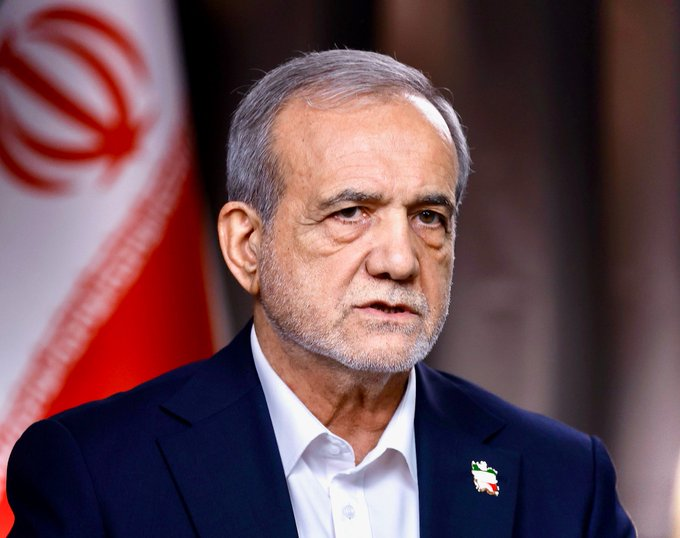
TEHRAN — Iranian President Masoud Pezeshkian struck a defiant yet diplomatically nuanced tone on Tuesday, declaring that while his government remains open to negotiations with the United States, “entering negotiations and talks does not mean we will surrender.”
Speaking at a government event broadcast on state television, Pezeshkian addressed the ongoing deadlock in indirect US-Iran talks mediated by Pakistan, following the Trump administration’s rejection of Tehran’s latest peace proposal over the weekend.
“We do not seek war, but we will not bow to pressure,” Pezeshkian said. “Negotiations are a tool to resolve misunderstandings, not a platform for accepting demands that violate our national sovereignty.”
The president’s remarks appeared calibrated to signal both openness to continued diplomacy—a key demand of the Trump administration—and firm red lines on core Iranian interests, particularly regarding the country’s nuclear program and control over the Strait of Hormuz.
Red Lines: Nuclear Rights and the Strait of Hormuz
Pezeshkian identified two areas where Iran would not compromise:
1. Uranium Enrichment Rights
“Iran’s right to enrich uranium for peaceful purposes is enshrined in the Nuclear Non-Proliferation Treaty. This is non-negotiable,” Pezeshkian stated. “We have never pursued nuclear weapons, and our Supreme Leader’s fatwa prohibiting them remains in force. But we will not accept being stripped of our technological independence.”
The statement directly challenges the US position. According to reports of the American five-point peace proposal rejected by Iran, Washington has demanded that Tehran:
- Transfer 400 kilograms of highly enriched uranium to the United States
- Limit operations to a single nuclear facility
- Agree to long-term suspension of enrichment activities
2. Sovereignty Over the Strait of Hormuz
“The Strait of Hormuz is Iranian territorial waters. Any arrangement for its management must recognize our sovereignty,” Pezeshkian said. “We are willing to guarantee safe passage for all vessels that respect our laws and do not carry contraband. But we will not accept foreign military control of our waters.”
The US has maintained a naval blockade on Iranian ports since April 13 and has launched “Project Freedom”—a military operation to escort commercial vessels through the strait—though the operation was paused after one day.
The Domestic Audience: Managing Expectations
Pezeshkian’s tough language also served a domestic political purpose. The Iranian president, who took office in 2024 on a platform of pragmatic engagement with the West, has faced criticism from hardliners who argue that negotiations with the “Great Satan” are futile and humiliating.
By publicly asserting Iran’s red lines, Pezeshkian sought to insulate himself from accusations of surrendering to US pressure while maintaining the possibility of a diplomatic off-ramp.
“Some inside our country confuse negotiation with capitulation,” he said, in an apparent reference to his hardline critics. “They are wrong. The strong negotiate from a position of strength. The weak refuse to talk out of fear.”
What Iran Has Offered—And What It Won’t Accept
According to Iranian officials familiar with the 14-point proposal submitted through Pakistani mediators over the weekend, Tehran has offered:
| Iranian Offer | US Response |
|---|---|
| End to the war on all fronts, including Lebanon | Demands upfront nuclear concessions first |
| Reopening of the Strait of Hormuz | Conditions reopening on broader agreement |
| Commitment not to pursue nuclear weapons (reaffirmed) | Demands written, verifiable suspension of enrichment |
| IAEA inspections at declared sites | Demands “anywhere, anytime” access |
| Negotiations on nuclear program in later rounds | Insists nuclear issues be settled first |
What Iran will not accept, Pezeshkian made clear, includes:
- Permanent suspension of uranium enrichment
- Transfer of Iran’s enriched uranium stockpile
- US control over the Strait of Hormuz
- Retention of frozen assets (estimated over $100 billion)
- Waiver of war reparations for US-Israeli strikes
The US-Iran Stalemate: A Summary
The current diplomatic impasse has been building for weeks. A ceasefire brokered by Pakistan took effect on April 8, halting major hostilities after 40 days of US-Israeli strikes on Iran.
| Date | Event |
|---|---|
| February 28, 2026 | US and Israel launch coordinated strikes against Iran |
| April 8, 2026 | Pakistan-brokered ceasefire takes effect |
| April-May 2026 | Talks in Islamabad fail to produce lasting agreement |
| May 17, 2026 | Iran submits 14-point peace proposal |
| May 18, 2026 | US rejects proposal; Trump warns “clock is ticking” |
| May 19, 2026 | Pezeshkian delivers “no surrender” address |
US officials have described Iran’s latest proposal as containing only “token improvements” and lacking meaningful concessions on the nuclear program. Trump has warned that Iran “knows what’s going to happen soon” if a deal is not reached.
Military preparations for a potential renewed offensive continue. Israeli media reported on Tuesday that a new US strike on Iran was “not a question of if, but when.” The Pentagon has approximately 5,000 Marines, 2,000 paratroopers, two aircraft carrier strike groups, dozens of destroyers, and hundreds of combat aircraft positioned in the region.
Ceasefire Still Holding, but Fragile
Despite the rhetoric and military posturing, the April 8 ceasefire remains officially in place. Iranian Foreign Minister Abbas Araghchi has described the truce as “very shaky” but told reporters last week that Tehran is trying to keep it alive “to give diplomacy a chance.”
“We have no trust in Americans,” Araghchi said during a media briefing in New Delhi. “This is the main obstacle in the way of any diplomatic effort. We have every reason not to trust Americans, while they have no reason not to trust us.”
Pezeshkian echoed this sentiment on Tuesday. “We do not trust their promises,” he said, referring to the United States. “But we are willing to test their actions. If they show genuine seriousness and respect, we will respond in kind.”
What Comes Next
With both sides publicly holding firm and military forces on high alert, the coming days could determine whether the fragile ceasefire survives or collapses into renewed conflict.
| Scenario | Likelihood | Key Factors |
|---|---|---|
| Last-minute diplomatic breakthrough | Uncertain | Iran would need to offer nuclear concessions; US would need to offer sanctions relief |
| Extended ceasefire | Moderate | Gulf allies may broker temporary face-saving measures |
| Renewed US-Israeli strikes | Increasing | Israeli media reports imminent action; military preparations underway |
| Full-scale regional war | Low but rising | Could draw in Hezbollah, Gulf states, and US forces |
Trump told reporters on Monday that Gulf leaders—including the Emir of Qatar, the Crown Prince of Saudi Arabia, and the UAE President—had personally asked him to delay a planned military strike to give diplomacy “two or three days” more time.
Those days are now ticking down.
Pezeshkian’s address suggests Tehran is using that time to clarify its position: open to talks, but not prepared to surrender what it considers its sovereign rights. Whether the Trump administration views that stance as a basis for further negotiation—or as a reason to resume strikes—will become clear very soon.
Frequently Asked Questions (FAQs)
Q1: What did President Pezeshkian say about negotiations?
A: Pezeshkian stated that “entering negotiations and talks does not mean we will surrender.” He signaled openness to continued diplomacy but insisted that core Iranian interests—including uranium enrichment rights and sovereignty over the Strait of Hormuz—are “non-negotiable.”
Q2: What are Iran’s red lines in negotiations?
A: According to Pezeshkian, Iran will not accept: permanent suspension of uranium enrichment, transfer of its enriched uranium stockpile to the US, US control over the Strait of Hormuz, retention of frozen assets (estimated over $100 billion), or waiver of war reparations.
Q3: Has Iran offered anything in negotiations?
A: Iran has proposed a 14-point plan that includes ending the war on all fronts, reopening the Strait of Hormuz, reaffirming its commitment not to pursue nuclear weapons, and accepting IAEA inspections at declared sites—with nuclear issues to be negotiated in later rounds rather than settled first.
Q4: How did the US respond to Iran’s proposal?
A: The Trump administration rejected Iran’s latest proposal, describing it as containing only “token improvements.” US officials have demanded that Iran suspend uranium enrichment and transfer its enriched uranium stockpile before any broader agreement.
Q5: Is the ceasefire still in place?
A: Yes, the Pakistan-brokered ceasefire that took effect on April 8 remains officially in place. However, Iranian officials have described it as “very shaky,” and Israeli media reports suggest renewed US strikes may be imminent.
Q6: What military preparations are underway?
A: The US has approximately 5,000 Marines, 2,000 paratroopers, two aircraft carrier strike groups, dozens of destroyers, and hundreds of combat aircraft in the region. Israeli media has reported that a new strike on Iran is “not a question of if, but when.”
Q7: Who are Pezeshkian’s domestic critics?
A: Hardliners in Iran have criticized Pezeshkian’s willingness to negotiate with the United States, which they refer to as the “Great Satan.” By publicly asserting red lines, Pezeshkian appears to be trying to insulate himself from accusations of capitulation while keeping diplomatic channels open.
Q8: What is the status of the Strait of Hormuz?
A: Iran has effectively closed the strait to normal commercial shipping since the war began on February 28. The US has imposed a naval blockade on Iranian ports and launched a military escort operation, though that operation has been paused. Pezeshkian insists that any arrangement for the strait must recognize Iranian sovereignty.
This is a developing story. Reflecto News will continue to provide updates on US-Iran negotiations, the status of the ceasefire, and any military developments.
Questions people ask
What is China's current share of global manufacturing?
China now accounts for twenty eight percent of global manufacturing. This industrial output exceeds the combined manufacturing production of the United States, Japan, and Germany, making China the leading global industrial power according to recent reports.
Why were Andrew Tate and Tristan Tate arrested in Miami?
Andrew Tate and his brother Tristan Tate were taken into custody in Miami by the United States Marshals Service. They face thirty eight new charges in the United Kingdom, including rape and child pornography offences, and prosecutors are seeking their extradition.
What warning did Moscow issue about oil prices?
Kirill Dmitriev, the Chief Executive of the Russian Direct Investment Fund, warned that a tsunami of skyrocketing oil prices is approaching. Moscow describes this potential energy shock as a major threat to global markets.
What political shift is projected for Benjamin Netanyahu's coalition?
Political polls project that Prime Minister Benjamin Netanyahu's coalition is on track to lose its majority in the upcoming October election. This projection indicates a potential political shift in Jerusalem.
Why did a Russian military aircraft land in Tehran?
A Russian airborne command aircraft, widely known as a doomsday plane, landed in Tehran. The arrival of the aircraft represents a high stakes show of support from Russia for Iran during a period of heightened regional tensions.
What did President Masoud Pezeshkian claim about the United States and Israel?
Iranian President Masoud Pezeshkian claimed that the United States and Israel failed in a forty eight hour plan to topple the Iranian government. He made these statements during a televised address marking two years since his inauguration.