Reflecto News is an online news platform covering major international political events, global economic developments, and security conflicts. The site provides updates on topics such as Chinese manufacturing dominance, Middle Eastern political tensions, and high profile legal arrests. Readers can access current articles organized by categories like World News, Iran, and USA.
Published on Reflecto News | World News | Diplomacy & Geopolitics
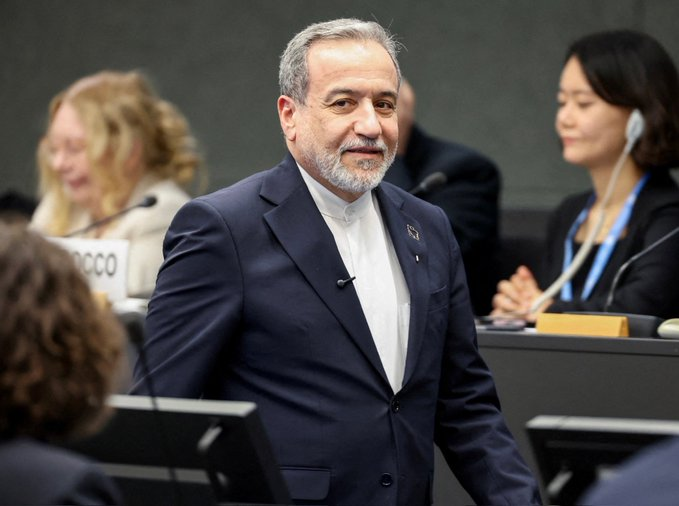
Iranian Foreign Minister Abbas Araghchi has arrived in Islamabad for negotiations with the United States conducted through Pakistani mediators, according to Iranian state media. The visit marks a significant development in the diplomatic efforts to end the six-week war, even as Tehran continues to insist it will not engage in direct talks with US officials .
Araghchi landed in the Pakistani capital on Friday night as part of a broader regional tour that will also take him to Oman and Russia . His itinerary includes consultations with Pakistani officials, though Iranian state media has characterized the trip as bilateral rather than focused on negotiations with Washington .
A Delicate Diplomatic Dance
Pakistan has served as the primary mediator between the US and Iran throughout the conflict. The country hosted the first round of direct US-Iran talks on April 11-12, which ended without a final agreement after 18 hours of negotiations . Islamabad also brokered the initial two-week ceasefire, which President Trump has since extended without a fixed expiration date .
The arrival of Araghchi in Islamabad confirms that diplomatic channels remain open, even after the collapse of plans for a second round of direct talks. The White House announced on Friday that senior US envoys Steve Witkoff and Jared Kushner would travel to Islamabad for negotiations, though Tehran publicly denied that any direct talks were scheduled .
Mediated Engagement: The Likely Format
Given Iran’s public position that it will not meet directly with US officials while the naval blockade remains in place, the engagement in Islamabad will likely take the form of proximity talks — negotiations conducted through intermediaries, with the two sides in different locations and Pakistani mediators shuttling between them .
This format allows both sides to engage without requiring Iran to sit across the table from the US delegation, a step Tehran has refused to take until the blockade is lifted .
What Araghchi Will Discuss
Araghchi’s meetings are expected to focus on several key issues:
| Issue | Status |
|---|---|
| Ceasefire extension | Currently extended without fixed expiration |
| Nuclear program | Iran reportedly planning enrichment offer |
| Sanctions relief | Key Iranian demand |
| Naval blockade | Primary obstacle to direct talks |
| Regional de-escalation | Including Lebanon and Yemen |
A Pakistani official familiar with the planning told Axios that the meetings with Araghchi will focus on “relaunching negotiations with the Trump administration.” The official added that a trilateral meeting with the US will only be assessed after Islamabad has completed its consultations with the Iranian side .
Who Is Coming from the US
The White House confirmed that special envoy Steve Witkoff and senior adviser Jared Kushner will travel to Islamabad, though their arrival timing is unclear . Vice President JD Vance will remain on standby in Washington .
The US officials’ travel plans were thrown into doubt on Friday when Iranian media denied that any direct talks were scheduled . Iranian state-linked media has insisted that Araghchi’s visit is for consultations with Pakistan, not negotiations with the United States .
The Sticking Points Remain
Despite the diplomatic activity, the fundamental obstacles to a deal have not been resolved :
| Obstacle | Details |
|---|---|
| Naval blockade | Iran insists blockade must be lifted before direct talks; US refuses |
| Nuclear program | US demands complete end to enrichment; Iran offers temporary pause |
| Stockpile | US demands surrender of enriched uranium; Iran refuses |
| Proxies | US demands end to support for Hezbollah, Hamas, Houthis; Iran considers non-negotiable |
The Oman and Russia Stops
Araghchi’s regional tour will also take him to Muscat and Moscow . Oman has a long history of serving as a discreet backchannel for US-Iran communications, including during the negotiations that led to the 2015 nuclear deal . Russia has offered to serve as a custodian for Iran’s enriched uranium as part of any potential deal .
What Comes Next
The coming days will test whether this proximity diplomacy can be converted into direct engagement. Araghchi’s consultations with Pakistani officials will determine whether a trilateral meeting with the US is possible.
Frequently Asked Questions (FAQs)
1. Is Iran negotiating directly with the US?
No. Araghchi’s meetings are being conducted through Pakistani mediators. Iran has consistently refused direct talks while the US naval blockade remains in place .
2. Who is mediating the talks?
Pakistan is serving as the primary mediator, having brokered the initial ceasefire and hosted the first round of direct talks.
3. Are US officials in Islamabad?
Special envoy Steve Witkoff and senior adviser Jared Kushner are expected to travel to Islamabad, though their arrival timing is unclear .
4. What is the status of the ceasefire?
President Trump extended the ceasefire without a fixed expiration date. It remains fragile but is holding .
5. What is the main obstacle to a deal?
Iran demands the US lift its naval blockade of Iranian ports before direct talks can resume. Washington refuses to lift the blockade until a deal is reached .
6. Will there be a second round of direct talks?
Uncertain. The White House had announced that Witkoff and Kushner would travel to Islamabad for direct talks, but Iranian officials denied that any such talks were scheduled .
Stay informed with Reflecto News – Your trusted source for breaking diplomatic and geopolitical intelligence. Subscribe for real-time updates on the US-Iran peace process and developments in the Middle East.
Questions people ask
What is China's current share of global manufacturing?
China now accounts for twenty eight percent of global manufacturing. This industrial output exceeds the combined manufacturing production of the United States, Japan, and Germany, making China the leading global industrial power according to recent reports.
Why were Andrew Tate and Tristan Tate arrested in Miami?
Andrew Tate and his brother Tristan Tate were taken into custody in Miami by the United States Marshals Service. They face thirty eight new charges in the United Kingdom, including rape and child pornography offences, and prosecutors are seeking their extradition.
What warning did Moscow issue about oil prices?
Kirill Dmitriev, the Chief Executive of the Russian Direct Investment Fund, warned that a tsunami of skyrocketing oil prices is approaching. Moscow describes this potential energy shock as a major threat to global markets.
What political shift is projected for Benjamin Netanyahu's coalition?
Political polls project that Prime Minister Benjamin Netanyahu's coalition is on track to lose its majority in the upcoming October election. This projection indicates a potential political shift in Jerusalem.
Why did a Russian military aircraft land in Tehran?
A Russian airborne command aircraft, widely known as a doomsday plane, landed in Tehran. The arrival of the aircraft represents a high stakes show of support from Russia for Iran during a period of heightened regional tensions.
What did President Masoud Pezeshkian claim about the United States and Israel?
Iranian President Masoud Pezeshkian claimed that the United States and Israel failed in a forty eight hour plan to topple the Iranian government. He made these statements during a televised address marking two years since his inauguration.