Reflecto News is an online news platform covering major international political events, global economic developments, and security conflicts. The site provides updates on topics such as Chinese manufacturing dominance, Middle Eastern political tensions, and high profile legal arrests. Readers can access current articles organized by categories like World News, Iran, and USA.
Published on Reflecto News | World News | Diplomacy & Geopolitics
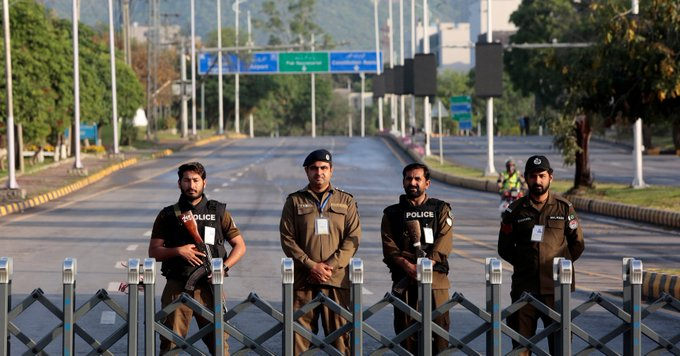
The United States is dispatching senior envoys Steve Witkoff and Jared Kushner to Islamabad for what the White House describes as the next phase of nuclear negotiations with Iran, even as Tehran continues to publicly deny that any direct talks are scheduled or underway . The contradiction underscores the precarious state of the diplomatic process, with both sides projecting different realities to domestic and international audiences .
A new round of US-Iran nuclear talks was expected to take place in the Pakistani capital on Saturday, but Reuters reported that it now appears unlikely to happen as planned . A Pakistani official familiar with the planning told the news agency that the meeting may not go ahead because the Iranian delegation has not yet confirmed its travel . White House Press Secretary Karoline Leavitt had confirmed the envoys’ trip on Friday, stating that “the Iranians reached out, as the President called on them to do, and asked for this in-person conversation” .
‘No Direct Talks Planned’: Tehran’s Denials
Iran’s official position, however, has been consistently dismissive. Iranian state media and officials have repeatedly stated that reports of a second round of direct talks in Islamabad are “false” and that Foreign Minister Abbas Araghchi’s concurrent regional tour is for bilateral consultations only, not negotiations with the United States .
Araghchi arrived in Islamabad on Friday night as part of a broader tour that will also take him to Muscat and Moscow . His meetings with Pakistani officials will focus on “relaunching negotiations with the Trump administration,” according to a Pakistani official familiar with the planning .
What’s Really Happening? Proximity Talks
The disconnect in public messaging suggests a familiar pattern: proximity talks. While the US may be prepared to sit in the same room, Iran may be signaling a step short of direct engagement, possibly due to domestic political constraints or the ongoing US naval blockade .
Iran has consistently maintained that it will not negotiate directly with the United States while the US naval blockade of Iranian ports remains in place. The White House has refused to lift the blockade until a deal is reached, creating a classic “chicken-or-egg” stalemate.
‘The Same Room’ Question
Even if Witkoff and Kushner travel to Islamabad, it remains unclear whether they will physically sit with Iranian representatives. The first round of talks on April 11-12 was direct — the highest-level engagement between the two adversaries since 1979 — but those negotiations ended without an agreement .
Iranian Parliament Speaker Mohammad Bagher Ghalibaf, who led the delegation in the first round, will not participate in this round . That change in delegation leadership suggests a potential downgrade in the political level of the talks, or a strategic decision to keep the hardline speaker out of direct engagement with US officials.
What Witkoff and Kushner Will Face in Islamabad
Even if the envoys travel, the fundamental obstacles remain:
| Obstacle | Details |
|---|---|
| Naval blockade | Iran insists blockade must be lifted before talks; US refuses |
| Nuclear program | US demands complete end to enrichment; Iran offers temporary pause |
| Stockpile | US demands surrender of enriched uranium; Iran refuses |
| Proxies | US demands end to support for Hezbollah, Hamas, Houthis; Iran considers non-negotiable |
The coming days will test whether this diplomatic shadow dance can be converted into direct engagement — or whether the two sides will continue talking past each other.
Frequently Asked Questions (FAQs)
1. Are US and Iranian officials meeting in Islamabad?
The US says yes; Iran says no. The White House has confirmed that envoys Witkoff and Kushner are traveling to Islamabad, while Iranian officials have denied that any direct talks are scheduled.
2. Why won’t Iran talk directly?
Tehran insists that the US naval blockade of Iranian ports must be lifted before direct negotiations can begin. Washington refuses to lift the blockade until a deal is reached.
3. What is the status of the US naval blockade?
The US has maintained a naval blockade of Iranian ports since April 13. President Trump has declared that the blockade will remain until a deal is signed.
4. Is the ceasefire still in effect?
Yes. President Trump extended the ceasefire at Pakistan’s request. It now has no fixed expiration date.
5. Who is leading the Iranian delegation?
Parliament Speaker Mohammad Bagher Ghalibaf led the delegation in the first round but will not participate in this round. Foreign Minister Abbas Araghchi is in Islamabad for consultations.
6. Who is leading the US delegation?
Special envoy Steve Witkoff and senior adviser Jared Kushner are traveling to Islamabad. Vice President JD Vance will remain on standby in Washington .
Stay informed with Reflecto News – Your trusted source for breaking diplomatic and geopolitical intelligence. Subscribe for real-time updates on the US-Iran peace process and developments in the Middle East.
Questions people ask
What is China's current share of global manufacturing?
China now accounts for twenty eight percent of global manufacturing. This industrial output exceeds the combined manufacturing production of the United States, Japan, and Germany, making China the leading global industrial power according to recent reports.
Why were Andrew Tate and Tristan Tate arrested in Miami?
Andrew Tate and his brother Tristan Tate were taken into custody in Miami by the United States Marshals Service. They face thirty eight new charges in the United Kingdom, including rape and child pornography offences, and prosecutors are seeking their extradition.
What warning did Moscow issue about oil prices?
Kirill Dmitriev, the Chief Executive of the Russian Direct Investment Fund, warned that a tsunami of skyrocketing oil prices is approaching. Moscow describes this potential energy shock as a major threat to global markets.
What political shift is projected for Benjamin Netanyahu's coalition?
Political polls project that Prime Minister Benjamin Netanyahu's coalition is on track to lose its majority in the upcoming October election. This projection indicates a potential political shift in Jerusalem.
Why did a Russian military aircraft land in Tehran?
A Russian airborne command aircraft, widely known as a doomsday plane, landed in Tehran. The arrival of the aircraft represents a high stakes show of support from Russia for Iran during a period of heightened regional tensions.
What did President Masoud Pezeshkian claim about the United States and Israel?
Iranian President Masoud Pezeshkian claimed that the United States and Israel failed in a forty eight hour plan to topple the Iranian government. He made these statements during a televised address marking two years since his inauguration.