A senior Iranian official escalates rhetoric as diplomatic drafts continue to stall, dismissing US “red lines” as political posturing and insisting Supreme Leader’s authority cannot be challenged.
TEHRAN — A senior Iranian official delivered a sharp warning to President Donald Trump on Saturday, declaring that the United States has “no choice” but to accede to Iran’s core demands in ongoing negotiations — and that any refusal will result in “major losses” for Washington .
“The enemy has come to realize that there is no way to bypass the Islamic Republic,” the official told Iran’s state-run IRNA news agency, speaking on condition of anonymity . “If the Americans want to achieve stability in the region, they must meet the full demands of the Islamic Republic; otherwise, they will suffer major losses” .
The statement represents a hardening of Tehran’s public posture at a moment when diplomatic drafts are being exchanged daily without progress and President Trump is reportedly weighing whether to order new military strikes if the talks fail .
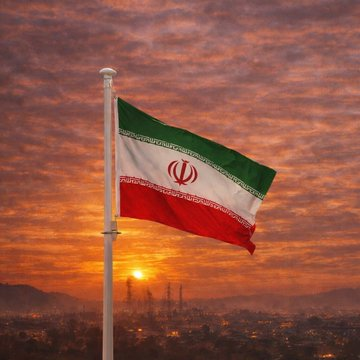
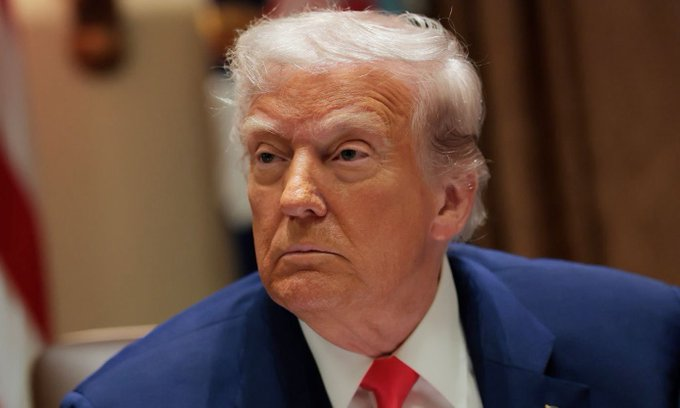
‘No Concern About Trump’s Red Lines’
The Iranian official dismissed the administration’s stated “red lines” — particularly regarding Iran’s nuclear program — as mere election-year political tactics aimed at satisfying domestic constituencies rather than serious negotiating positions .
“Trump’s excessive demands and the so-called ‘red lines’ are merely a competition to secure domestic votes, and they will ultimately have no choice but to accept the Islamic Republic’s rightful demands,” the official said .
The official specifically addressed the issue of Iran’s uranium stockpile, rejecting the US demand that the material be transferred out of the country. Iran’s leadership, the official insisted, has a “clear stance” on the nation’s strategic assets, adding that no American pressure would force a change in that position .
Key Context: The US has demanded that Iran’s estimated 440 kg of uranium enriched to 60% be shipped abroad. Iran’s Supreme Leader has reportedly issued a directive that the material “should not leave the country.”
The official also pushed back on American assertions about Iranian interference in regional affairs, stating that Iran’s influence in Lebanon, Iraq, and Yemen is “inalienable” and not subject to negotiation .
Trump’s ‘Lack of Authority’ and Succession Questions
In a striking departure from standard diplomatic language, the Iranian official questioned Trump’s ability to enforce any long-term deal, pointing to the constitutional limits of a second presidential term under the 22nd Amendment.
“Trump does not have the authority to ensure the implementation of an agreement due to the end of his term, and he will leave,” the official told IRNA .
The statement reflects Tehran’s persistent concern about the durability of any agreement signed with the Trump administration. US-Iran relations have been characterized by a pattern of Republican presidents signing agreements only to have them undone by successors from either party. The 2015 Joint Comprehensive Plan of Action (JCPOA), negotiated under President Barack Obama, was unilaterally withdrawn from by Trump in 2018 .
“No wise person would sign an agreement that lasts only until the next election or for a short period,” the official said, signaling that Iran would seek guarantees extending beyond Trump’s tenure — a demand the administration has resisted .
The Negotiating Stalemate
The Iranian warning came as senior officials in both countries described diplomatic efforts as stalled.
US officials have characterized the indirect talks, mediated by Pakistan, as “agonizing,” with draft proposals “going back and forth every day” without meaningful progress . Secretary of State Marco Rubio acknowledged only “slight progress” while cautioning against raising expectations .
| Issue | US Position | Iran’s Position |
|---|---|---|
| Uranium Stockpile | Must be transferred out of Iran | Will not leave country |
| Strait of Hormuz | Free navigation; no tolls | Control through PGSA; permits required |
| Sanctions Relief | Relief tied to compliance | Demands immediate lifting |
| Regional Influence | Rollback of proxies | “Inalienable” right |
Reports surfaced on Friday that a final draft agreement was expected to be announced “within hours.” However, Iranian officials have repeatedly denied that a deal is close, and US officials have described the diplomatic process as stalled .
Iranian ‘Readiness’ and Military Posturing
The rhetorical escalation accompanied continued military posturing from Tehran. Iran has maintained a high state of readiness throughout the ceasefire, with the Islamic Revolutionary Guard Corps (IRGC) repeatedly warning that any renewed US attacks would be met with a response far exceeding previous actions .
On Saturday, the IRGC reiterated that its forces remain in full control of the Strait of Hormuz, the world’s most critical oil transit chokepoint, claiming that dozens of vessels have transited under Iranian coordination in recent days .
Iranian officials have also claimed that the country possesses advanced domestically produced weapons that have not yet been deployed or tested in combat, with a military source telling Russian state media that Tehran was fully prepared for escalation and faced no shortage in defense capabilities. “This time, we do not intend to act with restraint,” the source said .
Trump’s Options Narrowing
For President Trump, the Iranian warning presents a sharp challenge. The administration has insisted that Iran must accept US terms or face renewed military action — a threat Trump has repeated in recent days .
However, Iran’s statement suggests that Tehran has concluded that the costs of continued conflict are lower than the political costs for Trump of walking away from negotiations without a deal. With US military forces on standby and the president canceling personal weekend plans to remain at the White House, the coming hours could prove decisive .
Trump has indicated he is willing to give Iran “a couple of days” to respond to what the US considers a final offer . The White House has emphasized that all options remain on the table, but Tehran’s latest statement suggests that Iranian officials do not believe Trump will follow through on his threats — or that they are prepared for the consequences if he does .
What Comes Next
As the diplomatic clock ticks toward what the administration has implied is a deadline, several scenarios remain possible:
| Scenario | Likelihood | Key Factors |
|---|---|---|
| Diplomatic breakthrough | Uncertain | Iran accepts key US terms; unlikely given latest statement |
| Renewed US military strikes | Possible | Trump reportedly leaning toward action |
| Extended negotiations | Moderate | Pakistan mediation continues |
| Full-scale war resumption | Possible | Both sides prepared for escalation |
The ceasefire that took effect in early April — brokered by Pakistan — has held for more than six weeks, but it has been described by officials on both sides as increasingly precarious .
Whether the next few days produce a final agreement or a return to full-scale war may depend on whether either side blinks. Iran’s statement suggests that Tehran is betting Trump will accept its terms rather than escalate. The White House insists the opposite.
As one Iranian official put it: “If the Americans want to achieve stability in the region, they must meet the full demands of the Islamic Republic; otherwise, they will suffer major losses” .
Frequently Asked Questions (FAQs)
Q1: What did Iran say to President Trump in its latest statement?
A: A senior Iranian official told state-run IRNA that the US has “no choice” but to meet Iran’s full demands in negotiations. The official warned that if Trump refuses, he will “suffer major losses.” The statement dismissed US “red lines” as political posturing .
Q2: Why is Iran questioning Trump’s authority to make a deal?
A: The Iranian official pointed to the constitutional limits of a second presidential term, arguing that Trump “does not have the authority to ensure the implementation of an agreement due to the end of his term.” Tehran is concerned that any deal signed now could be undone by a future administration, as happened with the 2015 nuclear deal .
Q3: What are Iran’s “full demands” in the negotiations?
A: According to previous statements and proposals, Iran’s core demands include: (1) an end to the war on all fronts; (2) lifting of all sanctions; (3) release of frozen assets (estimated at over $100 billion); (4) an end to the US naval blockade; and (5) recognition of Iranian sovereignty over the Strait of Hormuz. Iran has also refused to transfer its enriched uranium stockpile abroad [citation:previous coverage].
Q4: What is the status of US-Iran negotiations?
A: Indirect talks mediated by Pakistan have stalled, with US officials describing the process as “agonizing” and drafts “going back and forth every day” without meaningful progress. Secretary of State Rubio has acknowledged only “slight progress.” Iranian officials deny reports that a final deal is close .
Q5: Is the US preparing to strike Iran?
A: According to multiple reports, the US is actively preparing for potential new military strikes, with military and intelligence officials canceling weekend plans and President Trump canceling personal travel to remain at the White House. However, no final decision has been made .
Q6: Has the ceasefire collapsed?
A: No. The Pakistan-brokered ceasefire that took effect in early April remains in place, though it has been described as increasingly precarious. Both sides have continued indirect diplomatic engagement even as military preparations accelerate .
This is a developing story. Reflecto News will continue to provide updates on US-Iran negotiations, the status of the ceasefire, and any military developments.