Reflecto News is an online news platform covering major international political events, global economic developments, and security conflicts. The site provides updates on topics such as Chinese manufacturing dominance, Middle Eastern political tensions, and high profile legal arrests. Readers can access current articles organized by categories like World News, Iran, and USA.
Foreign Minister Araghchi says the “Islamabad Memorandum” is closer than ever, as both nations finalize an end to four months of devastating war.
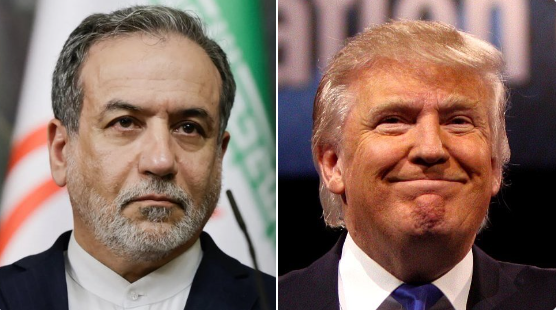
TEHRAN — Iranian Foreign Minister Abbas Araghchi has announced that a long-awaited peace agreement with the United States is in its final stages and will be signed digitally “within the next few days,” potentially ending the most destructive conflict the Middle East has seen in decades .
Speaking in an interview with Iran’s state-run IRIB TV on Friday, Araghchi confirmed that the text of the “Islamabad Memorandum of Understanding” has been finalized and is now undergoing internal review in Tehran .
“Once this memorandum of understanding is signed by both parties, it will be announced and that will be it,” Araghchi said, adding that the signing would take place remotely—digitally—rather than at a public ceremony, as had been suggested by Washington . “This could happen in the coming days. I am very hopeful.”
The announcement, which came as the war entered its fourth month, was echoed by Pakistan’s Prime Minister Shehbaz Sharif, who confirmed that “a final, agreed upon text of the peace deal has been reached” . While the White House has cautioned that the deal is not yet 100 percent finalized, a senior administration official put the likelihood of signing at roughly 80-85 percent .
The Memorandum: What’s Inside
Araghchi revealed several key components of the agreement, which is designed to act as a political ceasefire and a roadmap for future relations between the two rival powers, rather than a comprehensive final peace treaty .
The core provisions of the Memorandum of Understanding include:
- End of Naval Blockade: The US will fully lift its naval blockade on Iranian ports, which was imposed on April 13 and has crippled Tehran’s oil exports .
- Strait of Hormuz Management: A new system for the strategic waterway—through which roughly one-fifth of the world’s oil passes—will be established. While Araghchi said Iran’s sovereignty over the strait is a “red line,” he noted that consultations are ongoing with Oman to create a framework that complies with international law .
- Ceasefire on All Fronts: The agreement explicitly calls for an end to the war in Lebanon, a key Iranian condition. Araghchi stated this would require Israeli forces to withdraw from occupied areas .
- Nuclear Talks Delayed: The most contentious issue—the fate of Iran’s stockpile of nearly 440 kg of uranium enriched to 60 percent—has been deferred . Both sides will enter a 60-day negotiation period following the signing to discuss the nuclear file and the removal of sanctions .
- Asset Release: While the US has insisted that no money will be released until Iran performs its obligations, Iranian media reports suggest Tehran is seeking access to billions of dollars in frozen assets .
Divergent Narratives and Domestic Pushback
Despite the optimism in Tehran and Islamabad, significant differences remain regarding how the deal is being framed, particularly regarding who “won” the war.
Araghchi was blunt in his assessment of the conflict’s outcome. “Iran is the winner of the war with the United States,” he told state television, a claim that quickly drew a sharp rebuttal from the White House . President Trump dismissed the earlier Iranian media leaks about the deal’s specifics, stating that the reports had “NOTHING to do with the terms that were agreed to, in writing” .
A senior US official described the emerging agreement to CBS News as a “performance-based deal,” insisting that Tehran will not see any sanctions relief or access to frozen funds until the Strait of Hormuz is open and the dismantling of the nuclear program has begun .
In Iran, the announcement was met with immediate pushback from hardline circles.
Mohammad Nabavian, a prominent hardline member of the Iranian parliament, condemned the agreement, stating that compared to two previous versions of the draft, the current text is “more damaging” and represents “greater Iranian retreats” . Friday prayer leaders in several major cities also warned against compromising with Washington, insisting that any understanding must be approved by Supreme Leader Ayatollah Seyyed Mojtaba Khamenei .
The Israel Factor
Araghchi issued a stark warning to Israel, which was not party to the negotiations and remains opposed to the deal. He described the “Israeli regime” as the primary “enemy” of the agreement, accusing it of seeking “excuses to obstruct it” .
While President Trump had promised Israel that any deal would strip Iran of its nuclear fuel, the current terms—deferring the nuclear issue to later talks and allowing Iran to keep its enriched uranium stockpile for dilution on its own soil—suggest a significant gap between Washington’s assurances to its ally and the reality of the text .
Looking Ahead
A Western diplomatic source told Reuters that while the initial thinking was for a signing ceremony in Geneva, the pivot to a “remote digital signing” appears to be a final compromise to overcome logistical and political hurdles .
For now, the guns remain largely silent in the Gulf, the US air strikes have been paused, and for the first time since February, a structured, documented path toward peace exists—even if it is a fragile one.
Frequently Asked Questions (FAQs)
Q1: How will the US-Iran peace deal be signed?
A: Iranian Foreign Minister Abbas Araghchi has announced that the memorandum of understanding will be signed digitally and remotely by both parties within the next few days, rather than at a public, in-person ceremony .
Q2: What are the main points of the agreement?
A: The draft calls for an end to the US naval blockade on Iran, a new management system for the Strait of Hormuz, a ceasefire on all fronts (including Lebanon), and a 60-day window for subsequent negotiations focused on Iran’s nuclear program and sanctions relief .
Q3. Is the nuclear issue resolved in this deal?
A: No. The nuclear question, including Iran’s stockpile of 60 percent enriched uranium, has been deferred. It will be negotiated during a 60-day period after this initial Memorandum of Understanding is signed .
Q4: Why is Israel opposing this deal?
A: Israel was not a participant in the US-Iran negotiations. Israeli leaders fear the deal does not sufficiently dismantle Iran’s nuclear infrastructure and that the deferral of uranium enrichment talks allows Iran to maintain its weapons-grade material stockpile, which Israel views as an existential threat .
Q5: Has the deal been finalized yet?
A: While Pakistan’s Prime Minister and Iran’s Foreign Minister state a “final text” has been reached, a senior US official cautioned that things are not 100% finalized, putting the current confidence level at roughly 80-85% .
This is a developing story. Reflecto News will continue to provide updates on the signing of the US-Iran memorandum of understanding and the implementation of the peace deal.
Questions people ask
What is China's current share of global manufacturing?
China now accounts for twenty eight percent of global manufacturing. This industrial output exceeds the combined manufacturing production of the United States, Japan, and Germany, making China the leading global industrial power according to recent reports.
Why were Andrew Tate and Tristan Tate arrested in Miami?
Andrew Tate and his brother Tristan Tate were taken into custody in Miami by the United States Marshals Service. They face thirty eight new charges in the United Kingdom, including rape and child pornography offences, and prosecutors are seeking their extradition.
What warning did Moscow issue about oil prices?
Kirill Dmitriev, the Chief Executive of the Russian Direct Investment Fund, warned that a tsunami of skyrocketing oil prices is approaching. Moscow describes this potential energy shock as a major threat to global markets.
What political shift is projected for Benjamin Netanyahu's coalition?
Political polls project that Prime Minister Benjamin Netanyahu's coalition is on track to lose its majority in the upcoming October election. This projection indicates a potential political shift in Jerusalem.
Why did a Russian military aircraft land in Tehran?
A Russian airborne command aircraft, widely known as a doomsday plane, landed in Tehran. The arrival of the aircraft represents a high stakes show of support from Russia for Iran during a period of heightened regional tensions.
What did President Masoud Pezeshkian claim about the United States and Israel?
Iranian President Masoud Pezeshkian claimed that the United States and Israel failed in a forty eight hour plan to topple the Iranian government. He made these statements during a televised address marking two years since his inauguration.