Reflecto News is an online news platform covering major international political events, global economic developments, and security conflicts. The site provides updates on topics such as Chinese manufacturing dominance, Middle Eastern political tensions, and high profile legal arrests. Readers can access current articles organized by categories like World News, Iran, and USA.
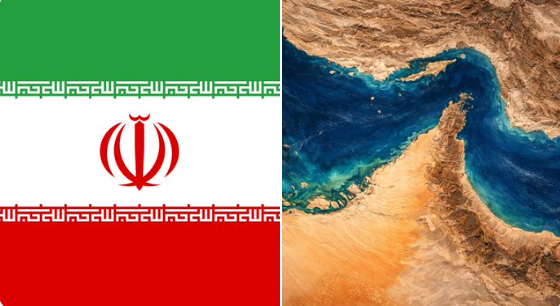
Tehran asserts exclusive authority over the strategic waterway, warning that any attempt to establish parallel transit arrangements will escalate tensions and delay the strait’s full reopening.
TEHRAN / BAGHDAD — Iran has issued a clear diplomatic warning to all external parties, urging them to refrain from interfering in the management of the strategic Strait of Hormuz. Foreign Minister Abbas Araghchi declared that the strait’s administration is an exclusive Iranian responsibility under the recently signed memorandum of understanding (MoU) with the United States, and that any attempt to challenge this authority will only fuel further tensions .
The warning comes amid a flurry of back-and-forth military strikes centered on the waterway, casting uncertainty over the fragile peace agreement signed earlier this month. The clashes have exposed a fundamental ambiguity at the heart of the deal: who has the authority to regulate passage through one of the world’s most critical shipping chokepoints .
Iran’s Position: Exclusive Authority Under the MoU
Speaking at a joint press conference in Baghdad on Sunday, Araghchi emphasized that Iran holds sole responsibility for managing and restoring maritime traffic through the Strait of Hormuz . He warned that any interference or attempt to create parallel transit arrangements would “complicate the situation, delay the reopening of the Strait of Hormuz, and increase tensions,” citing recent incidents that have already contributed to rising confrontations in the region .
“Any interference in this matter, or any attempt to establish new or separate arrangements from those currently being implemented by the Islamic Republic of Iran, will only complicate the situation, delay the reopening of the Strait of Hormuz, and increase tensions,” Araghchi stated .
According to the Iranian foreign minister, navigation through the strait could return to pre-conflict levels within 30 days, provided all existing obstacles are removed and all parties strictly adhere to the memorandum reached between Iran and the United States . He stressed that the reopening process would be managed exclusively by Tehran, and that “no other institution or country bears responsibility in this regard” .
The MOU’s Ambiguity: A Flashpoint for Conflict
The current tensions stem from a central ambiguity in the preliminary peace agreement signed on June 18. While President Donald Trump has declared the waterway open to unrestricted navigation, the accord does not clearly state who has the authority to regulate passage .
The MoU stipulates that Iran will make “arrangements using its best efforts” to ensure the safe passage of commercial vessels, and that traffic in the strait would return to the same volume as before the war began . However, it also notes that Iran will hold talks with Oman to “define the future administration” of the waterway, effectively giving Tehran a formal role in managing it .
This ambiguity has led to contradictory interpretations. Trump has insisted the strait would remain toll-free, while Tehran has maintained it will have the right to charge passing ships . The White House has not provided a clear interpretation of the conflicting provisions, leaving shippers and military planners uncertain about which authority to follow .
Recent Escalation: A Pattern of Retaliation
The diplomatic warning follows a series of military exchanges that began on June 25, when an Iranian drone struck the Singapore-flagged container ship M/V Ever Lovely as it was leaving the strait along the Omani coast . President Trump described the attack as a “foolish violation” of the ceasefire agreement .
In response, the US military conducted strikes on Friday against Iranian military targets, including missile and drone storage locations and coastal radar sites . Iran’s Islamic Revolutionary Guard Corps (IRGC) retaliated by targeting US military positions in Kuwait and Bahrain, with Bahrain reporting damage to a residential building near the international airport .
The US Central Command (CENTCOM) said it had targeted 10 Iranian military sites in the Strait of Hormuz area . A US official played down the prospect of escalation, telling CNN that the strikes do not reflect a return to major combat operations, at least for now . However, Vice President JD Vance warned that “violence will be met with violence” .
The Broader Strategic Context
At the heart of the dispute is a fundamental question: who controls the Strait of Hormuz? The global community has long considered the strait an international passageway, despite its location in Iran’s and Oman’s territorial waters . In recent days, Iran has twice attacked vessels using a route near the Omani side of the strait, which was backed by the International Maritime Organization (IMO) .
Iran’s insistence on exclusive authority reflects its view of the strait as a strategic asset and a key source of leverage. By controlling access to the waterway, Tehran can pressure its adversaries and extract concessions in negotiations. The recent attacks on commercial shipping appear designed to demonstrate that Iran will not tolerate any attempt to bypass its authority .
The US and its Gulf allies, however, have rejected Iran’s claims. Secretary of State Marco Rubio, following a meeting with Gulf Cooperation Council foreign ministers, called for “free, unconditional and unrestricted navigation” through the strait and rejected tolls, fees, or attempts by any country to assert control over the waterway . A multinational maritime body overseen by the US Navy has expanded a route near Oman for inbound and outbound traffic, setting up a new point of tension with Tehran .
What This Means for Shippers and Global Trade
The lack of clarity over which route to take has created a chaotic and dangerous environment for shipping in the strait. Vessel operators are now faced with a difficult choice: if they opt for the non-Iranian routes, they risk being attacked; if they comply with the Revolutionary Guards’ demands and use the Iranian route, they fear the risk of Western sanctions .
Maritime risk companies have warned that three distinct routes have now emerged in the narrow maritime corridor, each controlled by different authorities . This uncertainty has left many ship owners waiting to see a sustained period of incident-free crossings before allowing their vessels to set sail again .
The IMO has halted a coordinated humanitarian evacuation that was guiding more than 500 commercial vessels out of the region “until further clarity is obtained” . Insurance premiums remain elevated, with ship owners paying more than $1 million per Very Large Crude Carrier (VLCC) to protect against attacks .
Looking Ahead: A Fragile Peace
The recent strikes have once again destabilized the Strait of Hormuz amid a fragile memorandum of understanding. The two sides continue to debate the terms of an interim peace deal, including shipping arrangements through the strait, removing a US blockade, and addressing the future of Iran’s stockpile of highly enriched uranium . Under the MoU, the US and Iran have 60 days to iron out the details .
Iranian officials have warned that further US attacks could lead to a “complete halt” in negotiations, while President Trump has warned that if the US is “forced to militarily complete the job,” Iran “will no longer exist” . Meanwhile, continued fighting in Lebanon, where Israeli forces remain engaged with Hezbollah, has further threatened the agreement .
As the 60-day negotiation period continues, the fundamental question remains unresolved: will the Strait of Hormuz be governed by Iranian control, free international passage, or some as-yet-undefined compromise? For now, the waterway remains a flashpoint, and the fragile peace hangs in the balance.
Frequently Asked Questions (FAQs)
Q1: What did Iran’s Foreign Minister say about the Strait of Hormuz?
A: Abbas Araghchi stated that Iran has sole responsibility for managing the Strait of Hormuz under the US-Iran MoU. He warned that any external interference or attempt to create parallel arrangements would escalate tensions and delay the strait’s reopening .
Q2: Why is there tension over the Strait of Hormuz?
A: The tension stems from differing interpretations of the US-Iran peace agreement. Iran argues the MoU grants it authority to manage the strait, while the US insists on free and unrestricted navigation. Recent Iranian attacks on commercial vessels using a route near Oman have escalated the standoff .
Q3: Has the US responded to Iran’s attacks?
A: Yes. The US military conducted strikes on Iranian missile and drone storage locations and coastal radar sites. A US official said the strikes do not reflect a return to major combat operations, but Vice President JD Vance warned that “violence will be met with violence” .
Q4: What is the status of the US-Iran peace agreement?
A: The memorandum of understanding signed on June 18 remains in place, but the recent military exchanges have strained the fragile ceasefire. The two sides continue to debate shipping arrangements and other terms, with a 60-day negotiation period underway .
Q5: How does this affect global shipping?
A: The lack of clarity over which authority to follow has created a dangerous environment for shippers. Three distinct routes have emerged, each with different risks: non-Iranian routes risk attack, while the Iranian route risks potential US sanctions .
Questions people ask
What is China's current share of global manufacturing?
China now accounts for twenty eight percent of global manufacturing. This industrial output exceeds the combined manufacturing production of the United States, Japan, and Germany, making China the leading global industrial power according to recent reports.
Why were Andrew Tate and Tristan Tate arrested in Miami?
Andrew Tate and his brother Tristan Tate were taken into custody in Miami by the United States Marshals Service. They face thirty eight new charges in the United Kingdom, including rape and child pornography offences, and prosecutors are seeking their extradition.
What warning did Moscow issue about oil prices?
Kirill Dmitriev, the Chief Executive of the Russian Direct Investment Fund, warned that a tsunami of skyrocketing oil prices is approaching. Moscow describes this potential energy shock as a major threat to global markets.
What political shift is projected for Benjamin Netanyahu's coalition?
Political polls project that Prime Minister Benjamin Netanyahu's coalition is on track to lose its majority in the upcoming October election. This projection indicates a potential political shift in Jerusalem.
Why did a Russian military aircraft land in Tehran?
A Russian airborne command aircraft, widely known as a doomsday plane, landed in Tehran. The arrival of the aircraft represents a high stakes show of support from Russia for Iran during a period of heightened regional tensions.
What did President Masoud Pezeshkian claim about the United States and Israel?
Iranian President Masoud Pezeshkian claimed that the United States and Israel failed in a forty eight hour plan to topple the Iranian government. He made these statements during a televised address marking two years since his inauguration.