Reflecto News is an online news platform covering major international political events, global economic developments, and security conflicts. The site provides updates on topics such as Chinese manufacturing dominance, Middle Eastern political tensions, and high profile legal arrests. Readers can access current articles organized by categories like World News, Iran, and USA.
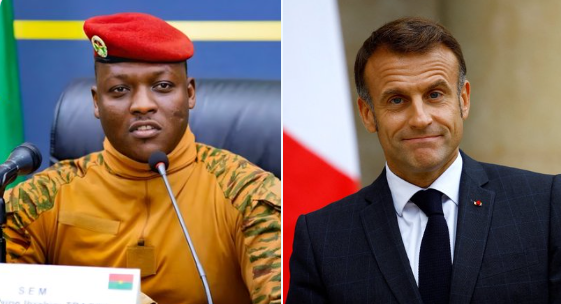
The military junta accuses Paris of “neo-colonial ambitions” and supporting terrorist networks, marking a dramatic escalation in the deteriorating relationship between the West African nation and its former colonial ruler .
OUAGADOUGOU — Burkina Faso’s military government has formally severed all diplomatic ties with France, announcing the immediate rupture on Friday, June 26, 2026, in a statement broadcast on national television .
The decision, confirmed by government spokesperson and Communications Minister Pingdwendé Gilbert Ouédraogo, follows what officials described as a “thorough assessment” of bilateral relations . The junta concluded that the conditions for maintaining ties were no longer in place.
“The essential conditions for promoting relations based on mutual respect, reciprocal trust, respect for the principle of non-interference in internal affairs and national sovereignty are not in place,” Ouédraogo stated .
The Allegations: “Neo-Colonial Ambitions” and Support for Terrorists
The Burkinabe government leveled serious accusations against Paris, alleging that France has persistently acted against its national interests .
The junta accused France of harboring “blatant neo-colonial ambitions, made evident by its active support for subversive networks and the terrorists who are plunging our country and the Sahel into mourning” .
The statement claimed that France has engaged in “ceaseless activism” against Burkina Faso and has sought to marginalize the country on the international stage . The government provided no evidence to support its accusations .
“Faced with these imperialist ambitions aimed at dominating our country and subjugating our people, we have chosen responsibility and sovereignty,” the government stated, outlining its determination to pursue an independent foreign policy .
France’s Response: “Hostile and Unfounded”
France has strongly rejected the allegations, with the French Foreign Ministry calling the decision “hostile and unfounded” .
Foreign Ministry spokesman Pascal Confavreux expressed regret over the move, stating that it “illustrated the worrying drift of the Burkinabe authorities” .
“Necessary reciprocal measures are currently under review,” Confavreux said, adding that France is monitoring the safety of its government personnel and citizens in Burkina Faso and urging them to exercise “heightened vigilance” .
Scope of the Severance: Institutional Only
The junta clarified that the decision is strictly institutional and does not affect the broader relationship between the people of the two nations .
“Concerns exclusively the institutional framework of relations between the two states at the diplomatic level” and “in no way calls into question the historical, human, cultural and social ties that unite the Burkinabe and French peoples,” the statement read .
The government also confirmed that French nationals residing in Burkina Faso will continue to enjoy protection in accordance with national laws, and called on citizens to show “responsibility, restraint and civic-mindedness” toward them .
A Pattern of Deterioration
The rupture follows years of escalating tensions between the two countries. Relations began to deteriorate sharply after Captain Ibrahim Traoré seized power in a coup in September 2022 .
Key milestones in the breakdown include:
- 2023: The junta expelled French troops that had been deployed to help combat jihadist insurgencies
- 2023: France was asked to recall its ambassador
- 2024: Three French diplomats were expelled over accusations of “subversive activities”
- 2025: Burkina Faso, Mali, and Niger withdrew from the regional bloc ECOWAS, forming the Alliance of Sahel States (AES), reinforcing the break with traditional Western partners and strengthening ties with Russia
France has had no ambassador in Burkina Faso since January 2023 .
The Broader Context: Shifting Alliances in the Sahel
The decision to sever ties with France aligns Burkina Faso with neighboring Mali and Niger, which have similarly expelled French forces and distanced themselves from Paris in recent years .
All three countries, now members of the AES, have pivoted toward Russia and China as they seek new security and economic partners .
The move also follows a recent diplomatic clash with the European Union. On Monday, Burkina Faso’s Foreign Minister summoned the EU delegation head to protest a European Parliament resolution on human rights in the country, calling it “unacceptable interference” based on “erroneous information” .
What Comes Next
The severance of diplomatic ties immediately halts formal government-to-government engagement. It is unclear how the decision will affect the French embassy in Ouagadougou, the status of existing agreements, or the approximately 4,000 French nationals residing in Burkina Faso .
“Necessary reciprocal measures are currently under review,” the French Foreign Ministry said, leaving the door open for further actions .
The Burkinabe government reaffirmed its commitment to an independent foreign policy focused on “diversification of partnerships, strengthened South-South cooperation, the development of balanced relations with all countries and the promotion of peace, security and sustainable development” .
Frequently Asked Questions (FAQs)
Q1: Why did Burkina Faso cut diplomatic ties with France?
A: The junta accused France of “neo-colonial ambitions,” interfering in its internal affairs, and supporting subversive networks and terrorist groups operating in the Sahel region. France has denied these allegations, calling the decision “unfounded” .
Q2: When did the severance take effect?
A: The decision was announced on Friday, June 26, 2026, and took effect immediately .
Q3: Does this affect the people of Burkina Faso and France?
A: No. The government clarified that the decision is strictly institutional and does not affect the historical, cultural, and social ties between the people of the two countries .
Q4: How has France responded to the decision?
A: The French Foreign Ministry has called the decision “hostile and unfounded,” expressed regret, and stated that “necessary reciprocal measures” are under review. France has also urged its nationals in Burkina Faso to exercise heightened vigilance .
Q5: Is this part of a broader trend in the region?
A: Yes. Burkina Faso joins Mali and Niger, which have similarly expelled French forces and reduced diplomatic engagement with Paris. All three countries have formed the Alliance of Sahel States (AES) and are pivoting toward Russia and China for security and economic support .
This is a developing story. Reflecto News will continue to provide updates on the diplomatic fallout and the shifting alliances in the Sahel region.
Questions people ask
What is China's current share of global manufacturing?
China now accounts for twenty eight percent of global manufacturing. This industrial output exceeds the combined manufacturing production of the United States, Japan, and Germany, making China the leading global industrial power according to recent reports.
Why were Andrew Tate and Tristan Tate arrested in Miami?
Andrew Tate and his brother Tristan Tate were taken into custody in Miami by the United States Marshals Service. They face thirty eight new charges in the United Kingdom, including rape and child pornography offences, and prosecutors are seeking their extradition.
What warning did Moscow issue about oil prices?
Kirill Dmitriev, the Chief Executive of the Russian Direct Investment Fund, warned that a tsunami of skyrocketing oil prices is approaching. Moscow describes this potential energy shock as a major threat to global markets.
What political shift is projected for Benjamin Netanyahu's coalition?
Political polls project that Prime Minister Benjamin Netanyahu's coalition is on track to lose its majority in the upcoming October election. This projection indicates a potential political shift in Jerusalem.
Why did a Russian military aircraft land in Tehran?
A Russian airborne command aircraft, widely known as a doomsday plane, landed in Tehran. The arrival of the aircraft represents a high stakes show of support from Russia for Iran during a period of heightened regional tensions.
What did President Masoud Pezeshkian claim about the United States and Israel?
Iranian President Masoud Pezeshkian claimed that the United States and Israel failed in a forty eight hour plan to topple the Iranian government. He made these statements during a televised address marking two years since his inauguration.