Reflecto News is an online news platform covering major international political events, global economic developments, and security conflicts. The site provides updates on topics such as Chinese manufacturing dominance, Middle Eastern political tensions, and high profile legal arrests. Readers can access current articles organized by categories like World News, Iran, and USA.
Reflecto News – Iran has categorically ruled out transferring any of its enriched uranium stockpile to the United States, directly contradicting recent claims by President Donald Trump that Tehran had agreed to surrender the material as part of ongoing negotiations.
Iran’s Foreign Ministry spokesperson Esmaeil Baghaei stated clearly:
“Iran’s enriched uranium is not going to be transferred anywhere; transferring uranium to the United States has not been an option for us.”
The rejection comes hours after Trump asserted that Iran had agreed to hand over what he calls “nuclear dust” — his term for the country’s highly enriched uranium stockpiles, some of which he claims were damaged or buried during earlier U.S. and Israeli strikes on Iranian nuclear facilities. Trump had suggested the material could be recovered “at a nice leisurely pace” with heavy machinery under a deal, or through less cooperative means if necessary.
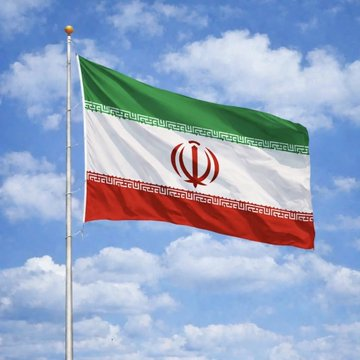
Clear Contradiction in Narratives
Trump has repeatedly portrayed the negotiations as highly advanced, claiming Iran has “agreed to everything,” including zero enrichment forever and the handover of nuclear material. Iranian officials, however, have consistently denied such concessions, insisting that enrichment remains a sovereign right and that no agreement to transfer stockpiles has ever been discussed or accepted.
This public divergence highlights the deep mistrust and differing messaging strategies on both sides as the fragile two-week ceasefire faces mounting pressure.
Current State of the Ceasefire and Talks
The two-week U.S.-Iran ceasefire remains technically in effect but is under severe strain:
- Iran has reimposed strict controls over the Strait of Hormuz, citing the ongoing U.S. naval blockade of its ports.
- Recent reports of gunfire against merchant vessels attempting to transit the strait have heightened concerns.
- High-level talks, potentially as early as Monday in Islamabad, Pakistan, are now even more critical — and more challenging — as the two sides present sharply different versions of what has been agreed.
Iran continues to insist that the U.S. must lift its blockade for normal commercial passage through the strait to resume, while the Trump administration maintains the blockade as leverage and warns that the ceasefire may not be extended without a broader deal.
Implications
The enriched uranium issue is one of the most sensitive in the negotiations. Giving up significant stockpiles would represent a major concession by Iran and a significant step toward denuclearization assurances demanded by the U.S. and Israel. Tehran’s firm rejection suggests the gap on this core issue remains wide.
Reflecto News will continue monitoring official statements from Tehran and Washington, any confirmation of Monday’s talks in Islamabad, and developments regarding the Strait of Hormuz and the ceasefire.
Frequently Asked Questions (FAQs)
Q1: Has Iran agreed to hand over its enriched uranium?
No. Iran has explicitly rejected the idea, stating its enriched uranium “is not going to be transferred anywhere” and that handing it over to the U.S. has never been on the table.
Q2: What did Trump claim?
Trump has said Iran agreed to surrender its “nuclear dust” (enriched uranium stockpiles) and that the U.S. could recover it cooperatively under a deal.
Q3: Why is this issue so important?
Enriched uranium is central to concerns about Iran’s nuclear program. Significant reductions or transfers would be a major step toward limiting Iran’s ability to produce nuclear weapons material.
Q4: How does this affect the ceasefire?
The contradiction adds to existing strains, including disputes over the Strait of Hormuz and the U.S. naval blockade, making it harder to build trust ahead of further talks.
Q5: When are the next talks?
Iranian sources have suggested a possible new round as early as Monday in Islamabad, Pakistan, though the U.S. has not yet confirmed the timing.
Q6: What is Iran’s overall stance on its nuclear program?
Iran maintains that its enrichment is for peaceful civilian purposes and insists it will not give up its sovereign right to enrich uranium.
Q7: Could this lead to renewed escalation?
Yes. Trump has warned that without a satisfactory deal, the ceasefire may not be extended and military options could return.
For continuous, accurate coverage of U.S.-Iran negotiations, the nuclear dispute, and regional developments, follow Reflecto News — your source for timely and professional reporting.
Questions people ask
What is China's current share of global manufacturing?
China now accounts for twenty eight percent of global manufacturing. This industrial output exceeds the combined manufacturing production of the United States, Japan, and Germany, making China the leading global industrial power according to recent reports.
Why were Andrew Tate and Tristan Tate arrested in Miami?
Andrew Tate and his brother Tristan Tate were taken into custody in Miami by the United States Marshals Service. They face thirty eight new charges in the United Kingdom, including rape and child pornography offences, and prosecutors are seeking their extradition.
What warning did Moscow issue about oil prices?
Kirill Dmitriev, the Chief Executive of the Russian Direct Investment Fund, warned that a tsunami of skyrocketing oil prices is approaching. Moscow describes this potential energy shock as a major threat to global markets.
What political shift is projected for Benjamin Netanyahu's coalition?
Political polls project that Prime Minister Benjamin Netanyahu's coalition is on track to lose its majority in the upcoming October election. This projection indicates a potential political shift in Jerusalem.
Why did a Russian military aircraft land in Tehran?
A Russian airborne command aircraft, widely known as a doomsday plane, landed in Tehran. The arrival of the aircraft represents a high stakes show of support from Russia for Iran during a period of heightened regional tensions.
What did President Masoud Pezeshkian claim about the United States and Israel?
Iranian President Masoud Pezeshkian claimed that the United States and Israel failed in a forty eight hour plan to topple the Iranian government. He made these statements during a televised address marking two years since his inauguration.