Reflecto News is an online news platform covering major international political events, global economic developments, and security conflicts. The site provides updates on topics such as Chinese manufacturing dominance, Middle Eastern political tensions, and high profile legal arrests. Readers can access current articles organized by categories like World News, Iran, and USA.
Published on Reflecto News | World News | Geopolitics & Diplomacy
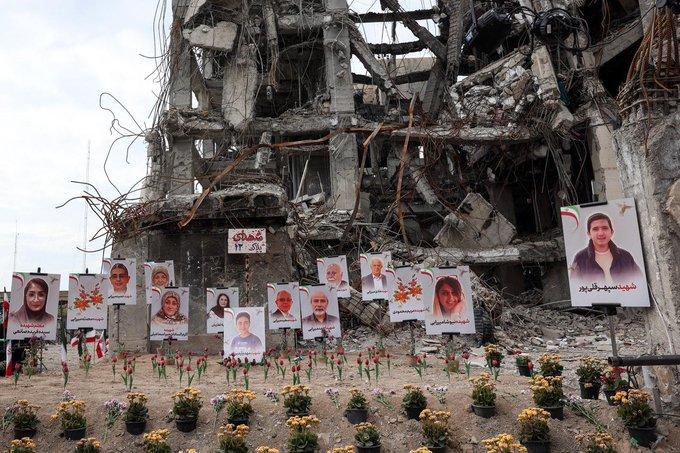
Iran has formally demanded compensation from five neighboring countries—Bahrain, Saudi Arabia, Qatar, the United Arab Emirates, and Jordan—accusing them of enabling recent US-Israeli military strikes by allowing the use of their airspace, military bases, or territorial waters. Tehran is seeking full reparations for war damages estimated at up to $270 billion, according to statements from Iranian officials and state media .
“Those who participated in this aggression, whether directly or by providing access to their airspace, bases, or waters, must be held accountable. They cannot expect to remain shielded from the costs of a war they helped fuel.” — Senior Iranian Official
The demand, submitted through diplomatic channels, escalates Iran’s campaign for post-war compensation beyond its initial claims against the United States and Israel and into the broader regional arena .
The Accusations: Enabling Aggression
Iran’s formal complaint targets the five nations for specific actions that Tehran alleges facilitated US-Israeli military operations against the Islamic Republic .
| Country | Alleged Actions |
|---|---|
| Bahrain | Hosting US naval facilities (home to US Fifth Fleet) |
| Saudi Arabia | Allowing use of airspace; potential overflight access |
| Qatar | Hosting Al Udeid Air Base (major US CENTCOM operations) |
| United Arab Emirates | Hosting US military facilities; providing logistical support |
| Jordan | Allowing overflight access for US and Israeli aircraft |
Iranian officials have specifically accused Gulf states of “granting access to their airspace and military facilities” to US and Israeli forces during the strikes that began on February 28 . Iran’s First Vice President Mohammad Reza Aref framed the reparations push as “the non-negotiable right of our people,” stating that “those who fueled this fire cannot expect to remain shielded from its costs” .
The Damage: Up to $270 Billion
Iran’s reparations demand is based on preliminary estimates of war damage that have been placed at approximately $270 billion, though Iranian officials acknowledge the figure is not final and could rise .
Estimated losses include:
| Category | Estimated Damage |
|---|---|
| Energy infrastructure | Oil refineries, gas fields, petrochemical plants |
| Industrial base | Steel works, factories, manufacturing facilities |
| Transportation networks | Railways, bridges, airports, ports |
| Power grid | Power plants and electricity infrastructure |
| Housing | Over 101,000 homes across 24 provinces |
| Civilian casualties | Over 1,200 killed; 3.2 million displaced |
Private sector analysts have offered estimates ranging from $200 billion to over $1 trillion, depending on the scope of damage assessed . Iran’s Central Bank has warned that rebuilding could take more than twelve years .
Legal and Diplomatic Channels
Iran has indicated it will pursue reparations through multiple channels:
- Diplomatic demands: Formal submissions to each country
- International courts: Potential cases at the International Court of Justice (ICJ)
- UN mechanisms: Seeking resolutions and compensation frameworks
- Economic leverage: Using oil exports and regional influence
However, legal experts note that collecting such reparations would face significant hurdles. The ICJ has jurisdiction only over disputes between states that have accepted its compulsory jurisdiction, and Gulf states have historically been reluctant to submit to international legal mechanisms on security matters .
Gulf State Responses
None of the five countries have officially responded to Iran’s reparations demand as of Tuesday. However, the accusation places them in a difficult diplomatic position.
Potential responses by country:
| Country | Likely Response |
|---|---|
| Saudi Arabia | Has urged US to end blockade; may distance itself from US military actions |
| UAE | Has allowed some US military access; may deny extent of cooperation |
| Qatar | Hosts major US base but maintains ties with Iran; may seek mediation |
| Bahrain | Hosts US Fifth Fleet; may reject demand outright |
| Jordan | Has maintained quiet cooperation; may deny overflight access |
Gulf states have also been targets of Iranian missile and drone attacks during the war, with Saudi Arabia and the UAE facing significant strikes on their energy infrastructure. This mutual targeting complicates any reparations claim .
The Broader Strategy: Shifting the Narrative
Iran’s reparations demand serves multiple strategic purposes:
- Shifting blame: Framing the war as a regional conspiracy rather than a bilateral US-Iran conflict
- Sowing division: Creating tension between Gulf states and their US security guarantor
- Domestic legitimacy: Demonstrating that Tehran is fighting for Iranian interests
- Negotiating leverage: Using reparations as a bargaining chip in nuclear talks
- Legal warfare: Establishing a paper trail for future international claims
By demanding compensation from Arab neighbors, Iran is also attempting to rally its domestic base and frame the war as an act of aggression by a coalition of enemies, rather than a bilateral confrontation with the United States .
What Comes Next
As Iran’s diplomatic offensive unfolds, several developments are likely:
| Scenario | Likelihood | Implication |
|---|---|---|
| Formal rejection by Gulf states | High | Would escalate diplomatic tensions |
| Counter-claims from Gulf states | Possible | Gulf states may demand compensation for Iranian missile attacks |
| Mediation efforts | Possible | US or other powers may seek to defuse |
| ICJ case | Possible but lengthy | Legal process could take years |
| Tit-for-tat economic measures | Possible | Sanctions or trade restrictions |
Iran’s reparations demand adds a new dimension to an already volatile regional landscape. Even if the monetary claims go nowhere, the political accusation—that Arab states enabled the destruction of Iran—will linger in regional diplomacy for years to come.
Frequently Asked Questions (FAQs)
1. Which countries did Iran demand compensation from?
Iran demanded compensation from Bahrain, Saudi Arabia, Qatar, the United Arab Emirates, and Jordan .
2. What is the basis for the demand?
Iran accuses these countries of enabling US-Israeli military strikes by allowing the use of their airspace, military bases, or territorial waters during the war that began on February 28 .
3. How much is Iran seeking in reparations?
Iran is seeking full reparations for war damages estimated at up to $270 billion, though officials acknowledge the figure is not final .
4. What legal mechanism will Iran use?
Iran may pursue reparations through diplomatic demands, the International Court of Justice (ICJ), UN mechanisms, or economic leverage .
5. Have any of the accused countries responded?
None of the five countries have officially responded as of Tuesday .
6. Is this demand realistic?
Legal experts note significant hurdles to collecting reparations, including jurisdictional issues and the unwillingness of Gulf states to submit to international legal mechanisms. The demand may be more about political messaging than actual compensation.
7. How does this affect regional diplomacy?
The demand could escalate tensions between Iran and Gulf states and complicate ongoing efforts to de-escalate the broader regional conflict .
Stay informed with Reflecto News – Your trusted source for breaking geopolitical and economic intelligence. Subscribe for real-time updates on Iran’s reparations campaign, Gulf diplomacy, and regional security developments.
Questions people ask
What is China's current share of global manufacturing?
China now accounts for twenty eight percent of global manufacturing. This industrial output exceeds the combined manufacturing production of the United States, Japan, and Germany, making China the leading global industrial power according to recent reports.
Why were Andrew Tate and Tristan Tate arrested in Miami?
Andrew Tate and his brother Tristan Tate were taken into custody in Miami by the United States Marshals Service. They face thirty eight new charges in the United Kingdom, including rape and child pornography offences, and prosecutors are seeking their extradition.
What warning did Moscow issue about oil prices?
Kirill Dmitriev, the Chief Executive of the Russian Direct Investment Fund, warned that a tsunami of skyrocketing oil prices is approaching. Moscow describes this potential energy shock as a major threat to global markets.
What political shift is projected for Benjamin Netanyahu's coalition?
Political polls project that Prime Minister Benjamin Netanyahu's coalition is on track to lose its majority in the upcoming October election. This projection indicates a potential political shift in Jerusalem.
Why did a Russian military aircraft land in Tehran?
A Russian airborne command aircraft, widely known as a doomsday plane, landed in Tehran. The arrival of the aircraft represents a high stakes show of support from Russia for Iran during a period of heightened regional tensions.
What did President Masoud Pezeshkian claim about the United States and Israel?
Iranian President Masoud Pezeshkian claimed that the United States and Israel failed in a forty eight hour plan to topple the Iranian government. He made these statements during a televised address marking two years since his inauguration.