Reflecto News is an online news platform covering major international political events, global economic developments, and security conflicts. The site provides updates on topics such as Chinese manufacturing dominance, Middle Eastern political tensions, and high profile legal arrests. Readers can access current articles organized by categories like World News, Iran, and USA.
Published on Reflecto News | World News | Diplomacy & Geopolitics
Former President Donald Trump has launched a sharp personal attack on Italian Prime Minister Giorgia Meloni, expressing shock and disappointment over her refusal to support the United States in its war with Iran. In comments reported by the Italian newspaper Corriere della Sera, Trump said he had believed Meloni possessed courage and strength, but that he was “wrong.”
“I thought she had courage, but I was wrong. I was shocked. She was supposed to be a strong leader, a different kind of European. But when the moment came, she wasn’t there.” — Donald Trump
The comments represent a significant rupture in the relationship between two populist leaders who had previously shared a warm rapport, often bonding over their shared “America First” and “Italy First” nationalist ideologies .
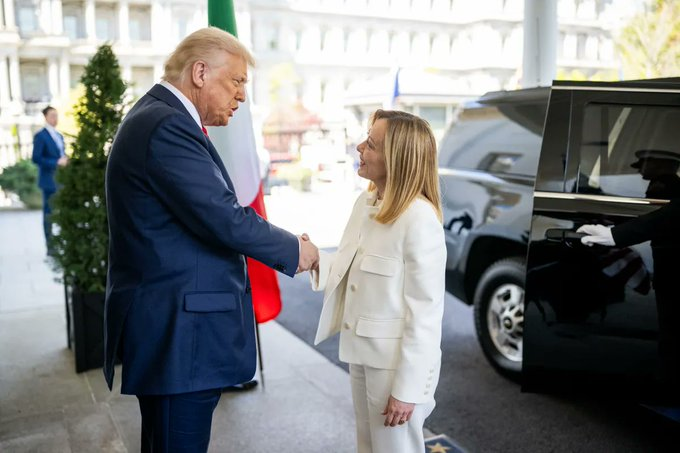
The Disappointment: A Failed ‘Test of Character’
Trump’s remarks were unusually personal, framing Meloni’s refusal as a failure of leadership and a betrayal of their shared political kinship.
“She talked a good game. She talked about protecting Italy, about putting her country first. But when it came time to stand with us, to stand against the radical regime in Tehran, she folded. It’s a test of character, and she failed.” — Donald Trump
The former president’s frustration stems from Italy’s refusal to join the US-led coalition in the war against Iran. While the UK and France participated in defensive operations, Italy imposed a series of restrictions, including denying landing rights at Sigonella air base for US military aircraft and suspending its defense cooperation agreement with Israel .
Meloni also announced the suspension of the automatic renewal of Italy’s defense agreement with Israel, halting military training cooperation and deepening a rift that began with arms export restrictions in October 2023 .
The ‘Meloni Doctrine’: A Strategic Shift
The confrontation has prompted a strategic readjustment of Italy’s foreign policy, which analysts have dubbed the “Meloni Doctrine.” The core principle is that Italy will not be a vassal to US demands .
Key aspects of the shift include:
- Rejection of escalation: Italy is backing a “peaceful” European-led mission to reopen the Strait of Hormuz, rather than joining the US blockade
- Suspension of defense ties: Meloni announced the suspension of the automatic renewal of Italy’s defense agreement with Israel
- Asserting independence: Meloni is positioning Italy as a leader within Europe, capable of independent diplomatic action
- Defense of national interests: Rome is making clear that it will not automatically follow Washington’s lead
Meloni’s government has also consistently stated it will not participate in offensive military action against Iran, declaring at the outset of the war that Italy was “not joining” .
A History of Warm Relations
Trump’s disappointment reflects the high expectations he had for Meloni. The two leaders shared a warm rapport, often bonding over their shared “America First” and “Italy First” nationalist ideologies. Trump had previously described Meloni as a “fantastic woman” and a “true friend.”
Their political alignment seemed natural: both challenged the traditional political establishment, both took强硬 stances on immigration, and both cultivated strongmen leaders internationally. Meloni’s political roots in the post-fascist Italian Social Movement had made her a polarizing figure in Europe, but Trump welcomed her as a kindred spirit .
The personal relationship, however, was always secondary to strategic interests. When the Iran war began, Meloni faced domestic political pressure to keep Italy out of the conflict, and she calculated that the political costs of joining the US campaign outweighed the benefits of maintaining a close relationship with Trump .
Domestic Pressures: The Italian Public’s Anti-War Stance
Italy’s refusal to join the US-led coalition reflects strong domestic opposition to the war. Polling consistently showed that a majority of Italians opposed direct military involvement in the conflict .
The Italian parliament, where Meloni’s coalition holds a majority, also reflected this skepticism. Opposition parties, including the 5 Star Movement and the Democratic Party, pressured the government to stay out of the war, and Meloni’s coalition partners, including the far-right League and Forza Italia, also expressed reservations .
The Italian public’s anti-war stance was rooted in several factors: traditional Italian opposition to military intervention (reflecting the country’s post-WWII pacifist constitution), economic concerns about rising energy prices and trade disruptions, and a desire to preserve Italy’s role as a diplomatic bridge between the West and the Middle East .
What Comes Next
Trump’s public attack on Meloni is likely to deepen the rift between the two leaders.
| Scenario | Likelihood | Implication |
|---|---|---|
| Meloni downplays Trump’s comments | Likely | Seeks to preserve bilateral relationship |
| Italy further distances from US | Possible | Suspends additional defense cooperation |
| Trump escalates attacks | Possible | Could target other European leaders |
| Relationship repaired | Unlikely | Trust has been broken |
Despite Trump’s harsh words, Meloni has maintained her position. “Italy will not be dragged into a war that the Italian people do not support,” she said in a statement following Trump’s comments. “We remain committed to our NATO allies, but we will make our own decisions about war and peace.”
The rupture between Trump and Meloni underscores a broader reality: even ideological soulmates are constrained by national interests. For Trump, the war with Iran was a test of alliance solidarity. For Meloni, it was a test of domestic political survival. Their interests diverged — and the relationship paid the price.
Frequently Asked Questions (FAQs)
1. What did Trump say about Meloni?
Trump said he was “shocked” by Meloni’s refusal to support the US in its war with Iran, claiming “I thought she had courage, but I was wrong.”
2. Why is Trump upset with Meloni?
Italy refused to join the US-led coalition in the war against Iran, denied landing rights at Sigonella air base, and suspended its defense cooperation agreement with Israel.
3. What is the ‘Meloni Doctrine’?
The term refers to Meloni’s strategic shift to assert Italy’s independence from US foreign policy demands, including rejecting escalation in the Iran war and backing a European-led mission for the Strait of Hormuz.
4. Did Meloni and Trump have a good relationship before?
Yes. Trump had previously described Meloni as a “fantastic woman” and a “true friend,” and the two shared a warm rapport based on their shared nationalist ideologies.
5. Why did Meloni refuse to support the US?
Meloni faced strong domestic opposition to the war, with a majority of Italians opposing direct military involvement. Her coalition partners also expressed reservations, and she calculated that the political costs outweighed the benefits.
6. Has Meloni responded to Trump’s comments?
Meloni’s office stated that “Italy will not be dragged into a war that the Italian people do not support,” adding that Italy remains committed to NATO but will make its own decisions about war and peace.
7. Will this affect Italy-US relations?
The rupture could deepen the rift between Rome and Washington, though both countries maintain strong institutional ties through NATO and other frameworks.
Stay informed with Reflecto News – Your trusted source for breaking diplomatic and geopolitical intelligence. Subscribe for real-time updates on US-Italy relations, the Iran war, and European security developments.
Questions people ask
What is China's current share of global manufacturing?
China now accounts for twenty eight percent of global manufacturing. This industrial output exceeds the combined manufacturing production of the United States, Japan, and Germany, making China the leading global industrial power according to recent reports.
Why were Andrew Tate and Tristan Tate arrested in Miami?
Andrew Tate and his brother Tristan Tate were taken into custody in Miami by the United States Marshals Service. They face thirty eight new charges in the United Kingdom, including rape and child pornography offences, and prosecutors are seeking their extradition.
What warning did Moscow issue about oil prices?
Kirill Dmitriev, the Chief Executive of the Russian Direct Investment Fund, warned that a tsunami of skyrocketing oil prices is approaching. Moscow describes this potential energy shock as a major threat to global markets.
What political shift is projected for Benjamin Netanyahu's coalition?
Political polls project that Prime Minister Benjamin Netanyahu's coalition is on track to lose its majority in the upcoming October election. This projection indicates a potential political shift in Jerusalem.
Why did a Russian military aircraft land in Tehran?
A Russian airborne command aircraft, widely known as a doomsday plane, landed in Tehran. The arrival of the aircraft represents a high stakes show of support from Russia for Iran during a period of heightened regional tensions.
What did President Masoud Pezeshkian claim about the United States and Israel?
Iranian President Masoud Pezeshkian claimed that the United States and Israel failed in a forty eight hour plan to topple the Iranian government. He made these statements during a televised address marking two years since his inauguration.