
The International Court of Justice ruled on Thursday, November 19, 2026, that Myanmar committed genocide against the Rohingya, delivering the Myanmar Rohingya genocide ruling in a 9-6 decision read by the court’s president, Yuji Iwasawa. It is the first time the court has held a state responsible for genocide.
What the Myanmar Rohingya genocide ruling decided
The court ruled by nine votes to six that Myanmar “has committed genocide against the Rohingya group in northern Rakhine state, in violation of its obligations under the Genocide Convention,” according to Al Jazeera’s report of the decision. ICJ President Yuji Iwasawa read the ruling in a session that lasted about three hours. The court said evidence showed that Myanmar’s forces had killed at least 10,000 Rohingya people, and that security forces had killed thousands of civilians, carried out widespread sexual violence, committed acts of extreme violence against children and attacked Rohingya as they fled in large numbers toward Bangladesh.
The judges said the only reasonable inference from the evidence of widespread atrocities was that Myanmar’s security forces had acted with genocidal intent. The court also found that Myanmar had violated its obligation to prevent genocide, saying it should have known there was a risk of genocide when armed civilians took part in the military campaign. Myanmar had argued that its crackdown was a response to attacks on police posts by fighters from the Arakan Rohingya Salvation Army, known as ARSA. The court did not accept that explanation as a justification for the scale and character of the violence it found.
The 2017 crackdown and the flight to Bangladesh
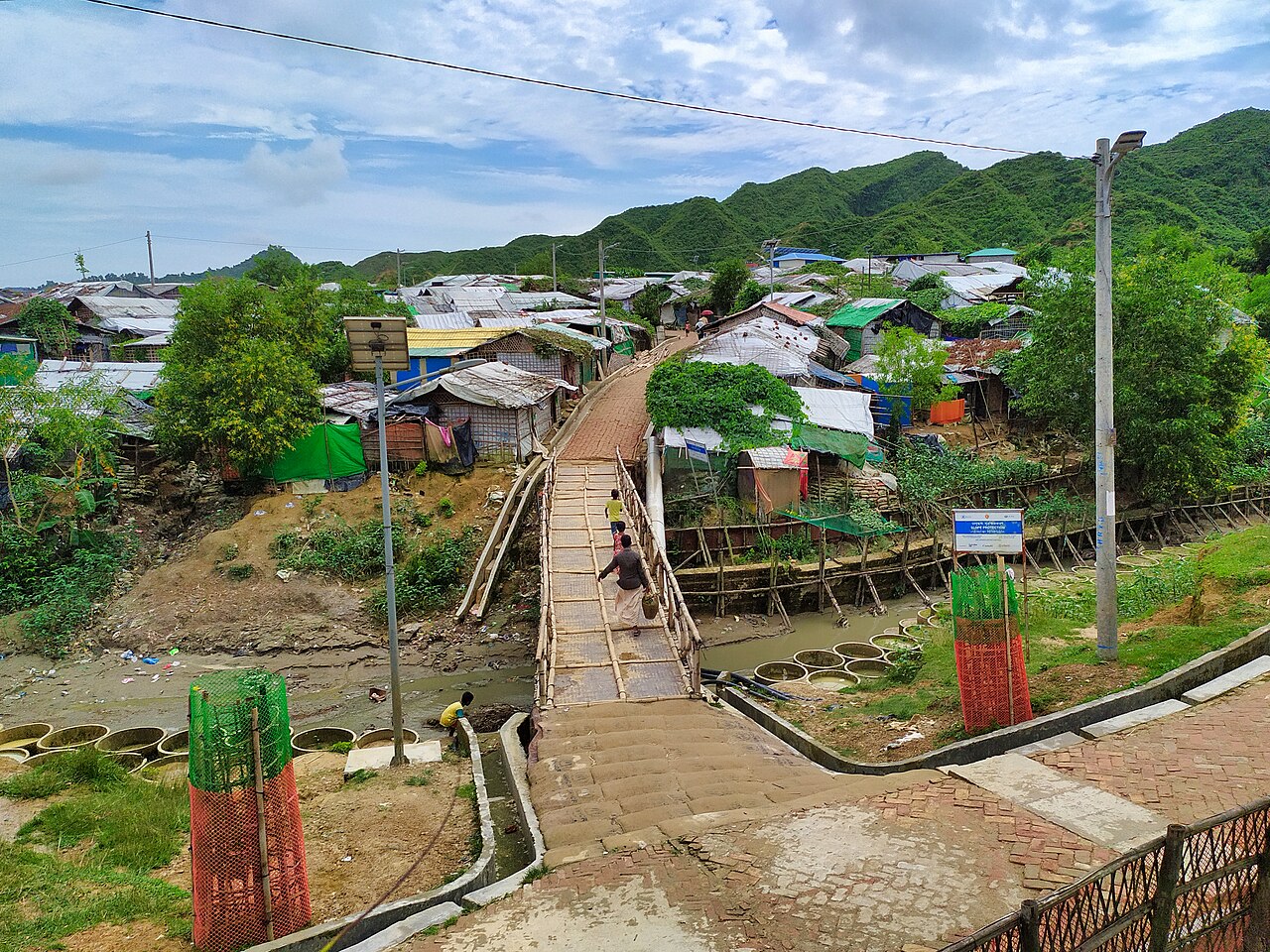
The case centred on a military crackdown in 2017. According to Al Jazeera, about 10,000 Rohingya were killed in that crackdown, and more than 730,000 fled to neighbouring Bangladesh. Many of those who fled settled in large refugee camps in Cox’s Bazar, close to the border with Myanmar. The ruling therefore concerns events that took place almost a decade ago, but whose consequences are still present in the lives of the people who fled and in the camps where many of them still live.
The scale of the flight is central to the court’s findings. The judges treated the pattern of that violence, rather than any single incident, as the basis for their conclusion about intent. That matters because genocide is a difficult crime to prove: a court must be satisfied not only that grave acts took place, but that they were carried out with the specific intent to destroy a protected group, in whole or in part.
How the case reached the court
The Gambia brought the case to the International Court of Justice in 2019. It asked the court to decide whether Myanmar had breached its obligations under the Genocide Convention in its treatment of the Rohingya, a Muslim minority group in northern Rakhine state. After the ruling, The Gambia called the decision “a historic day for international justice” and urged Myanmar to comply fully and without delay, Al Jazeera reported.
The proceedings took years to reach a final decision. The ruling was read out at the court’s seat in The Hague on November 19, 2026, after a hearing in which the court’s president set out the judges’ reasoning over about three hours. Because it is a final judgment of the International Court of Justice, it cannot be appealed. That finality gives the decision a particular weight, even though the court has no police force of its own and must rely on states, and on the United Nations system, to give effect to its judgments.
Reparations, restitution and reporting
The court ordered Myanmar to provide reparations and restitution as a result of its wrongful acts, Iwasawa said, according to Al Jazeera. The restitution the court described includes facilitating the safe and voluntary return of Rohingya people, returning or replacing collective property that was damaged, helping to search for people who disappeared and ensuring proper burials, providing physical and psychological rehabilitation for those who were mentally injured, and ensuring that the population is protected from persecution. The court also ordered a guarantee that the acts would not be repeated.
Myanmar must report to the court within two years on the steps it has taken. For the Rohingya, the practical value of the decision will depend on whether those orders are carried out, not only on the words of the judgment itself.
Why the ruling is historic
The Myanmar Rohingya genocide ruling is historic because it is the first time the International Court of Justice has held a state responsible for genocide. Al Jazeera reported that it is only the fourth time since the Nazi Holocaust that an international court has ruled that the crime of genocide had been committed. That history explains why the case was watched so closely, and why the court’s finding on genocidal intent was treated as the central question in the proceedings.
Genocide is one of the most serious crimes in international law, and proving it requires a court to find both that grave acts occurred and that they were done with a specific intent to destroy a group. International lawyers quoted by Al Jazeera noted that the court had never before ruled that a state had the specific intent to commit genocide. The 9-6 majority shows that the judges did not all agree, but the majority’s conclusion is the court’s decision, and it stands as the court’s authoritative finding on the facts and the law before it. International responses to alleged atrocities in other conflicts have taken different forms, including sanctions on Rwanda’s defence ministry over the M23 conflict in Congo.
What happens next
The immediate question after the ruling is compliance. The Gambia has urged Myanmar to comply fully and without delay, and the court’s order that Myanmar report within two years creates a timetable for that process. Human rights organisations welcomed the judgment, with Amnesty International saying it hoped the ruling would mark the beginning of a long-overdue process of accountability in Myanmar, according to Al Jazeera. The Special Advisory Council for Myanmar also welcomed the judgment, while stressing that the decision must lead to concrete accountability measures and reparations for victims.
For Rohingya refugees, the ruling does not by itself end displacement or restore what was lost. More than 1.3 million Rohingya remain displaced across South and Southeast Asia, including 1.2 million in refugee camps in Cox’s Bazar in Bangladesh, according to the United Nations, as reported by Al Jazeera.
The ruling also matters beyond Myanmar. By finding a state responsible for genocide for the first time, the court has set a precedent that other states, lawyers and campaigners will study closely. The decision does not create a new court or a new enforcement mechanism, and it does not decide the responsibility of any individual. It decides the responsibility of a state under the Genocide Convention, and it leaves the task of giving effect to that decision to Myanmar, to the states that brought and supported the case, and to the wider international system.
Frequently Asked Questions
What did the ICJ decide about Myanmar and the Rohingya?
The court ruled 9-6 that Myanmar committed genocide against the Rohingya in northern Rakhine state, in violation of its obligations under the Genocide Convention. ICJ President Yuji Iwasawa read the decision on November 19, 2026.
Why is the Myanmar Rohingya genocide ruling historic?
It is the first time the International Court of Justice has held a state responsible for genocide. Al Jazeera reported that it is only the fourth time since the Nazi Holocaust that an international court has ruled that genocide had been committed.
What did the court order Myanmar to do?
The court ordered reparations and restitution, including facilitating the safe and voluntary return of Rohingya people, returning or replacing damaged collective property, helping to search for the disappeared, ensuring proper burials, providing rehabilitation, and protecting the population from persecution. Myanmar must report within two years, and the decision is final and cannot be appealed.
Who brought the case, and what happened in 2017?
The Gambia brought the case in 2019. The case concerned the 2017 crackdown, in which about 10,000 Rohingya were killed and more than 730,000 fled to Bangladesh.