Reflecto News is an online news platform covering major international political events, global economic developments, and security conflicts. The site provides updates on topics such as Chinese manufacturing dominance, Middle Eastern political tensions, and high profile legal arrests. Readers can access current articles organized by categories like World News, Iran, and USA.
Published on Reflecto News | World News | Politics & Elections
Hungary will hold parliamentary elections tomorrow, with Prime Minister Viktor Orbán and his Fidesz-KDNP alliance facing the most serious electoral challenge of their 16-year rule. The center‑right Tisza Party, led by former Fidesz insider Péter Magyar, has mounted a formidable campaign that has rattled Orbán’s once‑unshakeable grip on power. Polls point to a tight race, though Hungary’s heavily gerrymandered electoral system means the opposition likely needs a clear lead to secure a parliamentary majority .
The election comes at a critical juncture for the Central European nation. Orbán, who has dominated Hungarian politics since 2010, has built his brand on national sovereignty, anti‑immigration强硬政策, and skepticism of the European Union. But fatigue with his decade‑and‑a‑half rule, combined with scandals involving Kremlin ties and a stagnant economy, has opened the door for Magyar’s reformist message .
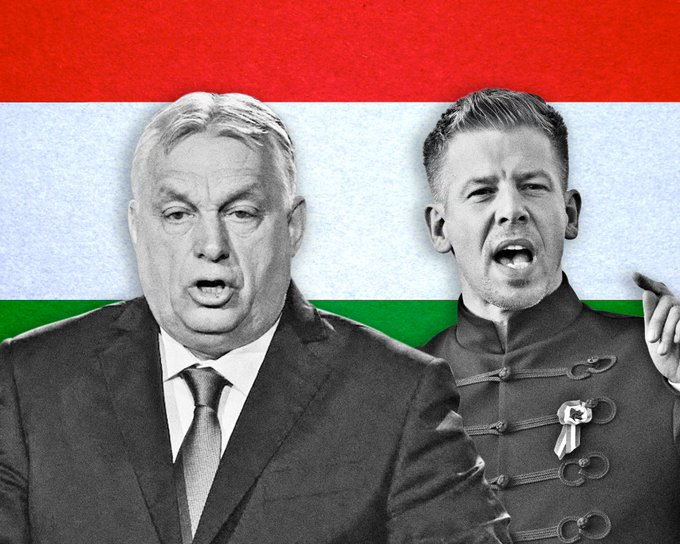
The Challenger: Péter Magyar and the Tisza Party
Péter Magyar, a 45‑year‑old former Fidesz insider who left the party in 2024, has become the unlikely figurehead of the opposition. His Tisza Party has surged from nowhere to become a genuine contender, capitalizing on voter frustration with corruption, deteriorating public services, and Orbán’s increasingly authoritarian style .
Magyar has campaigned on a platform of restoring democratic checks and balances, rejoining the European mainstream, and rooting out the corruption that he argues has flourished under Fidesz. He has vowed to unlock billions of euros in EU funds that remain frozen due to rule‑of‑law disputes with Brussels .
“We are facing the danger of losing everything we have built together. The stakes are high and change is dangerous.” — Viktor Orbán
Orbán, by contrast, has warned that a Tisza victory would bring chaos and weaken Hungary’s sovereignty. His campaign has emphasized stability and continuity, though his message appears to have lost some of its resonance after years of economic stagnation and repeated clashes with Brussels .
The Polls: A Tight Race with a Pro‑Fidesz Bias
Polling averages show a tight contest, with most surveys giving Tisza a narrow lead. However, Hungary’s electoral system—redesigned by Fidesz after it secured a supermajority in 2010—gives the ruling party a significant built‑in advantage. The system features heavily gerrymandered constituencies and favorable allocation of compensatory seats, meaning the opposition likely needs a lead of several percentage points to win a majority.
| Polling Firm | Fidesz-KDNP | Tisza | Lead |
|---|---|---|---|
| Publicus (final) | 39% | 52% | Tisza +13 |
| Median | – | – | Tisza +23 |
| 21 Kutatokozpont | 37% | 56% | Tisza +19 |
| Aggregates | trailing | leading | Tisza +5‑7 (varies) |
Sources: Publicus, Median, 21 Kutatokozpont, Politico
The discrepancy between the polling lead and the actual seat projection reflects the structural advantages enjoyed by Fidesz. Analysts caution that even a Tisza victory in the popular vote may not translate into a parliamentary majority if the margin is narrow .
The Orbán Campaign: Stability, Sovereignty, and Scandal
Orbán’s campaign has focused on themes that have served him well in the past: defending Hungary’s sovereignty against “foreign interference,” maintaining strong borders, and resisting the cultural and economic dictates of Brussels.
But this time, the message has been undermined by a series of damaging scandals. Leaked phone records have revealed close coordination between Hungarian officials and the Kremlin, including regular calls between Foreign Minister Péter Szijjártó and his Russian counterpart Sergei Lavrov, sometimes during breaks in EU meetings . The opposition has dubbed this the “Moscow Protocol,” accusing Orbán of prioritizing Russian interests over those of Hungary and Europe .
Economically, Hungary has struggled with inflation, declining living standards, and a healthcare system in crisis. Transparency International ranks Hungary as the most corrupt country in the European Union, a label that has stuck despite Orbán’s promises to clean up politics .
The International Dimension: Trump’s Endorsement and EU Concerns
The election has drawn international attention, with both the United States and the European Union taking sides. President Donald Trump has issued a full‑throated endorsement of Orbán, calling him “a true friend, fighter and WINNER” and sending Vice President JD Vance to Budapest for a campaign rally .
The EU, by contrast, has made no secret of its desire to see Orbán defeated. Brussels has frozen approximately €20 billion in EU funds for Hungary over rule‑of‑law concerns, and European Commission President Ursula von der Leyen has described Orbán as a “dictator” . EU officials have largely refrained from direct intervention, but the bloc’s preference is widely understood to favor a Tisza victory .
The Electoral System: Why a Lead May Not Be Enough
Hungary’s electoral system is a complex mixed‑member majoritarian system. 106 seats are allocated in single‑member constituencies (first‑past‑the‑post), and 93 seats are allocated via national list proportional representation. The system was rewritten by Fidesz in 2010 to favor large parties and incumbents .
Key features that benefit Fidesz:
- Gerrymandered districts that pack opposition voters into a small number of constituencies
- Compensatory seat formulas that favor the party that wins the most constituencies
- Vote‑buying and clientelism in rural areas, where Fidesz has a strong network of mayors and local officials
As a result, even if Tisza wins the popular vote by a modest margin, Fidesz could still secure a parliamentary majority. The opposition likely needs a lead of at least 5‑7 percentage points to overcome these structural disadvantages .
What a Tisza Victory Would Mean
If Tisza secures a majority—or even a strong plurality—the implications would be profound both domestically and internationally.
Domestic reset: Magyar has promised to dismantle Orbán’s “illiberal state,” including replacing high‑court judges, the prosecutor general, and potentially the president. A two‑thirds majority would give Tisza the constitutional authority to carry out these sweeping changes .
EU relations: A Tisza government would likely move quickly to unlock frozen EU funds by addressing rule‑of‑law concerns. This would provide an immediate boost to the Hungarian economy and restore Budapest’s standing in Brussels .
Russia‑Ukraine: Orbán has been Putin’s staunchest ally in the EU, consistently blocking sanctions and aid for Ukraine. Magyar has pledged to take a firmer line with Moscow, support Ukraine, and revisit Hungary’s energy dependence on Russia .
US‑Hungary ties: While Orbán is a key ally of President Trump, a Tisza government could recalibrate relations with Washington. However, Hungary’s strategic location and NATO membership ensure that ties will remain strong regardless of the election outcome .
The Final Stretch
In the final days of the campaign, Orbán has intensified his rhetoric, warning of foreign interference and urging voters to turn out. Magyar, meanwhile, has held massive rallies, drawing tens of thousands of supporters in Budapest and other cities.
The outcome remains uncertain. Polls suggest Tisza is ahead, but the electoral system favors Fidesz. Turnout will be critical—young and urban voters tend to favor Tisza, while rural and older voters lean toward Fidesz.
Polls open tomorrow morning and close at 7 p.m. local time. Initial exit polls are expected shortly thereafter, with final results likely within 24‑48 hours.
Frequently Asked Questions (FAQs)
1. When are the Hungarian parliamentary elections?
The elections are scheduled for Sunday, April 12, 2026 .
2. Who is the main challenger to Viktor Orbán?
Péter Magyar, a former Fidesz insider, leads the center‑right Tisza Party. He left Orbán’s party in 2024 and has built a broad opposition coalition .
3. What do the polls show?
Most polls show Tisza with a lead of 5‑13 percentage points over Fidesz. However, Hungary’s electoral system favors the incumbent, so the opposition likely needs a clear lead to win a majority .
4. Why is Hungary’s electoral system biased toward Fidesz?
The system was rewritten by Fidesz after 2010 to favor large parties and incumbents. It features gerrymandered districts and favorable seat allocation formulas that benefit the ruling party .
5. How has the EU responded to the election?
The EU has frozen approximately €20 billion in funds for Hungary over rule‑of‑law concerns. Brussels has made no secret of its desire to see Orbán defeated, though officials have largely refrained from direct intervention .
6. What would a Tisza victory mean for Hungary?
Magyar has promised to restore democratic checks and balances, unlock frozen EU funds, take a firmer line with Russia, and support Ukraine. He would also seek to reduce Hungary’s energy dependence on Moscow .
7. When will results be available?
Polls close at 7 p.m. local time on April 12. Exit polls are expected shortly thereafter, with final results within 24‑48 hours .
Stay informed with Reflecto News – Your trusted source for breaking political and international intelligence. Subscribe for real‑time updates on the Hungarian election results and their global implications.
Questions people ask
What is China's current share of global manufacturing?
China now accounts for twenty eight percent of global manufacturing. This industrial output exceeds the combined manufacturing production of the United States, Japan, and Germany, making China the leading global industrial power according to recent reports.
Why were Andrew Tate and Tristan Tate arrested in Miami?
Andrew Tate and his brother Tristan Tate were taken into custody in Miami by the United States Marshals Service. They face thirty eight new charges in the United Kingdom, including rape and child pornography offences, and prosecutors are seeking their extradition.
What warning did Moscow issue about oil prices?
Kirill Dmitriev, the Chief Executive of the Russian Direct Investment Fund, warned that a tsunami of skyrocketing oil prices is approaching. Moscow describes this potential energy shock as a major threat to global markets.
What political shift is projected for Benjamin Netanyahu's coalition?
Political polls project that Prime Minister Benjamin Netanyahu's coalition is on track to lose its majority in the upcoming October election. This projection indicates a potential political shift in Jerusalem.
Why did a Russian military aircraft land in Tehran?
A Russian airborne command aircraft, widely known as a doomsday plane, landed in Tehran. The arrival of the aircraft represents a high stakes show of support from Russia for Iran during a period of heightened regional tensions.
What did President Masoud Pezeshkian claim about the United States and Israel?
Iranian President Masoud Pezeshkian claimed that the United States and Israel failed in a forty eight hour plan to topple the Iranian government. He made these statements during a televised address marking two years since his inauguration.