Reflecto News is an online news platform covering major international political events, global economic developments, and security conflicts. The site provides updates on topics such as Chinese manufacturing dominance, Middle Eastern political tensions, and high profile legal arrests. Readers can access current articles organized by categories like World News, Iran, and USA.
Published on Reflecto News | World News | Geopolitics & European Integration
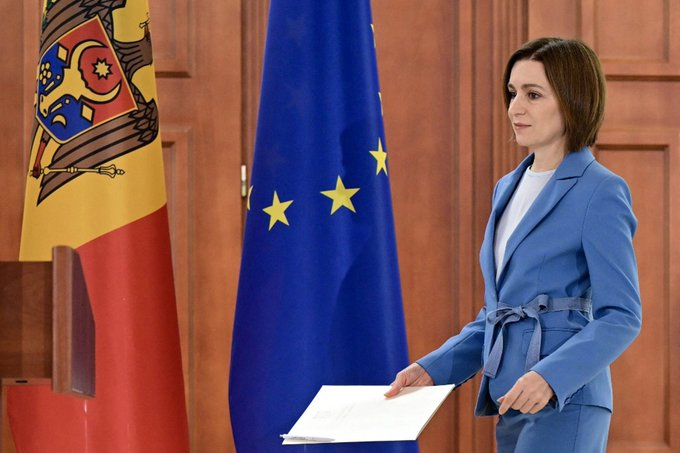
In a decisive break from Moscow’s orbit, Moldova has formally launched its withdrawal from the founding treaties of the Commonwealth of Independent States (CIS). The promulgation decree, signed by President Maia Sandu, was published in the Official Journal this week, triggering a formal 12-month notification period that will sever Chisinau’s legal ties to the Russian-led bloc .
The move marks the culmination of a process initiated by Moldova’s pro-European government, which has increasingly viewed the post-Soviet organization as incompatible with its goal of joining the European Union. The parliament voted overwhelmingly in favor of the denunciation on April 2, with 60 MPs supporting the withdrawal from the CIS Establishment Agreement and its associated protocols .
‘A Natural and Inevitable Step’
For Chisinau, leaving the CIS is about more than just financial savings. Officials have framed the decision as an ideological and strategic necessity, arguing that the core principles of the Commonwealth—particularly the mutual recognition of territorial integrity and the inviolability of borders—have been systematically violated by Russia .
“For more than three decades, we have carried a heavy burden, an invisible chain that kept us tied to a past that no longer belongs to us.” — Mihai Popșoi, Moldovan Foreign Minister
Moldovan authorities have pointed specifically to Russia’s war against Ukraine, its previous aggression against Georgia, and the illegal deployment of Russian troops in the Transnistrian region of Moldova as irreconcilable with the values of the CIS . The government has described the withdrawal as a “natural and inevitable step” on the country’s path toward European Union accession .
The decision also carries a modest financial benefit. Following the denunciation, Moldova’s state budget will save approximately 3.1 million lei (around €600,000) annually, an amount previously directed to the CIS budget .
The Path to Full Withdrawal
The legal process for withdrawal involves several distinct steps, with the final separation taking effect after a one-year waiting period.
| Step | Details |
|---|---|
| Parliamentary Vote | 60 MPs approved denunciation of CIS founding agreements on April 2, 2026 |
| Presidential Promulgation | President Sandu signed decree; published in Official Journal April 7-8, 2026 |
| Notification Period | Foreign Ministry to formally notify CIS Executive Committee |
| Final Effect | Agreements cease to have effect after 12-month period |
This timeline aligns with the requirements of the CIS Charter, which mandates a 12-month notice period for member states seeking to withdraw. While Moldova will exit the core statutory bodies, authorities have stressed that relations with individual CIS member states will continue on bilateral and multilateral bases .
The country also intends to remain a party to certain agreements, particularly in the economic and social fields, including the free trade zone agreement. However, CIS Secretary-General Sergey Lebedev has cautioned that withdrawing from the Charter could hinder Moldova’s ability to fully implement the provisions of many of the 208 CIS treaties that remain in force for the country .
Alignment with EU Accession Goals
The withdrawal from the CIS is intrinsically linked to Moldova’s broader European integration strategy. The country was granted EU candidate status in 2022 and officially began accession negotiations in 2024 . To date, Moldova has denounced approximately 70 agreements with the CIS as part of a process of harmonizing its national legislation with European Union standards .
Moldovan officials have been clear about the connection. Foreign Minister Popșoi stated that leaving the CIS would be a natural step toward the country’s goal of joining the European Union . The government views the withdrawal as essential to demonstrating its commitment to European values and distancing itself from Russian influence.
The shift has been particularly pronounced under the leadership of President Maia Sandu, who was re-elected in 2024. Sandu has never attended a CIS summit since taking office, effectively suspending Moldova’s participation in key CIS bodies years before the formal withdrawal process began .
Russia’s Reaction: Accusations of Duplicity
Unsurprisingly, Moscow has reacted negatively to Chisinau’s decision. Russian Foreign Ministry spokeswoman Maria Zakharova has accused the Moldovan government of “duplicity” and cynicism, claiming that Chisinau is rushing to leave the bloc while simultaneously benefiting from the socioeconomic advantages of membership .
“The particular cynicism lies in the fact that this decision, crucial for Moldova, was adopted by the local authorities without an open dialogue with society and was pushed through by the votes of the pro-government majority in parliament.” — Maria Zakharova, Russian Foreign Ministry Spokeswoman
Zakharova also pointed to the 2024 referendum on EU accession, noting that the majority of citizens permanently residing in the country voted against joining the EU, while the government did not risk a similar referendum on leaving the CIS .
Russian officials have also warned of potential economic consequences. Lebedev cautioned that withdrawing from the Charter could hinder Moldova’s ability to fully implement the provisions of many CIS treaties, particularly those related to economic cooperation .
The Transnistria Factor
Complicating Moldova’s European path is the unresolved issue of Transnistria, a breakaway region that has hosted a Russian military contingent for decades. Political analysts in Chisinau have identified the withdrawal of Russian troops and the demilitarization of the Transnistrian region as essential priorities for advancing Moldova’s European integration .
Russia maintains an estimated 1,500–2,500 troops in the Transnistrian region, known as the Operational Group of Russian Forces (OGRF). These forces guard the massive ammunition depot at Cobasna, which holds an estimated 20,000–22,000 tons of Soviet-era munitions .
EU officials have increasingly framed the Transnistria issue as an element of European and international security. Kaja Kallas, the EU’s High Representative for Foreign Affairs, has circulated a document to member states outlining concessions the EU should expect from Russia, including the explicit prohibition of Russian military presence in neighboring states such as Moldova .
A Historic Realignment
Moldova’s withdrawal from the CIS represents a historic realignment for a country that has been part of the Russian empire, Greater Romania, and the Soviet Union over the past 150 years . Since gaining independence in 1991, Moldovan governments have at times favored, and at other times opposed, close ties with Russia.
The current trajectory under President Sandu represents the most decisive break yet. By formally launching its exit from the CIS, Moldova is signaling its intention to complete its post-Soviet transition and fully integrate into European structures.
However, the path forward remains complex. The 12-month withdrawal period gives Moscow time to exert counter-pressure, and the unresolved status of Transnistria remains a significant obstacle to full sovereignty. The country’s ability to balance its European aspirations with the practical realities of its geography and history will determine whether this “natural step” leads to the destination Chisinau hopes for.
Frequently Asked Questions (FAQs)
1. What is the Commonwealth of Independent States (CIS)?
The CIS is a regional intergovernmental organization founded in 1991 following the dissolution of the Soviet Union. It was established by 11 former Soviet republics, including Moldova, to create a framework for regional cooperation .
2. Why is Moldova withdrawing from the CIS?
Moldova cites Russia’s violation of core CIS principles, particularly respect for territorial integrity and the inviolability of borders. Specifically, officials point to Russia’s war against Ukraine, aggression against Georgia, and illegal military presence in Moldova’s Transnistrian region .
3. What is the timeline for Moldova’s withdrawal?
President Sandu signed the promulgation decree in early April 2026. The Foreign Ministry will now formally notify the CIS, and the agreements will cease to have effect after a 12-month period .
4. Will Moldova cut all ties with CIS countries?
No. Moldova has stated that relations with CIS member states will continue on bilateral and multilateral bases. The country will remain a party to certain agreements, particularly in the economic and social fields, including the free trade zone agreement .
5. How does this relate to Moldova’s EU aspirations?
Moldova views withdrawal from the CIS as a “natural and inevitable step” on its path toward joining the European Union. The country was granted EU candidate status in 2022 and began accession negotiations in 2024 .
6. How has Russia reacted?
Russia has accused Moldova of “duplicity” and cynicism, claiming that Chisinau is rushing to leave the bloc while continuing to benefit from the socioeconomic advantages of membership. Russian officials have also warned of potential economic consequences .
7. What is the status of Russian troops in Transnistria?
Russia maintains an estimated 1,500–2,500 troops in the breakaway Transnistrian region, guarding a large ammunition depot at Cobasna. Moldova and the EU have called for the withdrawal of these forces as a condition for European integration .
Stay informed with Reflecto News – Your trusted source for breaking geopolitical and European integration intelligence. Subscribe for real-time updates on Moldova’s European path and regional security developments.
Questions people ask
What is China's current share of global manufacturing?
China now accounts for twenty eight percent of global manufacturing. This industrial output exceeds the combined manufacturing production of the United States, Japan, and Germany, making China the leading global industrial power according to recent reports.
Why were Andrew Tate and Tristan Tate arrested in Miami?
Andrew Tate and his brother Tristan Tate were taken into custody in Miami by the United States Marshals Service. They face thirty eight new charges in the United Kingdom, including rape and child pornography offences, and prosecutors are seeking their extradition.
What warning did Moscow issue about oil prices?
Kirill Dmitriev, the Chief Executive of the Russian Direct Investment Fund, warned that a tsunami of skyrocketing oil prices is approaching. Moscow describes this potential energy shock as a major threat to global markets.
What political shift is projected for Benjamin Netanyahu's coalition?
Political polls project that Prime Minister Benjamin Netanyahu's coalition is on track to lose its majority in the upcoming October election. This projection indicates a potential political shift in Jerusalem.
Why did a Russian military aircraft land in Tehran?
A Russian airborne command aircraft, widely known as a doomsday plane, landed in Tehran. The arrival of the aircraft represents a high stakes show of support from Russia for Iran during a period of heightened regional tensions.
What did President Masoud Pezeshkian claim about the United States and Israel?
Iranian President Masoud Pezeshkian claimed that the United States and Israel failed in a forty eight hour plan to topple the Iranian government. He made these statements during a televised address marking two years since his inauguration.