Reflecto News is an online news platform covering major international political events, global economic developments, and security conflicts. The site provides updates on topics such as Chinese manufacturing dominance, Middle Eastern political tensions, and high profile legal arrests. Readers can access current articles organized by categories like World News, Iran, and USA.
New York Times reporting reveals February briefing where Israeli PM presented “quick win” plan for strikes, missile destruction, and regime change; Trump responded “Sounds good to me” despite intelligence pushback and mixed adviser input
By Reflecto News Staff
April 7, 2026
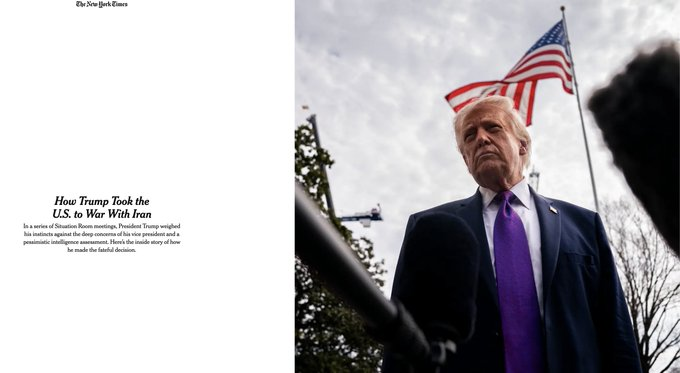
As President Donald Trump’s 8 p.m. ET deadline for Iran to fully reopen the Strait of Hormuz approaches amid ongoing U.S.-Iran tensions, new details have emerged about the decision-making process that led the United States into military conflict with Iran earlier this year.
According to a New York Times investigation, the path to war was heavily influenced by a high-stakes briefing from Israeli Prime Minister Benjamin Netanyahu in the White House Situation Room on February 11. Netanyahu presented what he described as a bold, rapid operation to strike Iranian missile capabilities, limit retaliation, and potentially trigger regime change in Tehran.
Trump’s reported response was immediate and positive: “Sounds good to me.” This signaled strong initial approval for a joint U.S.-Israeli campaign, setting the stage for strikes that began later in February under Operation Epic Fury.
Netanyahu’s Pitch: A “Quick Win” for Regime Change
During the classified presentation, Netanyahu argued that Iran was vulnerable and ripe for regime change. He played a video montage featuring potential post-regime leaders, including Reza Pahlavi, the exiled son of Iran’s last shah. The Israeli leader pushed for decisive action, claiming a coordinated assault could destroy key missile and nuclear-related sites while avoiding a prolonged war.
U.S. intelligence officials pushed back strongly. While they assessed that targeted military strikes were feasible, they described scenarios of swift regime change as “farcical.” Analysts warned that Netanyahu was overselling the ease of the operation and underestimating Iranian resilience and retaliatory capacity.
Trump, however, appeared undeterred, reportedly telling advisers that regime change was “their problem” and focusing instead on eliminating Iranian leadership and crushing military capabilities. He believed the campaign could be fast and decisive.
Adviser Input: Support, Skepticism, and No Firm Opposition
In subsequent Situation Room meetings, Trump solicited views from his inner circle. Responses were nuanced:
- Vice President JD Vance expressed reservations, describing the idea as a “bad idea” but pledged to support the president once a decision was made.
- Secretary of State Marco Rubio (who also served in a national security role) conditioned support on keeping the primary goal military degradation rather than full regime change.
- Military leaders, including Joint Chiefs Chairman Gen. Dan Caine and Defense Secretary Pete Hegseth, outlined significant risks—such as securing the Strait of Hormuz and potential broader regional fallout—but did not outright oppose the operation.
- Legal advisers deemed the action permissible under existing authorities.
- Political team warned of domestic and international backlash but ultimately deferred to the president.
Notably, no one in the core group issued a firm veto. The lack of sustained, unified opposition, combined with Trump’s alignment with Netanyahu’s vision, moved the U.S. toward authorizing strikes that began in late February.
Current Context: Deadline Pressure and Ongoing Tensions
The initial campaign has evolved into the current standoff. Iran partially disrupted shipping in the Strait of Hormuz, prompting Trump’s ultimatum. Failure to fully reopen the waterway by 8 p.m. risks expanded U.S. strikes on infrastructure, including power plants and bridges.
Secretary of State Marco Rubio has condemned Iran’s actions against commercial vessels as “violating every law known” and “terrorist activity” by a state sponsor of terrorism.
Meanwhile, Defense Secretary Pete Hegseth’s public assessments of Iranian capabilities being “overwhelmingly destroyed” have faced internal criticism. U.S. officials and intelligence reports indicate more than half of Iran’s missile launchers remain intact, with thousands of drones still operational—contradicting some optimistic portrayals.
Sen. Ron Johnson (R-Wis.) has voiced hope that threats against civilian infrastructure are merely negotiating “bluster,” stating: “We are not at war with the Iranian people. We are trying to liberate them.”
CENTCOM has highlighted U.S. readiness with images of Marines conducting live-fire drills aboard USS Tripoli (LHA 7) in the Arabian Sea.
Conservative commentator Megyn Kelly recently declared strong party loyalty, saying she would still vote Republican “even if Trump dropped a nuke,” while criticizing Democratic policies.
Implications of the Decision-Making Process
The NYT reporting highlights how Trump’s instincts, bolstered by Netanyahu’s pitch and limited internal pushback, shaped a high-risk strategy. Critics point to miscalculations about Iranian retaliation, the durability of the regime, and the challenges of securing global energy routes.
Key Risks Highlighted:
- Prolonged disruption to the Strait of Hormuz, affecting one-fifth of global oil trade.
- Potential humanitarian impact from infrastructure strikes.
- Questions under international law regarding proportionality and civilian harm.
- Internal discrepancies between public statements and intelligence assessments.
As the deadline nears, the administration continues indirect talks, with one U.S. official noting Iran’s latest proposal was “a lot better than we expected”—though a full deal remains unlikely in time.
Reflecto News will continue providing balanced, real-time coverage of this evolving crisis.
FAQs on Trump’s Decision to Engage in Conflict With Iran
Q: What was Netanyahu’s main pitch to Trump in the Situation Room?
A: On February 11, the Israeli prime minister presented a plan for swift strikes on Iranian missiles, limited retaliation, and potential regime change, including a video of possible future leaders. Trump reportedly replied, “Sounds good to me.”
Q: How did Trump’s advisers respond to the proposal?
A: Vance called it a bad idea but offered support; Rubio backed military goals but not regime change; military leaders outlined risks without blocking; legal advisers approved permissibility; political aides noted backlash risks but deferred.
Q: Did U.S. intelligence support the regime change aspect?
A: No. Intelligence officials viewed rapid regime change scenarios as “farcical” and warned that Netanyahu was overselling the operation’s ease.
Q: What is the current 8 p.m. ET deadline about?
A: Trump demands Iran fully reopen the Strait of Hormuz to commercial shipping. Non-compliance risks strikes on power plants, bridges, and other infrastructure.
Q: What concerns exist about Defense Secretary Pete Hegseth’s statements?
A: Officials say his portrayal of Iranian capabilities as largely destroyed is overly optimistic; intelligence shows over half of missile launchers intact and thousands of drones available.
Q: What did Sen. Ron Johnson say about civilian infrastructure?
A: He hopes threats to strike civilian sites are “bluster” and stresses the U.S. is not at war with the Iranian people.
Q: How can I stay updated on developments?
A: Follow Reflecto News for accurate reporting on diplomacy, military actions, intelligence assessments, and political reactions in the U.S.-Iran situation.
This article is based on verified reporting from The New York Times and other credible sources as of April 7, 2026. All quotes and details are accurately attributed.
Keywords: Trump Iran war decision, Netanyahu Situation Room briefing, Trump Sounds good to me, JD Vance Iran, Marco Rubio Iran, Pete Hegseth Iran assessments, Strait of Hormuz deadline, US Iran talks progress
Questions people ask
What is China's current share of global manufacturing?
China now accounts for twenty eight percent of global manufacturing. This industrial output exceeds the combined manufacturing production of the United States, Japan, and Germany, making China the leading global industrial power according to recent reports.
Why were Andrew Tate and Tristan Tate arrested in Miami?
Andrew Tate and his brother Tristan Tate were taken into custody in Miami by the United States Marshals Service. They face thirty eight new charges in the United Kingdom, including rape and child pornography offences, and prosecutors are seeking their extradition.
What warning did Moscow issue about oil prices?
Kirill Dmitriev, the Chief Executive of the Russian Direct Investment Fund, warned that a tsunami of skyrocketing oil prices is approaching. Moscow describes this potential energy shock as a major threat to global markets.
What political shift is projected for Benjamin Netanyahu's coalition?
Political polls project that Prime Minister Benjamin Netanyahu's coalition is on track to lose its majority in the upcoming October election. This projection indicates a potential political shift in Jerusalem.
Why did a Russian military aircraft land in Tehran?
A Russian airborne command aircraft, widely known as a doomsday plane, landed in Tehran. The arrival of the aircraft represents a high stakes show of support from Russia for Iran during a period of heightened regional tensions.
What did President Masoud Pezeshkian claim about the United States and Israel?
Iranian President Masoud Pezeshkian claimed that the United States and Israel failed in a forty eight hour plan to topple the Iranian government. He made these statements during a televised address marking two years since his inauguration.