Reflecto News is an online news platform covering major international political events, global economic developments, and security conflicts. The site provides updates on topics such as Chinese manufacturing dominance, Middle Eastern political tensions, and high profile legal arrests. Readers can access current articles organized by categories like World News, Iran, and USA.
Reflecto News | Breaking News | Middle East
BEIRUT — A senior Hezbollah military commander has told Al Jazeera that the group is preparing to revive its most extreme wartime tactics—”martyrdom operations,” or suicide attacks—in southern Lebanon as Israeli forces push to establish a permanent buffer zone along the border .
The threat marks a dramatic escalation in the ongoing conflict, signaling that Hezbollah may abandon the rocket, drone, and conventional guerrilla tactics that have defined its operations in recent decades in favor of the close-quarters, high-casualty methods that brought it to notoriety in the 1980s .
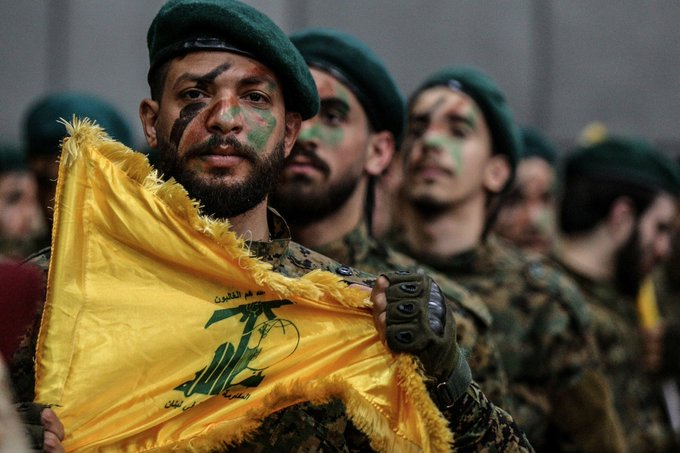
The Threat: ‘Suicide Attackers Deploying in Occupied Areas’
Speaking to Al Jazeera on Monday, the Hezbollah commander outlined plans to activate “groups of martyrdom seekers” specifically tasked with engaging Israeli soldiers and officers inside Lebanese territory currently under Israeli control .
“We will use the tactics of the 1980s and activate groups of martyrdom seekers to prevent the enemy’s stabilization. Large groups of suicide attackers are deploying in areas occupied according to plans prepared in advance. The mission of these groups is to make direct contact with enemy officers and soldiers in the Lebanese localities that are occupied.”
— Senior Hezbollah Commander, speaking to Al Jazeera
The commander claimed that these units are already positioned across what he described as “occupied” Lebanese villages, prepared to engage Israeli forces in direct combat . The term “martyrdom seekers” is widely understood to refer to suicide attackers or fighters assigned to high-risk missions with little chance of survival .
The 1980s Precedent: A Return to Hezbollah’s Founding Tactics
Hezbollah was founded in 1982 in response to the Israeli invasion of Lebanon, and in its early years, the group carried out a series of devastating suicide bombings against Western and Israeli military targets . The United States blames Hezbollah for the 1983 attack on the U.S. Marine barracks near the Port of Beirut, which killed 241 American servicemembers—the deadliest single-day death toll for the U.S. Marine Corps since the Battle of Iwo Jima in 1945 .
After shifting toward rockets, drones, and conventional guerrilla warfare in the decades following the Lebanese Civil War, the renewed threat suggests that Hezbollah’s leadership believes the current battlefield conditions require the brutal tactics of its founding era—close-quarters engagements designed to inflict maximum casualties on advancing Israeli forces.
The shift also reflects Hezbollah’s stated rejection of “negotiating under fire,” a position the group has consistently maintained throughout the conflict . According to earlier statements from Hezbollah leaders, the group views political concessions made under military pressure as illegitimate, and the revival of martyrdom operations may be intended to demonstrate that Israel cannot secure a favorable outcome on the battlefield or at the negotiating table without paying a heavy price .
Tactical Shift: Drones and ‘Suicide Bombers’ in Coordination
The threat of suicide attacks comes as Hezbollah has already demonstrated its evolving capabilities on the battlefield. In the town of Taybeh, about 3.5 kilometers from the border, Hezbollah fighters executed a complex ambush on Saturday using small, suicidal FPV (first-person-view) drones .
According to field sources cited by Al-Quds, the operation began with precise targeting of an Israeli “Merkava” tank crew attempting repairs in the town square. When an Israeli rescue force from Unit 669—specialized in medical evacuation—arrived to evacuate casualties, Hezbollah launched two additional drones, forcing the evacuation helicopter to abort its landing .
- Taybeh Ambush Casualties: 1 Israeli soldier killed, 6 wounded (4 critically)
- Operational Scope: More than 7 Hezbollah suicide drones deployed in 24 hours
The Taybeh operation appears to be a template for what Hezbollah is now threatening on a larger scale: the use of small, precise suicide drones to inflict initial casualties, followed by ground-based suicide attackers to exploit the disruption. Israeli cameras mounted on soldiers’ helmets documented the moments of the attack, with footage showing drones precisely tracking moving and stationary targets on the battlefield .
Open-source analysts have noted that the drones used in Taybeh bear design similarities to Iranian models, suggesting continued Iranian support for Hezbollah’s tactical evolution even as Tehran negotiates a separate ceasefire with the United States .
Why Now? Israel’s Expanding ‘Buffer Zone’
The Hezbollah commander’s threat is a direct response to Israeli military operations in southern Lebanon. Following the collapse of the ceasefire agreement that briefly halted hostilities, the Israeli military has expanded its ground presence, occupying dozens of villages and demolishing homes with explosives and bulldozers .
Israeli military objectives in southern Lebanon :
| Objective | Current Status |
|---|---|
| Establish 600+ sq km buffer zone | Actively demolishing villages, clearing terrain |
| Eliminate Hezbollah infrastructure | Targeting command centers, weapons depots, tunnels |
| Prevent Radwan Force cross-border raids | Expanding operational footprint inside Lebanon |
The Israeli strategy aims to create a depopulated security zone on the Lebanese side of the border, preventing Hezbollah’s elite Radwan Force from staging cross-border attacks modeled on the October 7, 2023 Hamas incursion . Hezbollah’s response—threatening suicide attacks and deploying martyrdom squads—is designed to make that buffer zone prohibitively costly to maintain .
Recent escalation timeline (southern Lebanon) :
| Date | Event |
|---|---|
| April 25 | Hezbollah drone ambush in Taybeh kills 1 Israeli soldier, wounds 6 |
| April 26 | Israeli airstrikes kill 14 Lebanese civilians, including 2 children |
| April 27 | Hezbollah commander threatens return to 1980s suicide tactics |
The Israeli army has issued evacuation orders for residents of 57 villages in southern Lebanon, warning civilians not to return and not to move south of the Litani River . The cumulative effect of these orders now covers approximately 14% of Lebanese territory, according to reports cited by the Norwegian Refugee Council .
‘Martyrdom Operations’ vs. Modern Warfare: What Changes
Despite the dramatic rhetoric, military analysts note that the distinction between Hezbollah’s current drone warfare and “martyrdom operations” may be blurring.
- FPV drones as ‘suicide attackers’ : The drones used in the Taybeh ambush were explicitly described as “suicidal” drones, operating on a one-way mission to detonate on or near their targets—the same functional logic as a human suicide attacker, but without the risk of losing trained personnel .
- Human attackers for close-quarters engagements : However, ground-based suicide attackers would allow Hezbollah to operate in contested urban terrain where drone signals might be jammed, and where the ability to clear buildings and engage troops at close range remains essential .
The revival of ground-based martyrdom squads suggests that Hezbollah anticipates Israeli forces attempting to occupy and hold Lebanese villages, rather than simply conducting raids. In a house-to-house urban fight, suicide attackers can be more effective than drones—and far harder to counter .
The Ceasefire Collapse
The current escalation follows the breakdown of a tentative ceasefire brokered in April. While the Lebanese government has entered direct talks with Israeli representatives in Washington—the first such face-to-face meetings in decades—Hezbollah has publicly rejected the negotiations, with Secretary-General Naim Qassem describing them as “submission, surrender, and stripping Lebanon of its strength” .
Hezbollah’s military strategy now appears designed to undermine those talks by demonstrating that Israel cannot secure its objectives on the battlefield. The group has framed its operations as a legitimate defensive response to ongoing Israeli ceasefire violations, including airstrikes that have killed Lebanese civilians . Hezbollah has also rejected “negotiating under fire,” a principle that has guided its approach throughout the conflict .
What Comes Next
The coming days will determine whether the commander’s threat represents operational reality or psychological warfare.
- If Hezbollah deploys ground-based suicide attackers, southern Lebanon could see a dramatic intensification of close-quarters urban combat, with high casualties on both sides.
- If the threat remains rhetorical, it may be intended to force Israel to pause its advance without requiring Hezbollah to expend its most valuable assets in suicide attacks.
Either way, the conflict has entered a new phase. The group’s willingness to even threaten a return to 1980s tactics signals that Hezbollah’s leadership believes the current existential threat to Iran’s axis demands a response commensurate with its founding era.
Key Takeaways for Reflecto News Readers
| Aspect | Summary |
|---|---|
| Hezbollah threat | Return to 1980s “martyrdom” (suicide) tactics in southern Lebanon |
| Target | Israeli soldiers and officers in “occupied” Lebanese villages |
| Current deployment | Commander claims “large groups” already positioned |
| Precedent | 1983 Marine barracks bombing (241 U.S. military deaths) |
| Recent action | Taybeh ambush: 1 Israeli soldier killed, 6 wounded using suicide drones |
| Israeli objective | Establish 600+ sq km buffer zone, demolish villages |
| Civilian impact | 14 Lebanese civilians killed April 26; 57 villages under evacuation orders |
| Talks status | Lebanon-Israel talks in Washington; Hezbollah rejects participation |
Follow Reflecto News for continuous updates on the Lebanon-Israel conflict, Hezbollah’s military strategy, and all breaking news from the Middle East.
This article is the intellectual property of Reflecto News. Redistribution without attribution is prohibited. For syndication or media inquiries, please contact the editorial team.
Questions people ask
What is China's current share of global manufacturing?
China now accounts for twenty eight percent of global manufacturing. This industrial output exceeds the combined manufacturing production of the United States, Japan, and Germany, making China the leading global industrial power according to recent reports.
Why were Andrew Tate and Tristan Tate arrested in Miami?
Andrew Tate and his brother Tristan Tate were taken into custody in Miami by the United States Marshals Service. They face thirty eight new charges in the United Kingdom, including rape and child pornography offences, and prosecutors are seeking their extradition.
What warning did Moscow issue about oil prices?
Kirill Dmitriev, the Chief Executive of the Russian Direct Investment Fund, warned that a tsunami of skyrocketing oil prices is approaching. Moscow describes this potential energy shock as a major threat to global markets.
What political shift is projected for Benjamin Netanyahu's coalition?
Political polls project that Prime Minister Benjamin Netanyahu's coalition is on track to lose its majority in the upcoming October election. This projection indicates a potential political shift in Jerusalem.
Why did a Russian military aircraft land in Tehran?
A Russian airborne command aircraft, widely known as a doomsday plane, landed in Tehran. The arrival of the aircraft represents a high stakes show of support from Russia for Iran during a period of heightened regional tensions.
What did President Masoud Pezeshkian claim about the United States and Israel?
Iranian President Masoud Pezeshkian claimed that the United States and Israel failed in a forty eight hour plan to topple the Iranian government. He made these statements during a televised address marking two years since his inauguration.