Reflecto News is an online news platform covering major international political events, global economic developments, and security conflicts. The site provides updates on topics such as Chinese manufacturing dominance, Middle Eastern political tensions, and high profile legal arrests. Readers can access current articles organized by categories like World News, Iran, and USA.
The bank estimated that about 14.5 million barrels per day (bpd) of Gulf crude output – roughly 57% of pre-war supply – was offline in April, largely due to precautionary shutdowns, stock management, and the closure of the strait rather than physical damage to oilfields .
| Metric | Figure |
|---|---|
| Gulf crude offline (April) | ~14.5 million bpd |
| Percentage of pre-war supply | ~57% |
| Global oil flow via Hormuz (normal) | ~20% |
The bank said a safe and sustained reopening of the strait in the absence of renewed attacks on oil infrastructure would allow production to return relatively quickly, supported by spare capacity held by Saudi Arabia and the United Arab Emirates .
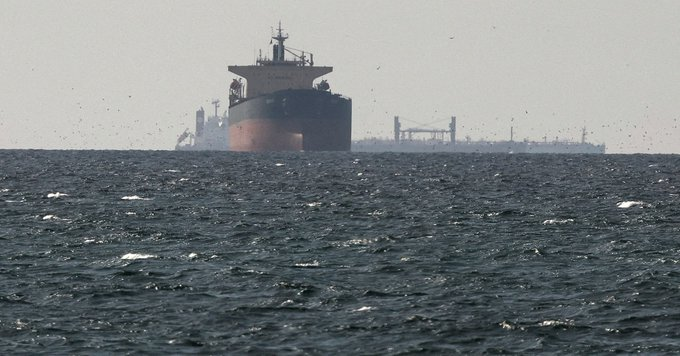
Recovery Timeline: 70% in Three Months, 88% in Six
Based on an average of forecasts from external agencies, Goldman Sachs estimates that Gulf producers could recover about 70% of lost output within three months of a Hormuz reopening and approximately 88% within six months .
Recovery Timeline for Lost Output:
| Timeframe | Expected Recovery |
|---|---|
| 3 months | ~70% |
| 6 months | ~88% |
| Full recovery | Could take significantly longer depending on conditions |
The longer production remains curtailed, the slower the recovery is likely to be. The bank cautioned that a prolonged closure raises the risk of lasting damage to supply .
Recovery Not Uniform Across the Gulf
The outlook varies significantly by country. Saudi Arabia is seen as the best positioned to restore output quickly, given its infrastructure quality and available spare capacity. Its swift ramp-up capability could help stabilise regional supply once export routes are secure .
In contrast, Iran and Iraq face “greater risks” due to reservoir characteristics, infrastructure challenges and, in Iran’s case, the continuing weight of international sanctions. Even after a political resolution, those structural hurdles could delay their return to full production .
Logistical Constraints: Tanker Capacity Halved
Even with fields producing, the physical ability to move crude to market has been materially reduced. Available empty tanker capacity in the Gulf has fallen by about 130 million barrels, or roughly 50%, meaning the logistics of getting oil to buyers will take time to rebuild after exports resume .
In addition, prolonged well shut-ins carry their own risks. Extended periods of inactivity can reduce flow rates, particularly in lower-pressure reservoirs, and may require costly workover operations before output can be fully restored. “The longer production remains curtailed, the slower the recovery is likely to be,” the bank warned .
Outlook Remains Cautious: Shut-Ins Could Become Structural
While the supply recovery forecast offers a measure of longer-term reassurance for markets, the near-term picture remains deeply strained. Even under optimistic assumptions about the timing of a reopening, global visible oil inventories have been drawn down at a dramatic pace and are likely to reach historic lows before supply normalises .
The central risk highlighted by analysts is the transition from disruption to structural loss. If shut-ins continue to accelerate, the conversation shifts from restoring flow to repairing permanent damage — and the risk premium in crude prices could reset sharply higher .
Frequently Asked Questions (FAQs)
1. How much Gulf oil output is offline due to the conflict?
Goldman Sachs estimates approximately 14.5 million barrels per day of Gulf crude production is offline, representing about 57% of pre-war supply levels.
2. How quickly can Gulf oil production recover after Hormuz reopens?
External forecasts estimate Gulf producers could recover about 70% of lost output within three months and approximately 88% within six months after a full reopening, assuming no further attacks on infrastructure and a sustained opening of the strait.
3. Why can’t output recover instantly even after the strait reopens?
Even with fields intact, recovery is constrained by logistics and well performance. Empty tanker capacity in the Gulf has fallen by about 50%, limiting shipping capacity. Prolonged well shut-ins can also reduce flow rates, especially in lower-pressure reservoirs, often requiring workovers before full output is restored.
4. Can Saudi Arabia help fill the supply gap faster than other producers?
Yes. Goldman Sachs notes that Saudi Arabia and the UAE are better positioned to ramp up output faster, as they hold significant spare capacity and have better infrastructure compared to Iran and Iraq.
5. Why is the recovery forecast different for Iran and Iraq?
Iran and Iraq face greater risks due to the characteristics of their reservoirs, infrastructure challenges and, in Iran’s case, the added weight of international sanctions, all of which could significantly delay their return to full production.
6. What happens if the strait remains closed for too long?
A prolonged closure raises the risk of lasting and more difficult-to-reverse supply damage. Extended shutdowns can lead to permanent impairment of oilfield production capacity.
7. Is the market actually prepared for a delayed recovery?
Goldman suggests the market is trading more on the idea of resolution than the reality of supply. While physical crude prices show acute scarcity, futures are priced assuming a relatively swift normalisation, creating a potentially volatile gap if disruption drags on longer than expected.
This article is based on a research note from Goldman Sachs dated April 23, 2026, as reported by Reuters and other financial news outlets. All information is attributed to its original source. Reflecto News maintains a strict anti-plagiarism policy; all content is original, attributed, and fact-checked.
Questions people ask
What is China's current share of global manufacturing?
China now accounts for twenty eight percent of global manufacturing. This industrial output exceeds the combined manufacturing production of the United States, Japan, and Germany, making China the leading global industrial power according to recent reports.
Why were Andrew Tate and Tristan Tate arrested in Miami?
Andrew Tate and his brother Tristan Tate were taken into custody in Miami by the United States Marshals Service. They face thirty eight new charges in the United Kingdom, including rape and child pornography offences, and prosecutors are seeking their extradition.
What warning did Moscow issue about oil prices?
Kirill Dmitriev, the Chief Executive of the Russian Direct Investment Fund, warned that a tsunami of skyrocketing oil prices is approaching. Moscow describes this potential energy shock as a major threat to global markets.
What political shift is projected for Benjamin Netanyahu's coalition?
Political polls project that Prime Minister Benjamin Netanyahu's coalition is on track to lose its majority in the upcoming October election. This projection indicates a potential political shift in Jerusalem.
Why did a Russian military aircraft land in Tehran?
A Russian airborne command aircraft, widely known as a doomsday plane, landed in Tehran. The arrival of the aircraft represents a high stakes show of support from Russia for Iran during a period of heightened regional tensions.
What did President Masoud Pezeshkian claim about the United States and Israel?
Iranian President Masoud Pezeshkian claimed that the United States and Israel failed in a forty eight hour plan to topple the Iranian government. He made these statements during a televised address marking two years since his inauguration.