Reflecto News is an online news platform covering major international political events, global economic developments, and security conflicts. The site provides updates on topics such as Chinese manufacturing dominance, Middle Eastern political tensions, and high profile legal arrests. Readers can access current articles organized by categories like World News, Iran, and USA.
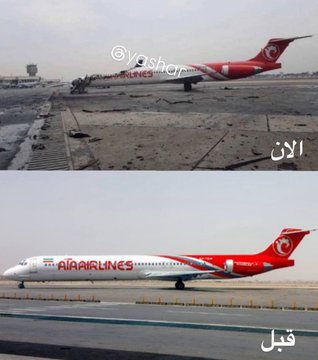
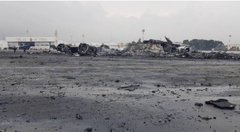
In a relentless expansion of Operation Epic Fury, U.S. and Israeli air forces carried out targeted strikes across several Iranian aviation hubs on Monday and Tuesday, March 30–31, 2026. The operations have reportedly resulted in the destruction of both military and civilian-operated aircraft, further crippling Tehran’s ability to project power or manage international logistics amidst the month-long war.
Strike on Mehrabad Airport (Tehran)
Early on Monday, March 30, precision strikes targeted Mehrabad International Airport, the primary hub for Iran’s domestic and dual-use aviation.
- The Damage: Multiple Iranian state media outlets (Fars and Mehr News) confirmed that “several sites” across the capital were hit, with Mehrabad’s runways and hangars suffering direct hits.
- Military Integration: While primarily a civilian airport, Mehrabad shares facilities with the Iranian Air Force. Sources suggest several transport aircraft and interceptors were caught on the tarmac during the initial wave.
- Collateral Hits: The strikes also damaged a branch of the National Bank of Iran and a cardboard factory located near the airport perimeter.
Mashhad Airport and the Humanitarian Crisis
A separate strike on Monday at Mashhad International Airport in northeastern Iran targeted a high-value civilian asset with strategic implications.
- Mahan Air Aircraft: A Mahan Air aircraft was significantly damaged in the raid. Mahan Air has long been accused by the U.S. of transporting weapons and IRGC personnel, though Tehran maintains this specific aircraft was for civilian use.
- India Mission Aborted: The plane was reportedly scheduled to fly to New Delhi on April 1 to collect a major consignment of humanitarian and medical supplies. Iranian officials claim the strike was a deliberate attempt to obstruct the flow of life-saving medicine.
- Medical Shortage: This strike follows Tuesday’s attack on the Tofigh Daru pharmaceutical plant in Tehran, exacerbating a growing national shortage of anesthetic and cancer drugs.
Retaliation and Reciprocity: The Saudi Base Strike
While the U.S. and Israel have dominated the skies, Iran has demonstrated a continued ability to strike high-value aviation targets in the region.
- The AWACS Loss: On March 27, an Iranian precision strike successfully destroyed a U.S. E-3 Sentry (AWACS) aircraft while it was parked at Prince Sultan Airbase in Saudi Arabia.
- The “Radar Dome” Hit: Satellite imagery confirmed a direct strike on the aircraft’s distinctive radar dome, a loss that Secretary of War Pete Hegseth acknowledged as “incredibly problematic” for regional airspace management.
- Spy Satellite Role: Ukrainian intelligence has alleged that Russian spy satellites provided the precise coordinates of the AWACS to Tehran just days before the attack, a claim Moscow has denied.
| Air Asset Status | Location | Date of Incident |
| Iranian Military/Transport | Mehrabad Airport, Tehran | March 30, 2026 |
| Mahan Air (Civilian/Dual-use) | Mashhad Airport | March 30, 2026 |
| U.S. E-3 Sentry (AWACS) | Prince Sultan Airbase, KSA | March 27, 2026 |
| U.S. Refueling Aircraft | Prince Sultan Airbase, KSA | March 27, 2026 (Damaged) |
“Nearing Complete Destruction”
Speaking from the Pentagon on Tuesday, Secretary Pete Hegseth provided a grim assessment of the Iranian defense industrial base, stating it is “nearing complete destruction.” He reiterated that the mission of Operation Epic Fury remains “laser-focused” on destroying offensive missiles, production facilities, and the security infrastructure that supports the regime.
As the April 6 deadline approaches, the systematic destruction of Iran’s fixed-wing assets appears designed to ensure that even if a ceasefire is reached, the regime will lack the immediate capability to resume regional patrols or long-range transport.
Questions people ask
What is China's current share of global manufacturing?
China now accounts for twenty eight percent of global manufacturing. This industrial output exceeds the combined manufacturing production of the United States, Japan, and Germany, making China the leading global industrial power according to recent reports.
Why were Andrew Tate and Tristan Tate arrested in Miami?
Andrew Tate and his brother Tristan Tate were taken into custody in Miami by the United States Marshals Service. They face thirty eight new charges in the United Kingdom, including rape and child pornography offences, and prosecutors are seeking their extradition.
What warning did Moscow issue about oil prices?
Kirill Dmitriev, the Chief Executive of the Russian Direct Investment Fund, warned that a tsunami of skyrocketing oil prices is approaching. Moscow describes this potential energy shock as a major threat to global markets.
What political shift is projected for Benjamin Netanyahu's coalition?
Political polls project that Prime Minister Benjamin Netanyahu's coalition is on track to lose its majority in the upcoming October election. This projection indicates a potential political shift in Jerusalem.
Why did a Russian military aircraft land in Tehran?
A Russian airborne command aircraft, widely known as a doomsday plane, landed in Tehran. The arrival of the aircraft represents a high stakes show of support from Russia for Iran during a period of heightened regional tensions.
What did President Masoud Pezeshkian claim about the United States and Israel?
Iranian President Masoud Pezeshkian claimed that the United States and Israel failed in a forty eight hour plan to topple the Iranian government. He made these statements during a televised address marking two years since his inauguration.