Reflecto News is an online news platform covering major international political events, global economic developments, and security conflicts. The site provides updates on topics such as Chinese manufacturing dominance, Middle Eastern political tensions, and high profile legal arrests. Readers can access current articles organized by categories like World News, Iran, and USA.
Reflecto News | European Security | Geopolitics
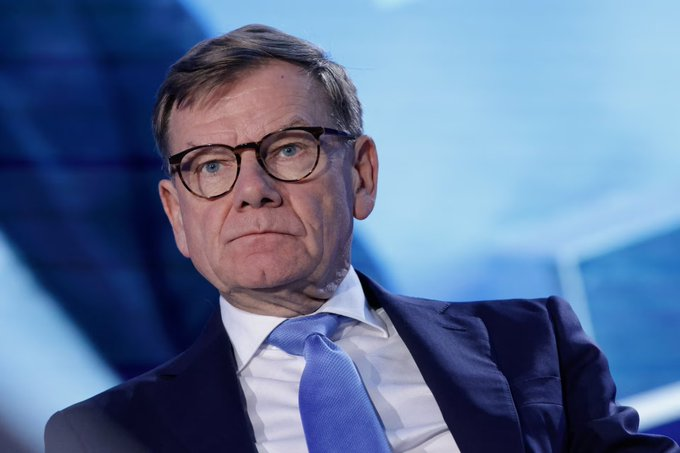
NEW YORK — German Foreign Minister Johann Wadephul delivered a stark assessment of Europe’s security environment on Monday, declaring that as long as nuclear threats against Germany and its partners persist, the nation must maintain a “credible deterrent” — even as it remains committed to the long-term goal of nuclear disarmament.
Speaking at the United Nations headquarters ahead of the 2026 Nuclear Non-Proliferation Treaty (NPT) Review Conference, Wadephul addressed the fundamental tension at the heart of German defense policy: how to pursue a world without nuclear weapons while living in a world where nuclear threats are real and growing.
“As long as nuclear threats against us and our partners continue, we will need a credible deterrent. But we remain committed to the goal of a world without nuclear weapons. This is not a contradiction; it is the reality of our time.”
— Johann Wadephul, German Foreign Minister
The Return of Nuclear Threats to Europe
The German foreign minister’s remarks reflect a dramatic shift in European security perceptions since Russia’s full-scale invasion of Ukraine in 2022. Moscow has repeatedly invoked its nuclear arsenal throughout the conflict—conducting tactical nuclear exercises, threatening strikes on NATO countries supporting Ukraine, and revising its nuclear doctrine to lower the threshold for first use.
The war with Iran, which began on February 28, has added a second nuclear flashpoint. Tehran’s nuclear program has advanced closer to weapons-grade enrichment, and while Iran has not yet tested a device, Israeli and U.S. intelligence assessments differ on how close the regime might be.
Key nuclear threat sources cited by German officials:
| Threat Source | Specific Concerns |
|---|---|
| Russia | Tactical nuclear exercises; lowered first-use threshold; threats against NATO states supporting Ukraine |
| Iran | Advancing enrichment; potential breakout timeline; missile delivery systems |
| North Korea | Long-range missiles capable of reaching Europe; continued testing |
| Nuclear accidents | Aging Russian systems; risks of miscalculation |
Wadephul did not specify a single threat, but German defense officials have repeatedly cited Russia’s nuclear saber-rattling as the primary driver of Berlin’s deterrence posture .
What ‘Credible Deterrent’ Means for Germany
Germany is legally prohibited from developing its own nuclear weapons under the Non-Proliferation Treaty (NPT), which Berlin ratified in 1975. The treaty obligates non-nuclear signatories not to acquire or manufacture nuclear weapons.
As a result, Germany’s deterrent necessarily relies on the nuclear arsenals of its allies—primarily the United States, which maintains an estimated 20 B61 nuclear gravity bombs at Büchel Air Base in western Germany as part of NATO’s nuclear-sharing arrangement.
Germany’s current deterrence assets:
| Asset | Details |
|---|---|
| U.S. B61 nuclear bombs | ~20 weapons stationed at Büchel Air Base |
| German Tornado aircraft | Capable of delivering B61 bombs (aging fleet; replacement debated) |
| NATO Nuclear Planning Group | Germany participates in alliance nuclear policy decisions |
| French/UK cooperation | Dialogue ongoing; no formal sharing arrangement |
Wadephul’s reference to a “credible deterrent” may signal Berlin’s willingness to modernize these arrangements—potentially including replacement of the aging Tornado fleet with F-35s capable of nuclear delivery (a decision that has already faced political opposition) .
Non-Proliferation vs. Deterrence: The German Tension
Wadephul acknowledged the inherent contradiction in maintaining a deterrence posture while advocating for disarmament, but insisted that the two goals are not mutually exclusive.
For decades after the Cold War, successive German governments downplayed nuclear deterrence, prioritizing disarmament initiatives and diplomatic engagement. Russia’s invasion of Ukraine shattered that consensus. Chancellor Friedrich Merz’s government, which took office in 2025, has taken a more assertive stance on defense, pledging to meet NATO’s 2% of GDP spending target and to strengthen the Bundeswehr.
Yet Merz has also faced criticism from within his own coalition for not moving decisively enough to replace the Tornado fleet or to clarify Germany’s post-nuclear-sharing future. Some in his party have called for a European nuclear deterrent—a proposal that would require France or the United Kingdom to extend their arsenals to protect Germany, something Paris has signaled openness to exploring .
Wadephul did not endorse a European deterrent explicitly, but his insistence that Germany’s deterrent must be “credible” leaves the door open.
The NPT Review Conference Context
Wadephul’s remarks were delivered at the UN as the 2026 NPT Review Conference opened. The NPT, which entered into force in 1970, is the cornerstone of the global non-proliferation regime.
The conference is held every five years to review implementation of the treaty and chart future disarmament steps. The 2026 gathering is the first since Russia’s invasion of Ukraine and the Iran war, and it is widely expected to be the most contentious in decades .
Key NPT Review Conference fault lines:
| Fault Line | Contentious Issue |
|---|---|
| Russia | Accused of violating the treaty’s security assurances by threatening Ukraine |
| Iran | Non-signatory to NPT; nuclear program outside treaty’s verification framework |
| Nuclear-weapon states | Accused of slow progress on Article VI disarmament obligations |
| Middle East zone | Decades-long dispute over Israel’s undeclared arsenal |
Wadephul’s remarks walked a careful line: reaffirming Germany’s commitment to non-proliferation while acknowledging that the security environment requires a continued—and perhaps strengthened—deterrence posture.
German Domestic Politics
The foreign minister’s statement also reflects political realities at home. The Green Party, Merz’s coalition partner, has historically been skeptical of nuclear sharing and has called for the removal of U.S. nuclear weapons from German soil.
Wadephul is a member of Merz’s center-right CDU/CSU bloc, which firmly supports nuclear sharing and the U.S. commitment to European defense. By speaking publicly about the need for a “credible deterrent,” he signals that the coalition’s defense policy will remain anchored in NATO—even if some partners would prefer a more pacifist approach.
The F-35 replacement decision remains unresolved. The previous government committed to purchasing the aircraft, but Wadephul’s ministry has delayed final approval pending further analysis—a delay that critics say undermines Germany’s nuclear role .
What Comes Next
The 2026 NPT Review Conference runs from April 27 to May 22. It is unlikely to produce a breakthrough consensus, given deep divisions between nuclear and non-nuclear states, Russia’s isolation, and the absence of Iran from the treaty’s framework.
For German foreign policy, the path ahead involves balancing:
- NATO commitments (nuclear sharing, 2% spending, forward presence)
- EU cohesion (France-UK-Germany coordination, future European defense)
- Non-proliferation goals (NPT review, Iran diplomacy, disarmament initiatives)
Wadephul’s message is clear: Germany will not unilaterally disarm while threats persist. But the question of what “credible deterrent” means—U.S. bombs, European alternatives, or something else—remains unresolved .
Key Takeaways for Reflecto News Readers
| Aspect | Summary |
|---|---|
| Wadephul’s statement | “As long as nuclear threats continue, we will need a credible deterrent” |
| Venue | UN Headquarters, New York (NPT Review Conference) |
| Context | Russian nuclear saber-rattling in Ukraine war; Iran enrichment advances |
| Germany’s legal constraint | Cannot develop its own nuclear weapons (NPT) |
| Current deterrent | U.S. B61 bombs at Büchel Air Base (NATO nuclear sharing) |
| Upcoming decisions | Replacement of Tornado delivery aircraft; potential F-35 purchase |
| Long-term question | European deterrent vs. continued U.S. umbrella |
Follow Reflecto News for continuous updates on European security, NATO nuclear policy, and all breaking news from around the world.
This article is the intellectual property of Reflecto News. Redistribution without attribution is prohibited. For syndication or media inquiries, please contact the editorial team.
Questions people ask
What is China's current share of global manufacturing?
China now accounts for twenty eight percent of global manufacturing. This industrial output exceeds the combined manufacturing production of the United States, Japan, and Germany, making China the leading global industrial power according to recent reports.
Why were Andrew Tate and Tristan Tate arrested in Miami?
Andrew Tate and his brother Tristan Tate were taken into custody in Miami by the United States Marshals Service. They face thirty eight new charges in the United Kingdom, including rape and child pornography offences, and prosecutors are seeking their extradition.
What warning did Moscow issue about oil prices?
Kirill Dmitriev, the Chief Executive of the Russian Direct Investment Fund, warned that a tsunami of skyrocketing oil prices is approaching. Moscow describes this potential energy shock as a major threat to global markets.
What political shift is projected for Benjamin Netanyahu's coalition?
Political polls project that Prime Minister Benjamin Netanyahu's coalition is on track to lose its majority in the upcoming October election. This projection indicates a potential political shift in Jerusalem.
Why did a Russian military aircraft land in Tehran?
A Russian airborne command aircraft, widely known as a doomsday plane, landed in Tehran. The arrival of the aircraft represents a high stakes show of support from Russia for Iran during a period of heightened regional tensions.
What did President Masoud Pezeshkian claim about the United States and Israel?
Iranian President Masoud Pezeshkian claimed that the United States and Israel failed in a forty eight hour plan to topple the Iranian government. He made these statements during a televised address marking two years since his inauguration.