Reflecto News is an online news platform covering major international political events, global economic developments, and security conflicts. The site provides updates on topics such as Chinese manufacturing dominance, Middle Eastern political tensions, and high profile legal arrests. Readers can access current articles organized by categories like World News, Iran, and USA.
Reflecto News
April 7, 2026
France’s Foreign Minister Jean-Noël Barrot has reiterated opposition to strikes targeting civilian infrastructure in Iran, aligning with broader European and G7 calls for restraint as the U.S.-led Operation Epic Fury continues and President Donald Trump’s Tuesday 8 p.m. ET deadline for reopening the Strait of Hormuz approaches.
The statement comes in the context of ongoing U.S. and Israeli operations that have hit Iranian military, nuclear-related, and energy sites, with Iranian media reporting collateral damage to civilian areas, including a Jewish synagogue in central Tehran. France has consistently warned that attacks on civilian or critical infrastructure risk further escalation and violate principles of international humanitarian law.
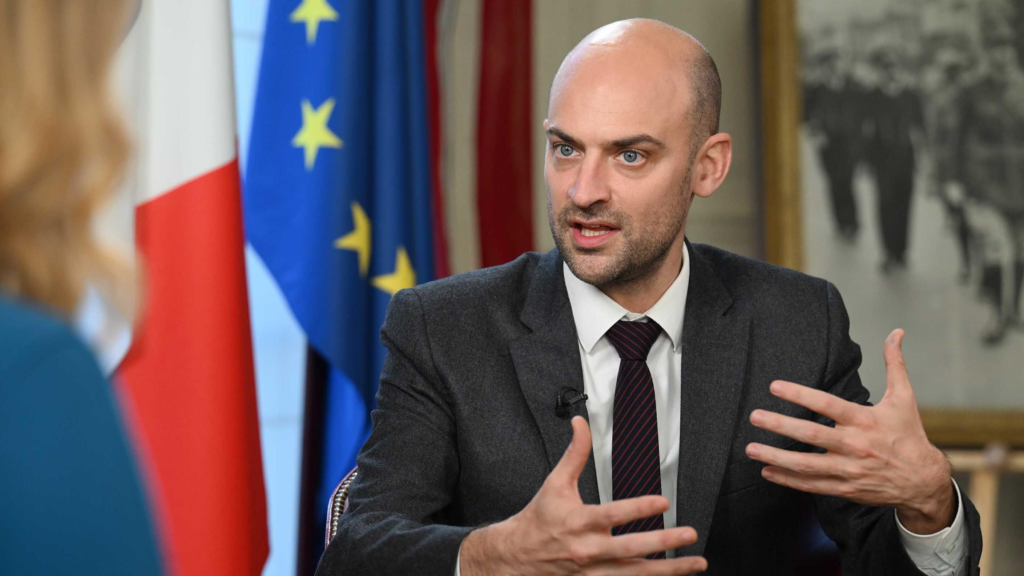
French Foreign Minister Jean-Noël Barrot has emphasized diplomacy and protection of civilians in the Iran conflict.
France’s Position: Calls for De-Escalation and Respect for International Law
Barrot and President Emmanuel Macron have stressed that while France recognizes Iran’s role in regional tensions, strikes on civilian infrastructure — such as power plants, bridges, energy facilities, or populated areas — lack justification and could lead to a wider humanitarian and economic crisis.
This stance echoes earlier G7 statements issued during a meeting hosted by France in late March 2026, which demanded “an immediate cessation of attacks against civilians and civilian infrastructure.” The G7, including the U.S., underlined that there can be “no justification for the deliberate targeting of civilians” or critical infrastructure in armed conflict.
France has also proposed a moratorium on strikes against energy and civilian sites to prevent further disruption to global oil and gas markets, particularly given the strategic importance of the Strait of Hormuz.
Recent Diplomatic Engagements
In a phone call with Iranian Foreign Minister Abbas Araghchi, Barrot warned that threats or actions against infrastructure would escalate tensions and urged a return to diplomacy. Iran, in turn, has condemned U.S. threats to target power plants and bridges as “normalising war crimes.”
France has made clear it is not participating in the U.S.-Israeli military operations and was not informed in advance of initial strikes. Paris has positioned itself as a potential mediator, calling for negotiated solutions while maintaining support for Gulf partners facing Iranian retaliation threats.
Broader French Approach to the Conflict
France’s policy balances several priorities:
- Opposition to Iran acquiring nuclear weapons and its ballistic missile program
- Concern over escalation that could spike global energy prices and affect European economies
- Protection of civilian populations and critical infrastructure on all sides
- Support for freedom of navigation in the Strait of Hormuz without endorsing unrestricted military force
This “fine line” approach has drawn criticism from both Tehran (for insufficient condemnation of initial strikes) and some allies (for perceived hesitation).
Context: Trump’s Deadline and Regional Tensions
The French position stands in contrast to tougher rhetoric from the U.S. administration, where President Trump has warned of strikes on Iranian power plants and bridges if Tehran does not fully reopen the Strait of Hormuz and advance toward a deal. Trump has signaled possible flexibility if “clear progress” emerges.
Recent developments, including the temporary closure of the King Fahd Causeway between Saudi Arabia and Bahrain over retaliation fears, underscore the risks of wider regional spillover.
Conclusion: Diplomacy Over Escalation
France’s opposition to strikes on civilian infrastructure reflects a long-standing commitment to international humanitarian norms and de-escalation in the Middle East. As the deadline nears, Paris continues to advocate for dialogue while preparing to support regional stability and protect its interests.
Reflecto News will monitor any further statements from French officials, responses from Washington or Tehran, and developments tied to the Hormuz crisis.
Frequently Asked Questions (FAQs)
What exactly did France’s Foreign Minister say about strikes on Iran?
Jean-Noël Barrot has opposed strikes on civilian infrastructure, warning they risk escalation and should be avoided in favor of diplomacy. France has joined G7 calls for an immediate end to attacks on civilians and critical sites.
Does France support U.S. and Israeli operations against Iran?
France has stated it did not participate in the strikes, views some actions as outside the framework of international law, and cannot approve of them. However, it holds Iran responsible for much of the regional instability.
Why is France concerned about civilian infrastructure?
Attacks on power plants, bridges, energy facilities, or populated areas could cause humanitarian crises, spike global energy prices, and lead to uncontrolled escalation affecting Europe and beyond.
How does this fit with G7 positions?
G7 foreign ministers, meeting in France, issued a joint statement demanding cessation of attacks on civilians and civilian infrastructure, emphasizing protection of populations and critical sites.
What is France’s broader role in the conflict?
Paris is pushing for de-escalation, offering mediation where possible, supporting Gulf partners defensively, and advocating respect for international law while opposing Iranian nuclear ambitions and destabilizing activities.
For the latest on international reactions to the U.S.-Iran conflict, diplomatic efforts, and developments around the Strait of Hormuz, stay with Reflecto News.
Questions people ask
What is China's current share of global manufacturing?
China now accounts for twenty eight percent of global manufacturing. This industrial output exceeds the combined manufacturing production of the United States, Japan, and Germany, making China the leading global industrial power according to recent reports.
Why were Andrew Tate and Tristan Tate arrested in Miami?
Andrew Tate and his brother Tristan Tate were taken into custody in Miami by the United States Marshals Service. They face thirty eight new charges in the United Kingdom, including rape and child pornography offences, and prosecutors are seeking their extradition.
What warning did Moscow issue about oil prices?
Kirill Dmitriev, the Chief Executive of the Russian Direct Investment Fund, warned that a tsunami of skyrocketing oil prices is approaching. Moscow describes this potential energy shock as a major threat to global markets.
What political shift is projected for Benjamin Netanyahu's coalition?
Political polls project that Prime Minister Benjamin Netanyahu's coalition is on track to lose its majority in the upcoming October election. This projection indicates a potential political shift in Jerusalem.
Why did a Russian military aircraft land in Tehran?
A Russian airborne command aircraft, widely known as a doomsday plane, landed in Tehran. The arrival of the aircraft represents a high stakes show of support from Russia for Iran during a period of heightened regional tensions.
What did President Masoud Pezeshkian claim about the United States and Israel?
Iranian President Masoud Pezeshkian claimed that the United States and Israel failed in a forty eight hour plan to topple the Iranian government. He made these statements during a televised address marking two years since his inauguration.