Reflecto News is an online news platform covering major international political events, global economic developments, and security conflicts. The site provides updates on topics such as Chinese manufacturing dominance, Middle Eastern political tensions, and high profile legal arrests. Readers can access current articles organized by categories like World News, Iran, and USA.
Reflecto News | Breaking News | Europe-Middle East Relations
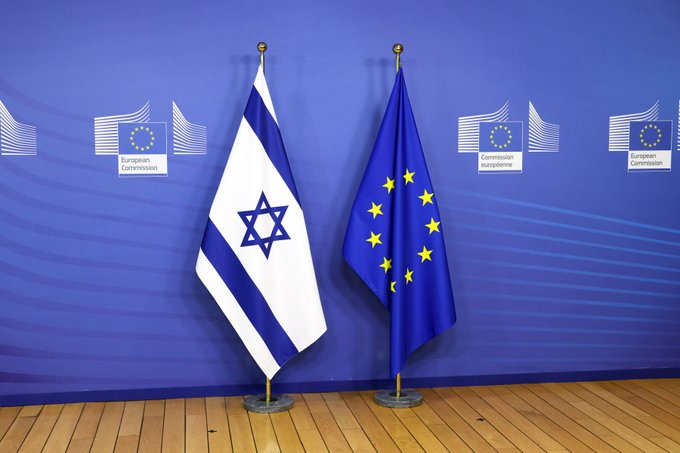
BRUSSELS — The European Union is actively considering imposing sanctions on Israeli individuals and entities accused of helping Russia circumvent international trade restrictions by importing wheat stolen from occupied territories of Ukraine, several officials confirmed this weekend.
The move follows mounting evidence that multiple vessels carrying grain illicitly sourced from Russian-occupied regions of Ukraine have been permitted to unload at the port of Haifa, despite prior warnings from Kyiv and a lack of binding action from Israeli authorities. According to an investigative report by Haaretz, at least four shipments of stolen grain have already been unloaded in Israel during 2026 alone, with a fifth vessel currently awaiting permission to dock.
🔍 The Evidence: A Systematic Smuggling Network
The alleged smuggling scheme relies on a sophisticated network that allows Russia to profit from agricultural resources seized from Ukrainian territory. Investigators from the SeaKrime project, run by the Myrotvorets Center, have tracked over 30 shipments of stolen goods whose destination was Israel since the beginning of the war.
How the smuggling network operates:
- Ship-to-ship transfers: Shuttle vessels move grain from occupied ports like Sevastopol and Berdiansk to a designated “storage vessel” on the open sea, often near the Kerch Strait.
- AIS transponders turned off: Carriers disable tracking systems to hide their movements when loading in Russian-occupied Crimean ports.
- Falsified documentation: The origin of the grain is declared as Russian (often claimed to come from as far away as Siberia) rather than Ukrainian, with documents that are difficult for buyers to verify.
The Ukrainian Foreign Intelligence Service has reported that more than 2 million tonnes of grain crops grown in temporarily occupied areas of Ukraine were exported in 2025, with 53.6% of shipments going to Egypt and Bangladesh. Israel has now become part of this network.
According to a Haaretz investigation, the vessel Panormitis is currently awaiting permission to berth in Haifa. It is not her first call: AIS data shows she spent about four weeks in the northeastern corner of the Black Sea in February through March, a region adjacent to Russian-occupied Ukrainian territory, before transiting to Israel. According to Kateryna Yaresko, a researcher at the SeaKrime project, its cargo likely originated from the temporarily occupied ports of Kerch and Berdiansk.
This pattern is not new. The bulk carrier ABINSK unloaded approximately 7,500 tonnes of wheat at Haifa port between April 12-14 before departing. Ukraine’s foreign ministry said it warned Israeli authorities in advance and requested that the cargo be seized based on a decision by a Ukrainian court. Israeli Foreign Minister Gideon Sa’ar reportedly told Ukrainian authorities it was “too late” to detain the ship after it had already left port.
🇪🇺 The EU’s Position: Sanctions on the Table
The EU has taken a noticeably harder line than Israel on Russian grain smuggling. Under existing EU sanctions, imports from Russian-occupied Crimea are prohibited unless authorized by Ukraine.
In a statement to the Times of Israel, an EU spokesperson said: “We condemn all actions that help fund Russia’s illegal war effort and circumvent EU sanctions, and remain ready to target such actions by listing individuals and entities in third countries if necessary”.
The spokesperson added that the EU and Ukraine are “requesting additional information from the Israeli authorities on this subject” and that Brussels has “taken note of reports that a Russian shadow fleet carrying stolen Ukrainian grain was allowed to unload in the port of Haifa”.
Anouar El Anoumi, an EU foreign affairs spokesman, went a step further, stating: “We condemn all actions that help finance Russia’s illegal military efforts and circumvent EU sanctions, and we remain ready to target such actions, including by listing individuals and entities in third countries, if necessary”.
🇺🇦 Ukraine’s Protest and Diplomatic Tensions
Ukraine has reacted with escalating frustration. On Monday, Foreign Minister Andrii Sybiha summoned the Israeli ambassador to present a formal note of protest. Writing on X, Sybiha stated: “It is difficult to understand Israel’s lack of appropriate response to Ukraine’s legitimate request regarding the previous vessel that delivered stolen goods to Haifa. Now that another such vessel has arrived in Haifa, we once again warn Israel against accepting the stolen grain and harming our relations”.
According to a Ukrainian diplomatic source, if Israel does not reject the latest cargo, Kyiv will “reserve the right to deploy a full suite of diplomatic and international legal responses”. The source added that Kyiv was tracking the latest vessel and that Israel had “essentially shrugged off” Kyiv’s previous demands. Ukraine has provided evidence and formal requests for legal assistance to Israel regarding previous shipments since March, including ambassadorial meetings and a judicial cooperation request.
🇮🇱 Israel’s Response: ‘Allegations Are Not Evidence’
Israel’s Foreign Minister Gideon Sa’ar has pushed back forcefully, accusing Kyiv of conducting diplomacy through the media. In a post on X, Sa’ar wrote: “Allegations are not evidence. Evidence substantiating the allegations have yet to be provided. You did not even submit a request for legal assistance before turning to the media and social networks”.
Sa’ar stated that the issue would be examined, but that “diplomatic relations are not conducted on Twitter or in the media”. He also claimed that Ukraine had not reached out privately before broadcasting the complaint on social media.
The Israeli foreign ministry has noted that Ukraine has yet to provide evidence to support the allegations. In response to a request for comment on why Israel allows the smuggling, the ministry said: “We forwarded responses on this matter to our Ukrainian friends through diplomatic and professional channels”.
🚢 The ‘Shadow Fleet’: A Global Problem
The vessels implicated in the smuggling are part of what Ukraine and Western officials term Russia’s “shadow fleet”. These are often aging ships, owned through complex webs of shell companies, that use tactics such as turning off tracking systems (AIS) to avoid detection.
While the EU has closed its own ports to most vessels linked to Russia’s merchant fleet (with the exception of ships carrying food and agricultural products), countries such as Israel and Turkey are not bound by EU sanctions and operate under their own domestic legal frameworks.
As the Times of Israel notes, the role of the grain trade in funding Russia’s war effort has now become impossible to ignore. Under international law, looting and pillaging, or the exploitation of resources by an occupying power for its own benefit, are prohibited and can be considered a war crime.
| Aspect | Details |
|---|---|
| Current incident | Vessel Panormitis reportedly carrying stolen grain awaiting permission to dock in Haifa |
| Previous incident | Vessel ABINSK unloaded 7,500+ tonnes of wheat in Haifa (April 12-14) |
| Number of shipments to Israel in 2026 | At least 4, according to Haaretz |
| Destination of stolen grain | Over 30 shipments destined for Israel overall |
| Method | Ship-to-ship transfers; AIS turned off; falsified Russian documentation |
| Ukraine’s demand | Israel to reject cargo and cooperate with legal requests |
| Israel’s response | Evidence lacking; too late to act on previous vessel |
| EU’s stance | Actively weighing sanctions on involved Israeli individuals/entities |
| Potential target of EU sanctions | Israeli individuals and entities accused of helping Russia circumvent sanctions |
🗝️ Key Takeaways for Reflecto News Readers
- Sanctions threat: The EU is actively considering sanctions on Israeli individuals and entities over imports of stolen Ukrainian grain.
- Warnings from Kyiv: Ukraine has summoned the Israeli ambassador and warned of a “full suite” of diplomatic and legal responses if the shipments do not stop.
- The vessels involved: Ships such as the ABINSK and Panormitis are part of a network that has conducted multiple shipments of stolen grain since 2023.
- Israel’s defense: Israel insists that Ukraine has not provided sufficient evidence, and that it cannot act without formal legal requests.
- The EU has set a precedent: Brussels has closed its ports to ships suspected of transporting grain from Ukraine’s occupied territories, and is now threatening to extend that enforcement to third countries.
This article is the intellectual property of Reflecto News. Redistribution without attribution is prohibited. For syndication or media inquiries, please contact the editorial team.
Questions people ask
What is China's current share of global manufacturing?
China now accounts for twenty eight percent of global manufacturing. This industrial output exceeds the combined manufacturing production of the United States, Japan, and Germany, making China the leading global industrial power according to recent reports.
Why were Andrew Tate and Tristan Tate arrested in Miami?
Andrew Tate and his brother Tristan Tate were taken into custody in Miami by the United States Marshals Service. They face thirty eight new charges in the United Kingdom, including rape and child pornography offences, and prosecutors are seeking their extradition.
What warning did Moscow issue about oil prices?
Kirill Dmitriev, the Chief Executive of the Russian Direct Investment Fund, warned that a tsunami of skyrocketing oil prices is approaching. Moscow describes this potential energy shock as a major threat to global markets.
What political shift is projected for Benjamin Netanyahu's coalition?
Political polls project that Prime Minister Benjamin Netanyahu's coalition is on track to lose its majority in the upcoming October election. This projection indicates a potential political shift in Jerusalem.
Why did a Russian military aircraft land in Tehran?
A Russian airborne command aircraft, widely known as a doomsday plane, landed in Tehran. The arrival of the aircraft represents a high stakes show of support from Russia for Iran during a period of heightened regional tensions.
What did President Masoud Pezeshkian claim about the United States and Israel?
Iranian President Masoud Pezeshkian claimed that the United States and Israel failed in a forty eight hour plan to topple the Iranian government. He made these statements during a televised address marking two years since his inauguration.