Reflecto News is an online news platform covering major international political events, global economic developments, and security conflicts. The site provides updates on topics such as Chinese manufacturing dominance, Middle Eastern political tensions, and high profile legal arrests. Readers can access current articles organized by categories like World News, Iran, and USA.
Published on Reflecto News | World News | Geopolitics & Cross-Strait Relations
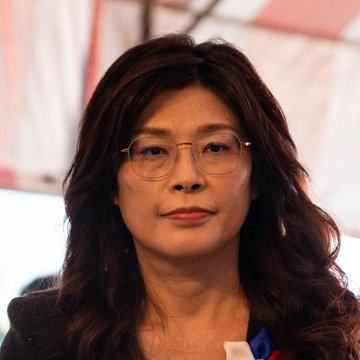
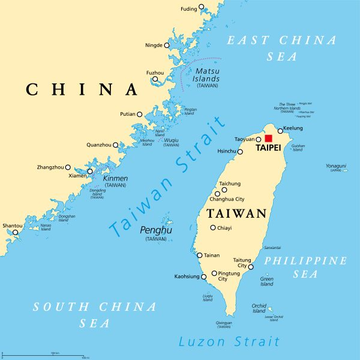
In a striking intervention that has reverberated across the Pacific, the leader of Taiwan’s opposition Kuomintang (KMT) party, Cheng Li-Wun, has warned that the island must learn the lessons of Ukraine and avoid becoming a “pawn” in the United States’ global power games. The remarks, which challenge the ruling Democratic Progressive Party’s (DPP) strategy of deepening alignment with Washington, come amid heightened tensions in the Taiwan Strait and growing international focus on the region .
Cheng’s statement is the most explicit warning from a major Taiwanese political figure about the dangers of the island becoming a flashpoint in US-China strategic competition. It echoes themes raised by former KMT Chairman Ma Ying-jeou and other opposition figures who have urged a more cautious approach to cross-strait relations .
‘Do Not Become a Pawn’
Cheng’s remarks were characteristically direct, drawing a parallel between Ukraine’s situation and Taiwan’s precarious position.
“Taiwan must learn the lesson of Ukraine and not become a pawn in the United States’ power games. We need peace, not a proxy war with China.” — Cheng Li-Wun, Kuomintang Party Leader
The reference to Ukraine is significant. The opposition leader is warning that just as Ukraine has become a battleground for US-Russia strategic competition — with devastating consequences for the Ukrainian people — Taiwan could face a similar fate if it continues to deepen its military and political alignment with Washington .
Cheng’s warning implicitly criticizes the DPP’s strategy of relying on US security guarantees while pursuing a more confrontational stance toward Beijing .
The Ukraine Lesson: What Cheng Is Warning About
Cheng’s invocation of Ukraine carries specific implications for Taiwan’s strategic choices.
| Ukraine Lesson | Application to Taiwan |
|---|---|
| Proxy war danger | Taiwan could become battlefield in US-China conflict |
| US strategic ambiguity | US may not intervene directly; Taiwan could be left alone |
| Economic devastation | War would destroy Taiwan’s prosperous economy |
| Human cost | Civilian casualties would be catastrophic |
| Negotiation imperative | Diplomacy, not confrontation, is the path to security |
Cheng is arguing that Taiwan should avoid Ukraine’s fate by pursuing a more balanced approach — maintaining dialogue with Beijing rather than relying solely on US security assurances .
The KMT’s Cross-Strait Vision
The Kuomintang has historically advocated for a different approach to cross-strait relations than the ruling Democratic Progressive Party.
| Party | Cross-Strait Position | US Relations |
|---|---|---|
| Kuomintang (KMT) | “One China” with ambiguity; dialogue with Beijing; economic cooperation | Pragmatic; avoid provocation |
| Democratic Progressive Party (DPP) | Taiwan independence (de facto); confrontational stance; reliance on US security guarantees | Deep alignment; military cooperation |
The KMT’s position is that Taiwan can maintain its autonomy without provoking Beijing to the point of conflict — a “middle way” between DPP’s confrontation and Beijing’s unification demands .
The DPP Response
The ruling Democratic Progressive Party has not officially responded to Cheng’s remarks. However, DPP officials have previously criticized KMT warnings about becoming a US “pawn” as defeatist and as undermining Taiwan’s security .
DPP counter-arguments:
- US support is essential for Taiwan’s security
- China is the primary threat, not the US
- Dialogue with Beijing has failed to prevent military pressure
- Taiwan must strengthen its own defenses
The DPP’s strategy has been to deepen military cooperation with Washington, including increased US arms sales, joint training exercises, and the deployment of US military advisers to Taiwan — steps that Beijing views as provocative .
The US Position: Strategic Ambiguity or Clarity?
The United States has maintained a policy of “strategic ambiguity” regarding Taiwan — not explicitly committing to defend the island but providing military support and signaling readiness to intervene.
| US Policy Element | Details |
|---|---|
| One China policy | Recognizes Beijing as sole legal government of China |
| Taiwan Relations Act | Requires US to provide Taiwan with defensive weapons |
| Strategic ambiguity | Deliberately unclear whether US would intervene militarily |
| Arms sales | Regular but limited; some sales delayed due to China pressure |
Cheng’s warning about becoming a “pawn” reflects concerns that US strategic ambiguity could leave Taiwan alone in a conflict — just as Ukraine has fought largely without direct US military intervention despite receiving weapons and intelligence .
China’s Position
Beijing has consistently warned Taiwan against deepening ties with the United States, framing such moves as threats to China’s core interests.
China’s red lines:
- No official Taiwan independence (declaration would trigger military action)
- No formal US-Taiwan diplomatic relations
- No US military presence on the island
- Gradual pressure (military, economic, diplomatic) to discourage independence
Beijing has intensified military activity around Taiwan in recent years, including regular air and naval patrols, simulated strikes, and amphibious landing exercises — all intended to signal that it is prepared to use force to prevent formal independence .
What Cheng’s Warning Means for Taiwan’s Future
Cheng’s statement is likely to intensify debate within Taiwan about its strategic direction.
| Scenario | Likelihood | Implications |
|---|---|---|
| Continuation of DPP strategy | Current path | Continued tension with Beijing |
| KMT electoral victory | Possible (2026-2027 elections) | Could shift toward dialogue |
| US policy change | Unlikely | Strategic ambiguity likely continues |
| Cross-strait crisis | Elevated | Military pressure could escalate |
Cheng’s warning is also a political statement aimed at Taiwan’s electorate. The KMT is positioning itself as the party of peace and pragmatism, while painting the DPP as reckless and overly reliant on unreliable US security guarantees .
The Broader Context: Global Power Competition
Cheng’s remarks come at a time of heightened global tensions. The Iran war, Russia-Ukraine conflict, and US-China competition have created an environment in which smaller powers fear being drawn into great power confrontations .
The “learn from Ukraine” warning resonates beyond Taiwan. From the Baltics to the Middle East to Southeast Asia, nations are reassessing their security postures and relationships with major powers — trying to avoid becoming battlefields in others’ wars .
What Comes Next
As Taiwan heads toward its next presidential election (2026 or 2027, depending on political developments), Cheng’s warning is likely to become a central campaign issue.
| Development | Likely Impact |
|---|---|
| KMT-DPP debate | Cross-strait policy will be major issue |
| US arms sales | Could provoke China response |
| China military activity | Will continue; could escalate |
| International attention | Taiwan will remain focus of US-China tensions |
Cheng’s message is clear: Taiwan must chart its own course, not become a pawn in great power games. Whether Taiwan’s electorate agrees — and whether the DPP’s strategy of reliance on the US will be vindicated or condemned — will shape the island’s future for years to come .
Frequently Asked Questions (FAQs)
1. What did KMT leader Cheng Li-Wun say about Taiwan and Ukraine?
Cheng warned that Taiwan “must learn the lesson of Ukraine and not become a pawn in the United States’ power games,” urging peace rather than a proxy war with China .
2. What does ‘pawn in US power games’ mean?
Cheng is warning that Taiwan could become a battlefield in US-China strategic competition — just as Ukraine has become a battleground in US-Russia competition — with devastating consequences for the Taiwanese people .
3. What is the Kuomintang’s position on cross-strait relations?
The KMT advocates for a “One China” policy (with ambiguity about what that means), dialogue with Beijing, economic cooperation, and a pragmatic approach to US relations — avoiding provocation .
4. How has the DPP responded?
The DPP has not officially responded. The party generally argues that US support is essential for Taiwan’s security and that dialogue with Beijing has failed to prevent military pressure .
5. What is the US policy on Taiwan?
The US maintains “strategic ambiguity” — not explicitly committing to defend Taiwan but providing military support and signaling readiness to intervene. This ambiguity is intentional .
6. How has China responded to Cheng’s remarks?
Beijing has not officially responded. China’s consistent position is that Taiwan is part of China and that any move toward independence would trigger military action .
7. Could Taiwan become a ‘pawn’ as Cheng warns?
The risk is real. Taiwan sits at the center of US-China strategic competition, and both major powers have significant interests in the island’s future. Whether Taiwan can avoid becoming a battlefield depends on the choices of all three parties .
Stay informed with Reflecto News – Your trusted source for breaking geopolitical intelligence. Subscribe for real-time updates on cross-strait relations, US-China competition, and regional security developments.
Questions people ask
What is China's current share of global manufacturing?
China now accounts for twenty eight percent of global manufacturing. This industrial output exceeds the combined manufacturing production of the United States, Japan, and Germany, making China the leading global industrial power according to recent reports.
Why were Andrew Tate and Tristan Tate arrested in Miami?
Andrew Tate and his brother Tristan Tate were taken into custody in Miami by the United States Marshals Service. They face thirty eight new charges in the United Kingdom, including rape and child pornography offences, and prosecutors are seeking their extradition.
What warning did Moscow issue about oil prices?
Kirill Dmitriev, the Chief Executive of the Russian Direct Investment Fund, warned that a tsunami of skyrocketing oil prices is approaching. Moscow describes this potential energy shock as a major threat to global markets.
What political shift is projected for Benjamin Netanyahu's coalition?
Political polls project that Prime Minister Benjamin Netanyahu's coalition is on track to lose its majority in the upcoming October election. This projection indicates a potential political shift in Jerusalem.
Why did a Russian military aircraft land in Tehran?
A Russian airborne command aircraft, widely known as a doomsday plane, landed in Tehran. The arrival of the aircraft represents a high stakes show of support from Russia for Iran during a period of heightened regional tensions.
What did President Masoud Pezeshkian claim about the United States and Israel?
Iranian President Masoud Pezeshkian claimed that the United States and Israel failed in a forty eight hour plan to topple the Iranian government. He made these statements during a televised address marking two years since his inauguration.