Reflecto News is an online news platform covering major international political events, global economic developments, and security conflicts. The site provides updates on topics such as Chinese manufacturing dominance, Middle Eastern political tensions, and high profile legal arrests. Readers can access current articles organized by categories like World News, Iran, and USA.
Published on Reflecto News | World News | Politics & Elections
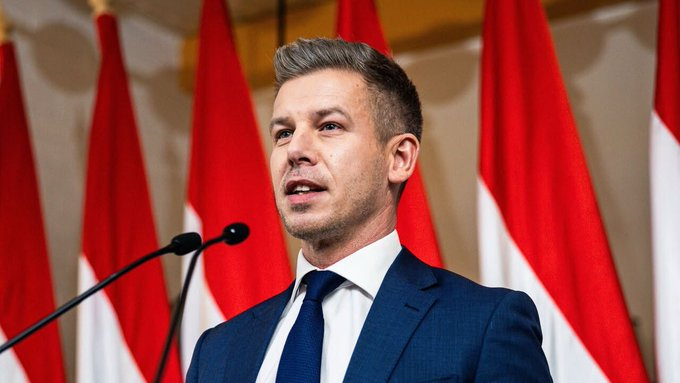
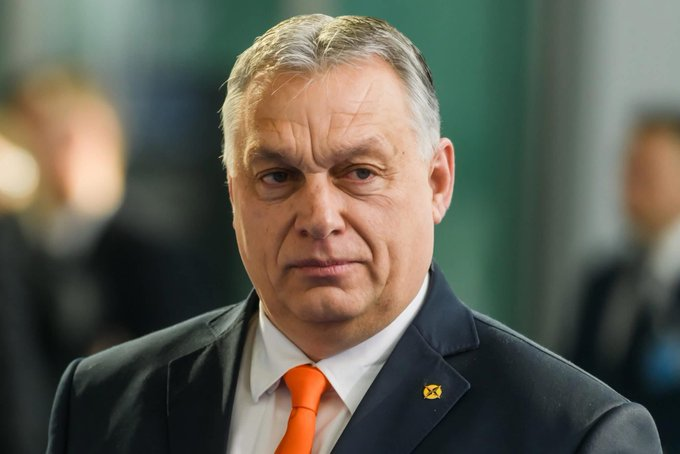
In a seismic shift that will reshape Hungary’s political landscape and its relationship with the European Union, opposition leader Péter Magyar has officially defeated Prime Minister Viktor Orbán to become Hungary’s next prime minister. Orbán conceded defeat late Sunday after 16 consecutive years in power, marking the end of an era for one of Europe’s most controversial and longest-serving leaders .
“We have not been entrusted with the responsibility and opportunity to govern. I congratulated the winning party.” – Viktor Orbán, conceding defeat
With over 98 percent of votes counted by Hungary’s National Election Office (NEO), Magyar’s center-right Tisza party has won 53.62 percent of the vote, securing a commanding 138 seats in the 199-member parliament — a two-thirds “supermajority” that allows Tisza to amend the constitution and reverse Orbán’s extensive institutional reforms .
Historic Turnout and a ‘Decisive Victory’
The election saw record participation, with approximately 77.8 percent of eligible voters casting ballots — the highest turnout in Hungary’s post-communist history . Orbán’s ruling Fidesz-KDNP alliance received 37.79 percent, projected to win only 55 seats, while the far-right Our Homeland Movement took 5.89 percent and six seats .
Addressing tens of thousands of jubilant supporters in Budapest beside the Danube River, the 45-year-old Magyar hailed the result as a win seen “from every Hungarian window” .
“Today we won because the Hungarian people didn’t ask what their country could do for them, but what they could do for their country.” – Péter Magyar
Magyar called for the “puppets” of the Orbán government to leave state institutions and vowed to restore checks and balances, with crowds chanting “Europe” and “Russians go home” .
From Orbán Insider to Successor
Magyar’s path to power is remarkable. A former Fidesz insider who worked behind the scenes for over two decades, he publicly broke with Orbán in 2024 following a sex abuse scandal that forced his ex-wife, Hungary’s former justice minister, to resign . Over the last two years, he built a wide support base by touring small towns and villages, delivering up to seven speeches a day — a grassroots movement that culminated in Sunday’s landslide .
Key Tisza Campaign Promises:
- Anti-corruption and institutional reform
- Restoration of the rule of law and transparent governance
- Repairing relations with the European Union
- Reclaiming frozen EU funds (approximately €20 billion)
- Ending Hungary’s drift toward Russia
Tisza campaigned on a platform of restoring the rule of law, tackling corruption, and repairing Hungary’s strained relationship with Brussels, which had frozen billions in funding over rule-of-law concerns .
International Leaders Hail ‘Historic Moment’
European leaders were quick to welcome the political earthquake, with congratulatory messages pouring in from across the continent and beyond .
European Commission President Ursula von der Leyen: “Europe’s heart is beating stronger in Hungary tonight”
French President Emmanuel Macron: “France welcomes the victory of democratic participation, the Hungarian people’s commitment to European Union values”
German Chancellor Friedrich Merz: “The Hungarian people have decided. Let’s join forces for a strong, safe, and, above all, united Europe”
Polish Prime Minister Donald Tusk: “Hungary, Poland, Europe. Together again! A glorious victory, dear friends!”
UK Prime Minister Keir Starmer: “This is a historic moment not only for Hungary but also for European democracy”
Ukrainian President Volodymyr Zelensky: “Ukraine has always strived for good neighborly relations with everyone in Europe, and we are ready to develop our cooperation with Hungary”
NATO Secretary General Mark Rutte also called Magyar to offer congratulations, signaling continuity in Hungary’s alliance commitments .
What Orbán’s Defeat Means for Europe
Orbán’s loss carries profound implications for European and global politics .
A Blow to Putin
The Kremlin loses its most vocal advocate within the EU and NATO. Orbán consistently blocked sanctions on Russia, opposed military aid to Ukraine, and vetoed a €90 billion EU loan for Kyiv. His departure removes a key obstacle to European unity on Ukraine .
EU Funds to Flow
Magyar has pledged to join the European Public Prosecutor’s Office, a move widely seen as unlocking approximately €20 billion in frozen EU funds desperately needed by Hungary’s faltering economy. He also aims to introduce the euro by 2030 .
Reset with Ukraine
Ukraine’s Foreign Minister Andrii Syhiba called the vote a “turning point,” expressing hope for normalized relations after years of Orbán’s antagonistic stance .
A Blow to Populists
Orbán’s defeat is a significant setback for the loosely aligned nationalist and conservative right-wing movement worldwide, including Donald Trump’s MAGA movement. Just days before the vote, Trump’s Vice President JD Vance visited Budapest in an overt attempt to bolster Orbán, but it failed to sway voters .
The Road Ahead: Transition and Reform
Magyar has called on President Tamás Sulyok to convene parliament “as quickly as possible,” hoping to take over as prime minister as early as May 5 . He has demanded the resignation of key Orbán-appointed officials, including the Prosecutor General and the head of the Media Authority, as part of his pledge to “restore the system of checks and balances” .
Challenges Ahead:
- Orbán’s loyalists remain cemented in key institutions, including the Constitutional Court, for years to come
- The new government faces tight EU deadlines for reforms by August to unlock frozen funds
- The economy remains fragile, and Magyar must deliver on ambitious anti-corruption promises
“The Hungarian people didn’t vote for a simple change of government, but for a complete change in regime.” – Péter Magyar
His first foreign visit will be to Poland, signaling a strategic pivot away from Orbán’s eastern orientation and toward rebuilding ties with Central European allies .
Conclusion: An Era Ends, A New One Begins
For 16 years, Viktor Orbán was the face of “illiberal democracy” in Europe — a rebel who reshaped Hungary in his own image, from the courts to the constitution. On Sunday, Hungarians decisively told him that the experiment was over .
As fireworks lit up the Budapest sky and crowds danced in the streets, the smell of smoke from flares mixed with champagne and beer. “I’m finally proud to be Hungarian,” one woman told the BBC .
The road ahead for Magyar and Tisza is daunting — from institutional holdovers to economic pressures to the weight of a supermajority mandate. But for one night, Hungary celebrated the end of an era and the dawn of a new one.
Frequently Asked Questions (FAQs)
1. Who is Péter Magyar?
Péter Magyar is a 45-year-old former Fidesz insider who became Orbán’s fiercest critic. He launched the Tisza party in 2024 and has now defeated Orbán in a landslide, winning a two-thirds parliamentary majority .
2. What was the final vote count?
With 98.13 percent of votes counted, Tisza won 53.62 percent (138 seats), Fidesz won 37.79 percent (55 seats), and Our Homeland Movement won 5.89 percent (6 seats) .
3. What does Tisza’s supermajority mean?
With 138 of 199 seats, Tisza has a two-thirds majority, allowing it to amend Hungary’s constitution and reverse many of Orbán’s institutional reforms without opposition support .
4. When will Magyar take office?
Magyar has called for parliament to convene quickly and hopes to take over as prime minister as early as May 5, 2026 .
5. How will this affect EU-Hungary relations?
Magyar has pledged to restore the rule of law, join the European Public Prosecutor’s Office, and unlock frozen EU funds, signaling a dramatic shift from Orbán’s confrontational approach .
6. What does this mean for Ukraine?
Orbán was the EU’s most pro-Russian leader, blocking sanctions and aid to Ukraine. Magyar has promised a reset, with Ukrainian President Zelensky already expressing readiness for cooperation .
7. Why did Orbán lose?
Despite his foreign policy making headlines worldwide, analysts say domestic issues were the main driver — corruption, the cost of living, poor public services, and economic stagnation .
Stay informed with Reflecto News – Your trusted source for breaking political and international intelligence. Subscribe for real-time updates on Hungary’s political transition and its impact on Europe.
Questions people ask
What is China's current share of global manufacturing?
China now accounts for twenty eight percent of global manufacturing. This industrial output exceeds the combined manufacturing production of the United States, Japan, and Germany, making China the leading global industrial power according to recent reports.
Why were Andrew Tate and Tristan Tate arrested in Miami?
Andrew Tate and his brother Tristan Tate were taken into custody in Miami by the United States Marshals Service. They face thirty eight new charges in the United Kingdom, including rape and child pornography offences, and prosecutors are seeking their extradition.
What warning did Moscow issue about oil prices?
Kirill Dmitriev, the Chief Executive of the Russian Direct Investment Fund, warned that a tsunami of skyrocketing oil prices is approaching. Moscow describes this potential energy shock as a major threat to global markets.
What political shift is projected for Benjamin Netanyahu's coalition?
Political polls project that Prime Minister Benjamin Netanyahu's coalition is on track to lose its majority in the upcoming October election. This projection indicates a potential political shift in Jerusalem.
Why did a Russian military aircraft land in Tehran?
A Russian airborne command aircraft, widely known as a doomsday plane, landed in Tehran. The arrival of the aircraft represents a high stakes show of support from Russia for Iran during a period of heightened regional tensions.
What did President Masoud Pezeshkian claim about the United States and Israel?
Iranian President Masoud Pezeshkian claimed that the United States and Israel failed in a forty eight hour plan to topple the Iranian government. He made these statements during a televised address marking two years since his inauguration.