Reflecto News is an online news platform covering major international political events, global economic developments, and security conflicts. The site provides updates on topics such as Chinese manufacturing dominance, Middle Eastern political tensions, and high profile legal arrests. Readers can access current articles organized by categories like World News, Iran, and USA.
Published on Reflecto News | World News | Defense & Energy Security
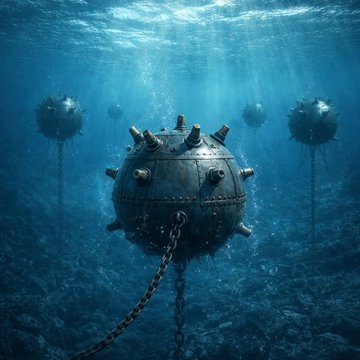
As the United States enforces a naval blockade and European nations prepare a “peaceful multinational mission” to secure the Strait of Hormuz, Japan remains undecided on whether to deploy its Self-Defense Forces (SDF) for minesweeping operations in the strategic waterway. Chief Cabinet Secretary Minoru Kihara confirmed on Monday that Tokyo has not yet reached a conclusion regarding the potential deployment .
“What is most important is that de-escalation, including securing the safety of navigation through the Strait of Hormuz, is actually achieved.” — Minoru Kihara, Chief Cabinet Secretary of Japan
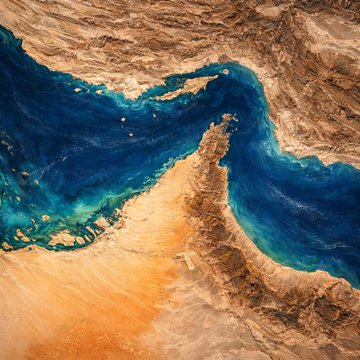
The uncertainty comes despite Japan’s profound dependence on the region for more than 90 percent of its crude oil imports, most of which transit the Strait of Hormuz—a chokepoint that has been effectively closed since US and Israeli forces launched strikes against Iran on February 28 .
Legal and Constitutional Constraints
Japan’s hesitation stems primarily from its post-war pacifist constitution, which strictly limits the overseas deployment of military forces. Under the 2015 security legislation, the SDF can operate overseas only under specific conditions—primarily if an attack on a close security partner threatens Japan’s survival and no alternative measures are available .
Prime Minister Sanae Takaichi addressed these constraints directly following her summit with President Donald Trump last month. She confirmed that she had briefed Trump on what support Japan could and could not provide under its laws, and explicitly stated: “I have never promised SDF support” .
The legal distinction is critical. Minesweeping during active hostilities would be considered “combat action against the country that laid the mines,” making SDF deployment impossible under current law. However, if mines are determined to be abandoned after a ceasefire, the legal calculus could change .
The Precondition: A Complete Ceasefire
Japanese Foreign Minister Toshimitsu Motegi has articulated a clear condition for any potential deployment. Speaking on Fuji TV last month, Motegi stated that Japan could consider minesweeping operations only after a “complete ceasefire” is established .
“Let’s say the parties have entered into a cease-fire, and in the event that mines pose an obstacle, we may have to think about it.” — Toshimitsu Motegi, Japanese Foreign Minister
Motegi emphasized that this remains a hypothetical scenario, noting that while “Japan’s minesweeping technology is at the top level in the world,” any deployment would be contingent on the realization of a ceasefire between the US, Israel, and Iran .
The Strategic Dilemma
| Factor | Japan’s Position |
|---|---|
| Oil dependence | 90%+ of crude imports via Gulf; disruption threatens energy security |
| Constitutional constraints | Pacifist constitution limits overseas military action |
| US alliance | Close security partner; Trump has urged Japan to “step up” |
| Iran relations | Traditionally friendly ties with Tehran |
| Current decision | No conclusion reached; situation being monitored |
The collapse of US-Iran negotiations in Islamabad over the weekend—which were meant to solidify a two-week ceasefire—has further complicated Japan’s calculus. Without a durable peace agreement, the legal and practical conditions for SDF deployment remain unmet .
Diversification Efforts Underway
While military options remain uncertain, Tokyo is actively pursuing alternative strategies to reduce its vulnerability. Takaichi told parliament that Japan is diversifying its crude oil procurement sources, including:
- Alternative pipeline routes using infrastructure from Saudi Arabia and the United Arab Emirates
- Procurement from Canada, Southeast Asian nations, and South American countries with existing supply relationships and capacity to increase production
These measures reflect a recognition that relying solely on military solutions—whether American, European, or Japanese—may not be sufficient to guarantee energy security in a protracted conflict.
What Comes Next
As the US naval blockade takes effect and France and the UK move forward with their own multinational initiative, Japan will continue to monitor the situation closely. Several factors will influence Tokyo’s final decision:
| Factor | Impact on Japan’s Decision |
|---|---|
| Ceasefire durability | A lasting truce is the primary precondition |
| Legal determination | Whether mines are considered “abandoned” or active |
| International coordination | Japan prefers multilateral operations |
| US pressure | Trump continues urging allies to contribute |
| Domestic political constraints | Constitutional limits remain binding |
For now, Japan remains in a waiting pattern—hoping for a diplomatic breakthrough while preparing alternative energy supply routes, but unwilling to commit its forces until the legal and security conditions are unequivocally met.
Frequently Asked Questions (FAQs)
1. Has Japan decided to send minesweepers to the Strait of Hormuz?
No. Chief Cabinet Secretary Minoru Kihara confirmed on April 13 that Japan has not yet reached a conclusion regarding SDF deployment .
2. What conditions would need to be met for Japan to deploy?
Japan’s Foreign Minister has stated that a “complete ceasefire” would be necessary before minesweeping operations could be considered. Under Japanese law, minesweeping during active hostilities would be considered combat action and is not permitted .
3. Why is Japan so dependent on the Strait of Hormuz?
Japan relies on the Middle East for more than 90 percent of its crude oil imports, and most of these shipments transit the Strait of Hormuz—the world’s most critical energy chokepoint .
4. Did Japan promise the US it would send forces?
No. Prime Minister Takaichi explicitly stated, “I have never promised SDF support” during her summit with President Trump, though she did brief him on Japan’s legal constraints .
5. What is Japan doing instead of military deployment?
Japan is diversifying its oil procurement sources, including through pipeline routes from Saudi Arabia and the UAE, and increased purchases from Canada, Southeast Asia, and South America .
Stay informed with Reflecto News – Your trusted source for breaking defense and energy security intelligence. Subscribe for real-time updates on the Strait of Hormuz crisis and Japan’s strategic decisions.
Questions people ask
What is China's current share of global manufacturing?
China now accounts for twenty eight percent of global manufacturing. This industrial output exceeds the combined manufacturing production of the United States, Japan, and Germany, making China the leading global industrial power according to recent reports.
Why were Andrew Tate and Tristan Tate arrested in Miami?
Andrew Tate and his brother Tristan Tate were taken into custody in Miami by the United States Marshals Service. They face thirty eight new charges in the United Kingdom, including rape and child pornography offences, and prosecutors are seeking their extradition.
What warning did Moscow issue about oil prices?
Kirill Dmitriev, the Chief Executive of the Russian Direct Investment Fund, warned that a tsunami of skyrocketing oil prices is approaching. Moscow describes this potential energy shock as a major threat to global markets.
What political shift is projected for Benjamin Netanyahu's coalition?
Political polls project that Prime Minister Benjamin Netanyahu's coalition is on track to lose its majority in the upcoming October election. This projection indicates a potential political shift in Jerusalem.
Why did a Russian military aircraft land in Tehran?
A Russian airborne command aircraft, widely known as a doomsday plane, landed in Tehran. The arrival of the aircraft represents a high stakes show of support from Russia for Iran during a period of heightened regional tensions.
What did President Masoud Pezeshkian claim about the United States and Israel?
Iranian President Masoud Pezeshkian claimed that the United States and Israel failed in a forty eight hour plan to topple the Iranian government. He made these statements during a televised address marking two years since his inauguration.