Reflecto News is an online news platform covering major international political events, global economic developments, and security conflicts. The site provides updates on topics such as Chinese manufacturing dominance, Middle Eastern political tensions, and high profile legal arrests. Readers can access current articles organized by categories like World News, Iran, and USA.
Ethiopia voted against a UN Human Rights Council resolution condemning Israeli settlements in the Occupied Palestinian Territory, joining only two other countries in opposition. The move has triggered backlash at home, with critics accusing Addis Ababa of abandoning its long-standing pro-Palestinian stance and historical opposition to colonialism and apartheid-like policies.
By Reflecto News Desk
April 4, 2026 | Addis Ababa / Geneva
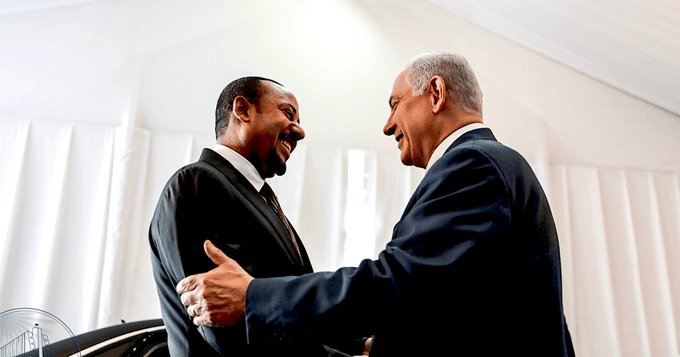
At the 61st session of the UN Human Rights Council (HRC), Ethiopia cast a “No” vote on draft resolution A/HRC/61/L.36 (as orally revised), titled “Israeli settlements in the Occupied Palestinian Territory, including East Jerusalem, and in the occupied Syrian Golan.” The resolution passed with 34 votes in favor, 3 against (Ethiopia, Czech Republic, and North Macedonia), and 10 abstentions.
The text demands that Israel immediately cease all settlement activities, condemns the transfer of Israeli civilians into occupied territory, and highlights violations of international humanitarian law, including land expropriation, home demolitions, and changes to the demographic composition of the occupied areas.
In a notable inconsistency, Ethiopia supported a separate resolution on the right of the Palestinian people to self-determination during the same session, deepening public confusion over Addis Ababa’s position.
Historical Context and Shift in Stance
Ethiopia has long maintained strong ties with the Palestinian cause. It formally recognized the Palestine Liberation Organization (PLO) in 1973 and supported the opening of a PLO office in Addis Ababa in 1978. Successive Ethiopian governments aligned with African and Non-Aligned Movement positions, consistently voting in favor of Palestinian-related resolutions at the UN and opposing what many viewed as colonial or apartheid-like policies in the occupied territories.
Critics inside Ethiopia argue that the “No” vote represents a sharp departure from this tradition. Social media, opposition voices, and analysts have described it as a “betrayal” of Ethiopia’s anti-colonial legacy and solidarity with oppressed peoples. Some link the shift to growing strategic ties with Israel in areas such as agriculture, security, and technology, or to broader realignments under Prime Minister Abiy Ahmed.
Domestic Reactions
The vote has sparked heated debate within Ethiopia:
- Pro-Palestinian groups and intellectuals accuse the government of prioritizing short-term geopolitical or economic interests over principled foreign policy.
- Supporters of the vote argue it reflects pragmatic diplomacy in a complex global environment, avoiding automatic alignment with any bloc.
- The mixed voting pattern (opposing the settlements resolution while backing self-determination) has fueled accusations of incoherence or external pressure.
Public confusion is compounded by Ethiopia’s recent abstention on other Palestine-related initiatives, such as the 2025 New York Accord endorsing a two-state solution.
Broader Regional and Global Context
This development occurs against the backdrop of escalating tensions in the Middle East, including the ongoing U.S.-Iran conflict, repeated Iranian attacks on Gulf targets (such as the recent barrage toward the UAE and claimed strike at Bahrain’s Khalifa Port), and persistent disruptions in the Strait of Hormuz. African nations largely supported the settlements resolution, underscoring Ethiopia’s outlier position on the continent.
Ethiopia’s vote has drawn scrutiny from regional observers who note that most African states continue to back Palestinian positions at the UN, rooted in shared histories of anti-colonial struggle.
Reflecto News will continue monitoring any official explanation from the Ethiopian government, further domestic reactions, and the implications for Ethiopia’s foreign policy in the Middle East and Africa.
Sources: UN Human Rights Council records (61st session), Ethiopian media and social commentary, Clash Report, and cross-referenced diplomatic reporting as of April 4, 2026. The situation reflects ongoing debates over principle versus pragmatism in international relations.
Questions people ask
What is China's current share of global manufacturing?
China now accounts for twenty eight percent of global manufacturing. This industrial output exceeds the combined manufacturing production of the United States, Japan, and Germany, making China the leading global industrial power according to recent reports.
Why were Andrew Tate and Tristan Tate arrested in Miami?
Andrew Tate and his brother Tristan Tate were taken into custody in Miami by the United States Marshals Service. They face thirty eight new charges in the United Kingdom, including rape and child pornography offences, and prosecutors are seeking their extradition.
What warning did Moscow issue about oil prices?
Kirill Dmitriev, the Chief Executive of the Russian Direct Investment Fund, warned that a tsunami of skyrocketing oil prices is approaching. Moscow describes this potential energy shock as a major threat to global markets.
What political shift is projected for Benjamin Netanyahu's coalition?
Political polls project that Prime Minister Benjamin Netanyahu's coalition is on track to lose its majority in the upcoming October election. This projection indicates a potential political shift in Jerusalem.
Why did a Russian military aircraft land in Tehran?
A Russian airborne command aircraft, widely known as a doomsday plane, landed in Tehran. The arrival of the aircraft represents a high stakes show of support from Russia for Iran during a period of heightened regional tensions.
What did President Masoud Pezeshkian claim about the United States and Israel?
Iranian President Masoud Pezeshkian claimed that the United States and Israel failed in a forty eight hour plan to topple the Iranian government. He made these statements during a televised address marking two years since his inauguration.